
I make this thick mango smoothie bowl no banana on the mornings when I want something bright, fast, and nourishing. The first time I learned to rely on frozen mango and a thick yogurt, I was surprised at how close the texture came to soft-serve — dense, spoonable, and intensely mango-forward. The bowl’s color alone wakes me up: a deep, sunset yellow that smells like ripe fruit and sunshine.
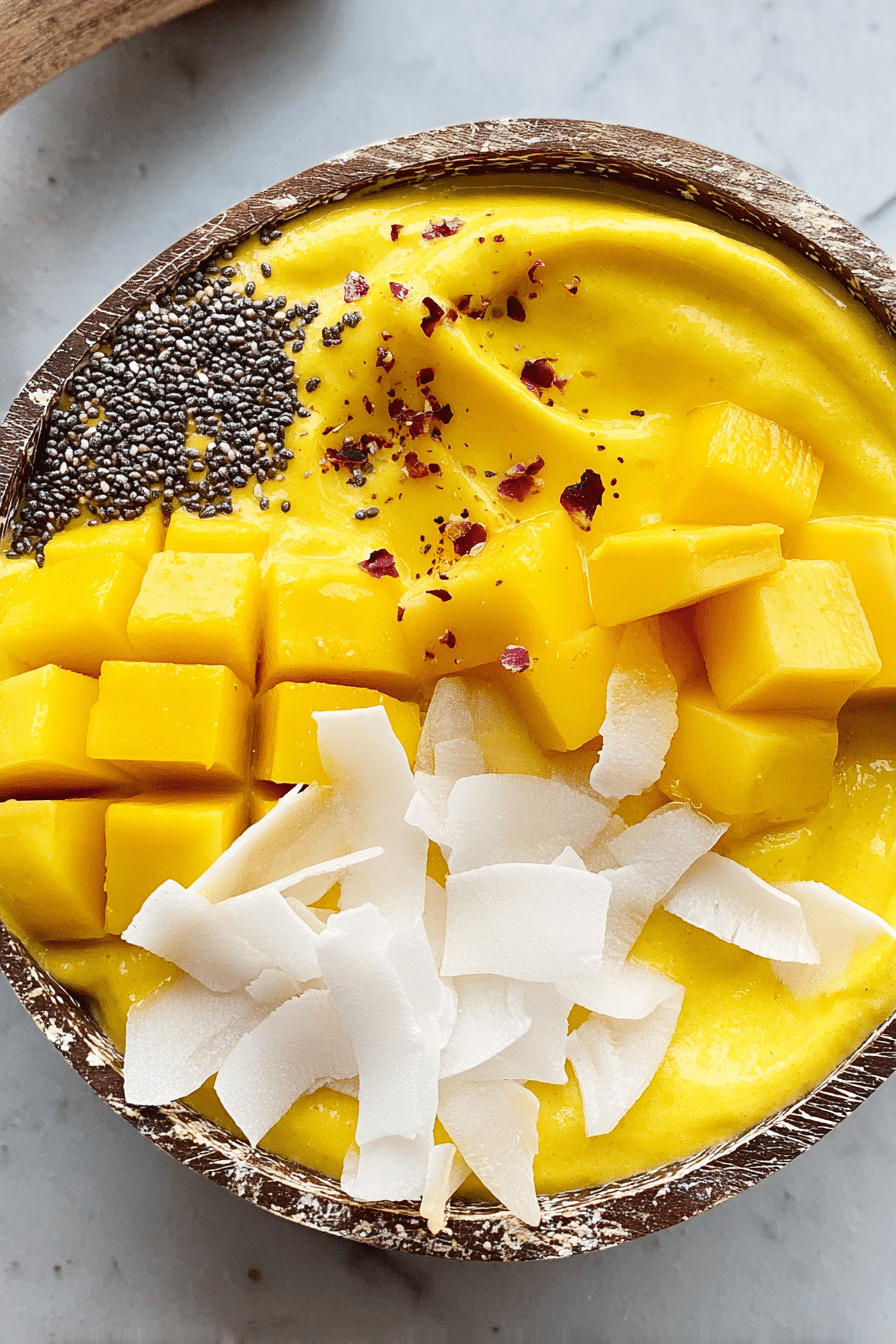
I keep the core of this recipe intentionally simple — just mango and yogurt — because it’s reliable, portable, and easy to adapt. I use frozen mango for body and creaminess, and a spoonful of rich yogurt for tang and protein. When life is hectic, this bowl gives me steady energy without a lot of prep or dishes.
Over the years I’ve tested different yogurts and dairy-free swaps and learned which combos keep the texture thick without diluting the mango’s bright flavor. I often treat this as a healthy dessert or a post-workout breakfast: add a scoop of protein powder or a drizzle of nut butter and it transforms into a satisfying recovery meal.
Below I’ll walk you through why this thick mango smoothie bowl no banana works so well for busy, health-conscious days, what to keep in the pantry, and small technique notes I’ve learned in my kitchen to make it consistently creamy.
Why This Thick Mango Smoothie Bowl No Banana Is Perfect for Busy, Health-Conscious Days
This recipe is built around simplicity and nutrient density. Using just two main ingredients keeps shopping and prep minimal, while frozen mango and a quality yogurt deliver vitamins, natural sweetness, and a creamy mouthfeel without added sugars.
Mango is a great source of vitamin A and vitamin C, which support immunity and skin health, and its natural sugars give you a quick energy lift without heaviness. Yogurt adds protein and probiotics (when live cultures are present), helping keep blood sugar steadier and helping you feel satisfied longer.
Because it takes only minutes to blend and can be topped or stretched to suit multiple meal occasions, this bowl works for breakfasts, mid-day snacks, or light desserts. I often make a double batch of frozen mango so I can build bowls all week — the speed and consistent texture are what make it my go-to.
Everything You Need for Thick Mango Smoothie Bowl (No Banana)
Below I list the core and optional ingredients conversationally so you can mix and match depending on diet and pantry staples.
- Frozen mango chunks – The backbone of the bowl; frozen fruit provides the thick, spoonable texture you want.
- Greek yogurt (whole-milk or thick variety) – Adds creaminess, tang, and protein; use fuller-fat versions for richer mouthfeel.
- Dairy-free yogurt (coconut, almond) – Use as a one-to-one swap if you need dairy-free; coconut gives a tropical richness while almond stays lighter.
- Protein powder – Optional for post-workout bowls; vanilla or unflavored blends mix well with mango.
- Nut butters – A spoonful adds healthy fats and satiety; peanut or almond work especially well.
- Superfood seeds – Chia, hemp, or flax for fiber, omega-3s, and a mild textural contrast.
- Fresh mango and fruit – For topping and extra freshness.
- Coconut chips or granola – For crunch and a contrast to the smooth base.
If you’re looking for another delicious mango recipe, try our Mango Coconut Milk Smoothie for a refreshing twist.
The Secret to Super Thick Texture Without Banana
Getting thick texture without banana is entirely about how you handle frozen fruit, yogurt, and blender technique. I learned a few simple rules that reliably produce that dense, almost soft-serve texture.
- Start with well-frozen mango chunks; the colder and firmer they are, the less liquid you’ll need.
- Use a thick yogurt rather than runny yogurt or a lot of milk. The yogurt’s body helps lock in creaminess.
- Begin blending on low to break the fruit down, then increase speed to create a smooth emulsion. Pulse and scrape rather than overliquefy.
- If your blender clogs, stop and press the chunks down toward the blades with a tamper or turn the machine off and use a spatula to reposition — this prevents air pockets and uneven blending.
- Add liquid sparingly and only if the blender truly needs it. A spoonful at a time is enough to coax movement without thinning the bowl too much.
When it’s right, the spoon will stand comfortably in the bowl and the texture will feel dense and velvety on your tongue — not airy, not runny, and definitely not icy.
Yogurt vs. Dairy-Free Alternatives: Nutrition and Flavor Notes
Choosing between Greek yogurt and dairy-free alternatives changes both nutrition and flavor. Here’s what I tell people in my kitchen when they ask which to use:
- Greek yogurt – Higher in protein and typically lower in added sugars; it brings a bright tang that balances mango’s sweetness and helps the bowl feel more filling.
- Coconut yogurt – Lower in protein, higher in saturated fat, and adds a mild coconut sweetness and creaminess that pairs beautifully with mango for a tropical profile.
- Almond or oat-based yogurts – Usually lighter in fat and protein than Greek yogurt; they add subtle nuttiness and are a good lower-calorie swap but may need a protein boost if you want a more filling bowl.
- Allergen notes – Dairy-free alternatives often use tree nuts or soy; if you have nut allergies, look for soy or pea-protein–based yogurts and always check labels for cross-contact warnings.
For a different way to use yogurt in your breakfasts, you might enjoy this Greek Yogurt Parfait Recipe as a nutritious option.
How to Make Thick Mango Smoothie Bowl No Banana (Step-by-Step)
- Place frozen mango chunks and the yogurt into the blender. If you’re adding protein powder, add it now so it blends evenly.
- Start blending on low, then use short pulses to break up the pieces. If needed, stop and press the fruit toward the blades to avoid stalls.
- Increase to medium-high speed and blend until the mixture becomes uniformly smooth and thick. Pause to scrape down the sides if bits cling to the jar.
- Only add a tiny splash of liquid if the blender stalls; otherwise keep the consistency dense so it’s scoopable with a spoon.
- Spoon into a bowl and arrange toppings right away so their colors and textures contrast with the mango’s bright yellow base.
For variety, don’t forget to check out our Easy Strawberry Smoothie, which is just as easy to make!
Pro Tip for Thick Mango Smoothie Bowl No Banana: Add Protein for Post-Workout Recovery
- Choose a protein powder that matches your diet: whey for fast-absorbing animal protein, pea or soy for plant-based options.
- Vanilla or coconut-flavored powders blend seamlessly without masking the mango; start with a small scoop so sweetness stays balanced.
- Consume your protein-forward bowl within 30–60 minutes post-workout for optimal muscle repair, pairing it with a carbohydrate-rich fruit like mango to help replenish glycogen.
- If you prefer whole-food protein, stir in a spoonful of Greek yogurt or nut butter after blending for extra creaminess and slow-digesting calories.
Toppings and Pairings to Boost Nutrition and Flavor
Toppings turn a simple bowl into a complete meal — they add texture, micronutrients, and staying power. Think of the toppings as contrast: crunchy, creamy, salty, and fresh.
- Fresh mango slices and berries for bright acidity and color.
- Hemp seeds, chia seeds, or ground flax for omega-3s and fiber.
- Toasted coconut chips or granola for crunch and a tropical note.
- Crushed nuts or a swirl of peanut/almond butter for healthy fats and extra protein.
- A small sprinkle of flaky sea salt to amplify the mango’s sweetness.
How to Store and Make-Ahead Your Thick Mango Smoothie Bowl
Prepping components ahead saves time and keeps mornings calm. I usually portion frozen mango into single-serve bags or containers so the blender work is minimal during busy mornings.
- Portion frozen mango into freezer bags so you can grab a serving and blend in under two minutes.
- Store leftover blended smoothie in an airtight container in the fridge for up to 24 hours; stir well before eating — texture will relax but remains enjoyable.
- For make-ahead convenience, freeze smoothie in popsicle molds or small containers and let thaw briefly before scooping for a thick, spoonable treat.
For a quick breakfast pairing, consider prepping bars or bakes ahead — for example, try pairing it with our Healthy Blueberry Oatmeal Bars to plan your meals ahead.
Troubleshooting
- If the blender stalls, stop and push fruit down with a tamper or turn off and reposition chunks with a spatula.
- If the bowl is too thin, refreeze for 10–20 minutes or add a small handful of extra frozen mango and re-blend briefly.
- If it’s too icy, that means the fruit was too cold or the blender didn’t emulsify; try a short burst on high and scrape the sides to fully combine.
- If the flavor is flat, a pinch of salt or a squeeze of lime brightens the mango without adding sugar.
Variations
- Tropical boost: add a splash of coconut yogurt and top with toasted coconut for a piña-colada vibe.
- Green spin: blend in a small handful of baby spinach for color and extra vitamins — the mango hides the taste.
- Protein-forward: add a scoop of vanilla protein powder and a spoonful of nut butter to make it a meal replacement.
- Dessert twist: stir in a little cacao nibs and a drizzle of honey for an indulgent after-dinner bowl.
Frequently Asked Questions
Can I use fresh mango instead of frozen mango chunks?
Yes, you can use fresh mango! However, using frozen mango chunks helps achieve that thick and creamy texture.
What can I substitute for Greek yogurt if I need a dairy-free option?
You can substitute Greek yogurt with dairy-free yogurt alternatives such as coconut yogurt or almond yogurt.
How can I make this smoothie bowl more filling?
To make it more filling, you can add protein powder, nut butter, or oats for extra nutrients and satiety.
What toppings can I add to my mango smoothie bowl?
You can add fresh cut mango, hemp seeds, chia seeds, coconut chips, or granola to enhance flavor and nutrition.
How do I store leftover smoothie bowl?
You can store any leftover smoothie in an airtight container in the refrigerator for up to a day. Just give it a good stir before enjoying!
Thick Mango Smoothie Bowl No Banana
Ingredients
Method
- In your blender, add frozen mango and yogurt. Add protein powder now if you're making this for breakfast and want more protein.
- Start speed on low, pushing frozen fruit down towards the blades either with your tamper or by turning off the blender periodically to scrape the sides down.
- Turn up the speed, continuing to push the frozen chunks of mango down until it is smooth and creamy.
- Scoop mango smoothie into a bowl and add your favorite toppings.
- Enjoy!