
The Summer Salad I Make All Season: Tomato Peach Burrata Salad
- Prep
- 15 min
- Total
- 30 min
- Serves
- 6
- Calories
- 130 kcal
- Carbs
- 8.00 g
Introduction
I make this tomato peach burrata salad all summer long because it’s the easiest way I know to taste the season. In my kitchen the colors pull people to the table: ruby heirloom slices, blushing peach wedges, glossy grape tomatoes, and a pillow of burrata that breaks open into a creamy puddle. It’s one of those recipes I lean on when friends stop by unannounced or when I want a light, impressive dinner with almost no fuss.
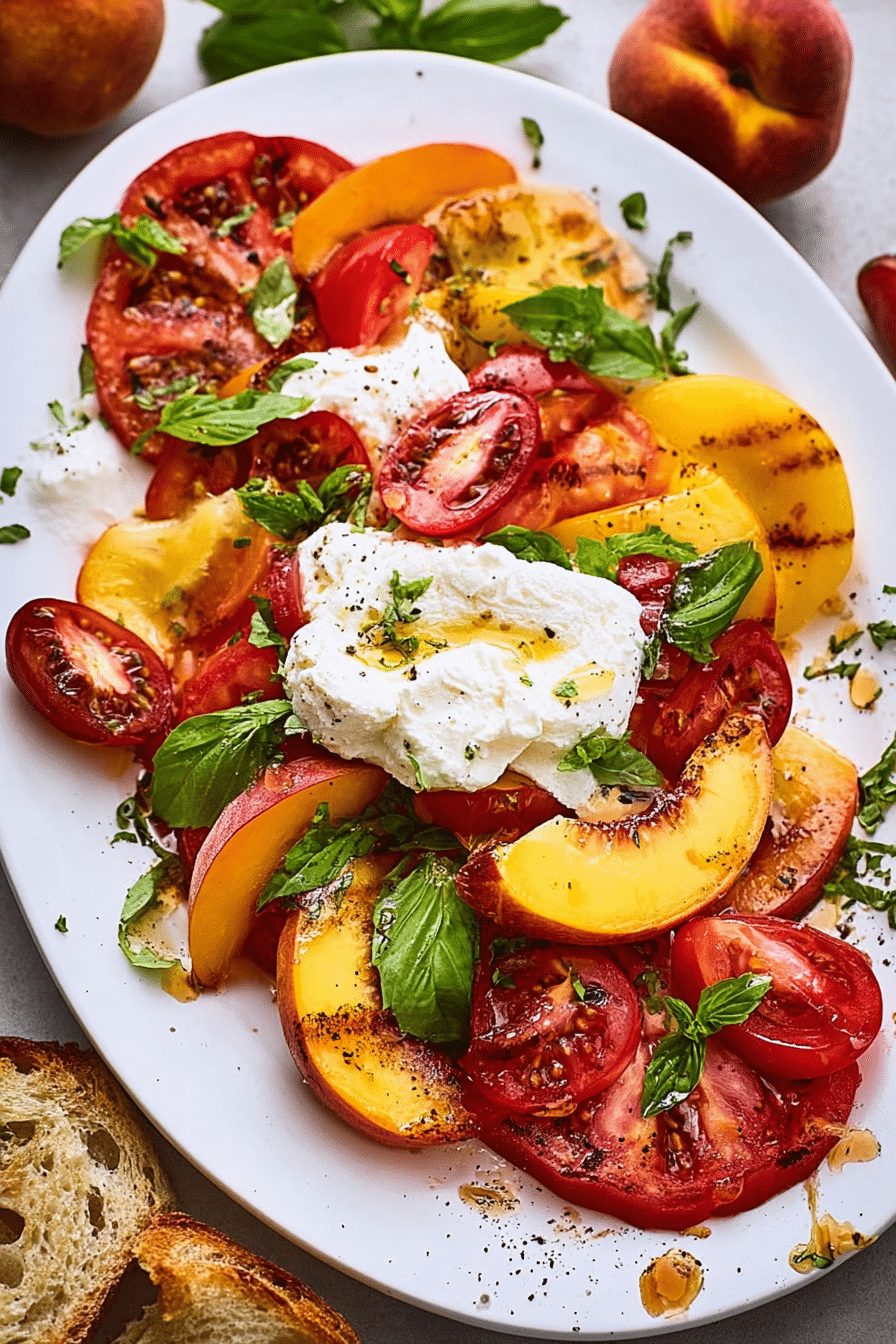
I love how quickly this comes together — a few smart slices and a gentle tear of cheese, and you have a centerpiece that tastes like sunshine. I’ll tell you the small handling steps I learned the hard way: how to treat burrata so it stays luxuriously creamy and how to pick peaches and heirloom tomatoes that actually taste sweet instead of mealy.
When I bring this to a gathering it’s the first thing to go. The scent of ripe fruit and basil rises off the platter, and people often reach for grilled bread to scoop up the cheese and juices. If you like peaches in other salads, try my peach salad for a different take on the same juicy sweetness: peach salad recipe.
Why This Tomato Peach Burrata Salad Is the Easiest Way to Taste Summer
Bright colors and pure, seasonal flavors are the point. This salad uses a handful of raw ingredients that need almost no prep, which keeps the flavor sharp and fresh. Serve it as a casual lunch, a party appetizer, or a side for simple grilled meats — it anchors a summer spread without stealing the show.
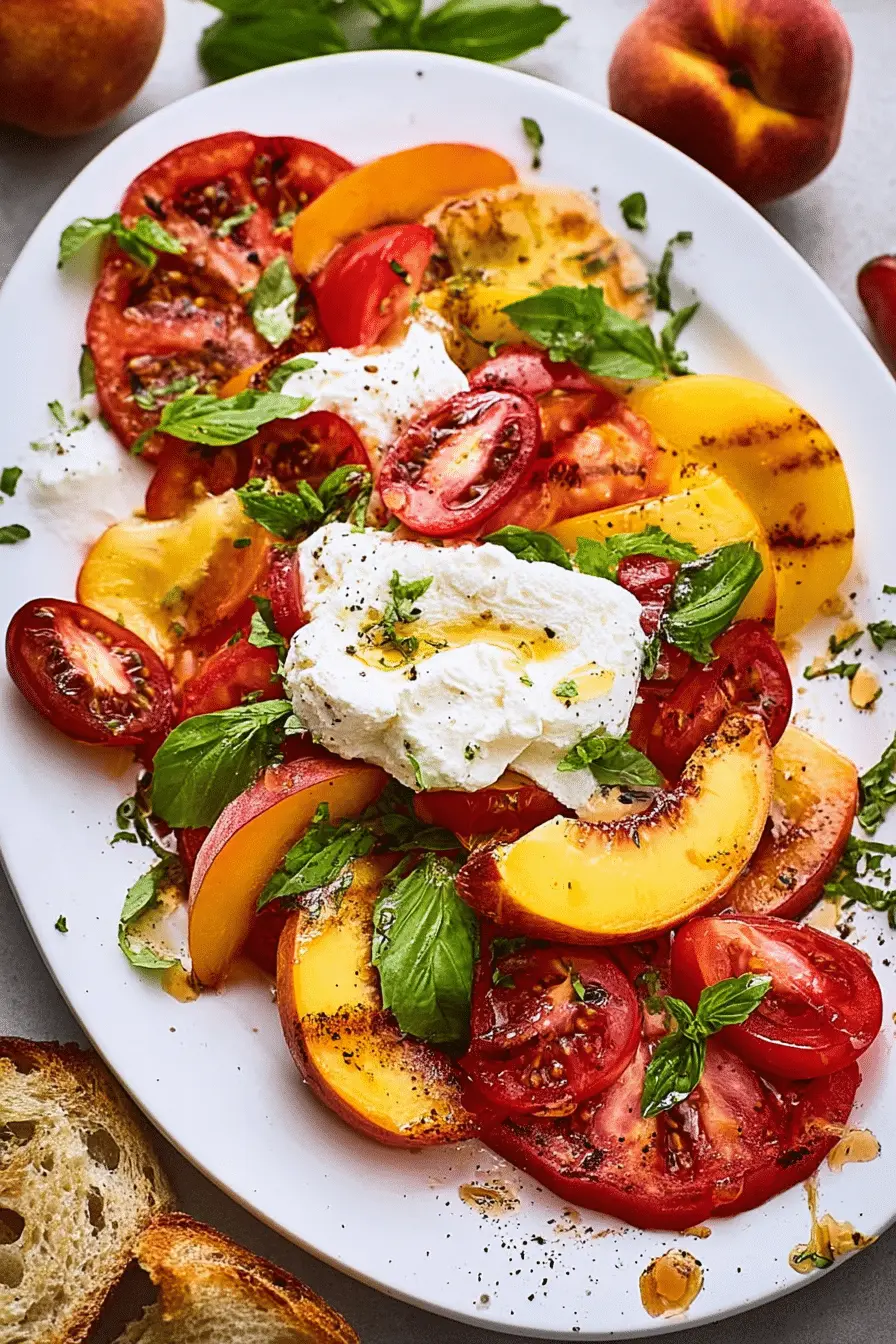
Sensory notes: visually the platter looks like summer—deep reds, apricot oranges, and a creamy white center. Aromatically, fresh basil and ripe peaches are the first things you notice; texturally, you get silky burrata against juicy fruit and a faint snap from grape tomatoes.
Everything You Need for Tomato Peach Burrata Salad
Gather the freshest produce you can find and a good-quality olive oil and balsamic glaze. Below I talk through key ingredients so you know what to reach for and what to swap if needed.
- * Heirloom tomatoes – Choose firm-yet-juicy varieties for color and complex tomato flavor; different colors add visual appeal.
- * Peaches – Ripe and fragrant peaches bring sweetness and juiciness; use freestone when possible for easy slicing.
- * Grape or cherry tomatoes – Add a burst of concentrated tomato flavor and a bit of texture contrast.
- * Burrata – The creamy centerpiece; it creates a rich, silky mouthfeel that binds the salad.
- * Olive oil – Use a fruity, extra-virgin olive oil for aroma and mouth-coating richness.
- * Balsamic glaze – A sweet, concentrated balsamic finish that balances the fruit’s acidity.
- * Fresh basil – Bright, aromatic leaves to garnish and lift the whole dish.
- * Kosher salt & black pepper – Essential for seasoning and highlighting the sweetness of the fruit.
- * Grilled or crusty bread (optional) – For scooping the cheese and juices; a nice serving companion.
For another way to enjoy contrasting textures with peaches, you can pair elements from a crisp cucumber-tomato salad into this one: cucumber tomato salad.
How to Pick Ripe Peaches and Heirloom Tomatoes
Picking the right fruit makes the salad. I always check peaches and heirlooms the same way: gentle press, aroma, and weight.
- Peaches should yield slightly to gentle pressure and smell sweet and floral at the stem end. A fragrant peach will translate to a sweet bite in the salad.
- Heirloom tomatoes should feel heavy for their size, with smooth, unblemished skin. Avoid ones with deep cracks or watery spots.
- Seasonality matters: the ripest, most flavorful peaches and tomatoes arrive in mid to late summer — when available, they need minimal seasoning.
Burrata Handling: The One Step That Makes It Creamy
Burrata responds to respect: handle it gently, remove excess liquid, and serve it close to room temperature for the ideal texture.
- Drain burrata well in a fine-mesh sieve and pat the exterior dry with a paper towel so it doesn’t water down the salad.
- Keep the ball whole until plating; then use a sharp knife to score the top and pull the outer shell aside so the creamy interior spills onto the fruit.
- Let burrata sit at room temperature for about 15–20 minutes before serving so the interior is silky rather than firm.
How to Make Tomato Peach Burrata Salad (Step-by-Step)
- Slice heirloom tomatoes on a bias and arrange them on a large serving platter to create the salad base, leaving room in the center for burrata.
- Slice peaches into wedges and tuck them between tomato slices so color and sweetness are evenly distributed.
- Scatter halved grape or cherry tomatoes over the arrangement for pops of concentrated flavor and additional texture.
- Place the drained burrata in the center, then score the top and gently open it so the creamy interior spills onto the fruit.
- Season the entire platter with kosher salt and freshly ground black pepper right before finishing so juices combine with the seasoning.
- Finish with a drizzle of good olive oil and a small amount of balsamic glaze, then scatter torn basil leaves over the top.
- Serve immediately with grilled or toasted bread for scooping; for a Caprese-style reference on plating, this approach borrows the same layering logic as a classic Caprese salad: Caprese salad.
Dressing and Drizzle: Olive Oil, Balsamic, and Seasoning Tips
The finishing drizzle is small but crucial. I prefer a simple approach so the fruit and cheese shine through.
- Use a fruity extra-virgin olive oil—you want aroma and mouth-coating body, not bitterness.
- Apply balsamic glaze sparingly; its concentrated sweetness should complement, not overwhelm. A good rule of thumb is a 3:1 visual balance of olive oil to balsamic glaze when finishing the platter.
- Season with salt first, then pepper. Salt brings out the peaches’ sweetness and the tomatoes’ acidity—start light and taste as you go.
- If you prefer, finish with a light sprinkle of flaky sea salt at the very end for a bright crunch against the creamy burrata.
Pro Tip for Tomato Peach Burrata Salad: Serve at Room Temperature for Best Flavor
Serving temperature changes everything. I always leave the sliced fruit and burrata to rest at room temperature for a short while before plating.
- Let sliced peaches and tomatoes sit at room temperature for about 10–20 minutes so juices bloom and aromatics become more expressive.
- If you must chill, store components separately and bring them together shortly before serving so the burrata doesn’t seize up from cold.
- Pair this salad at room temperature with grilled corn on the cob for an ultimate summer meal experience: grilled corn on the cob.
How to Store, Make-Ahead, and Serve Leftovers
I recommend assembling this salad right before serving, but here are practical steps if you need to prep ahead or keep leftovers fresh.
- Make-ahead: Slice tomatoes and peaches and store them separately in airtight containers in the refrigerator. Keep burrata chilled in its liquid until 15–20 minutes before serving; then drain and bring it to room temperature.
- Storage: Leftover assembled salad will release juices. If you have leftovers, remove the burrata, store it in fresh liquid or a lightly oiled container, and keep sliced fruit in a separate airtight container.
- Freshness guidelines: Use prepared fruit within 24 hours for best texture; burrata is best eaten the day it’s opened, but if stored properly it can keep for 1–2 days in the refrigerator.
- Re-serving: When serving leftovers, bring components to room temperature and re-season lightly—salt and a quick drizzle of olive oil revive flavors.
Simple Variations, Cheese Swaps, and Wine Pairings
Keep the core idea—fruit, tomato, creamy cheese—and customize to your mood or pantry. Below are quick, scannable options I often rotate through.
- Variations – Use nectarines instead of peaches for a slightly firmer bite; add thinly sliced red onion or a handful of arugula for peppery contrast; fold in toasted nuts for crunch.
- Cheese swaps – If burrata isn’t available try fresh mozzarella for mild creaminess, or crumbled goat cheese for tang and a firmer texture.
- Wine pairings – Light, aromatic white wines and rosés work beautifully: a dry Rosé, a unoaked Chardonnay, or a crisp Pinot Grigio will complement the fruit and the cheese without overpowering them. For a slightly richer experience, choose a light-bodied Vermentino or a chilled Grüner Veltliner.
For a refreshing twist that brings cucumber’s crispness into the mix, try adding elements from a cucumber tomato salad into this plate: cucumber tomato salad.
Frequently Asked Questions
How can I pick the best peaches and heirloom tomatoes for this salad?
Look for peaches that are slightly soft to the touch and fragrant. For heirloom tomatoes, choose ones that feel heavy for their size and have smooth, unblemished skin. Both should be in-season for the best flavor!
Can I make the salad ahead of time?
While it's best enjoyed fresh, you can prepare the ingredients ahead of time. Store the sliced fruits separately and assemble the salad just before serving to maintain freshness.
What is burrata and how should I handle it?
Burrata is a fresh Italian cheese made from mozzarella and cream. Handle it gently to preserve its creamy texture; it’s best served at room temperature for maximum flavor!
What should I serve with this salad?
This salad pairs beautifully with crusty bread, like grilled or toasted bread. It also goes well with light meats or as a refreshing appetizer at parties.
Can I substitute the burrata with another cheese?
Yes, if you're unable to find burrata, fresh mozzarella or goat cheese can work as delicious alternatives, although the texture and flavor will be slightly different.
Recipe Card
The Summer Salad I Make All Season: Tomato Peach Burrata Salad
- Prep
- 15 min
- Total
- 30 min
- Serves
- 6
- Calories
- 130 kcal
- Carbs
- 8.00 g
Ingredients
- 2 largeheirloom tomatoes (sliced)
- 2 to 3ripe peaches (sliced)
- 1.5 cupsgrape or cherry tomatoes (halved)
- 8 ouncesburrata cheese (drained and patted dry)
- —Kosher salt (to taste)
- —freshly ground black pepper (to taste)
- —Olive oil (for drizzling)
- —Balsamic glaze (for drizzling)
- —Chopped fresh basil (for garnish)
- —Grilled bread (for serving, optional)
Instructions
- 1
Arrange the sliced tomatoes, peaches, and grape tomatoes on a large platter. Break apart the ball of burrata cheese and arrange it on top of the salad. Season with salt and pepper.
- 2
Drizzle with a little olive and balsamic glaze. Garnish with fresh basil. Serve with grilled bread, if desired.
You might also like
Reviews
Be the first to review this.