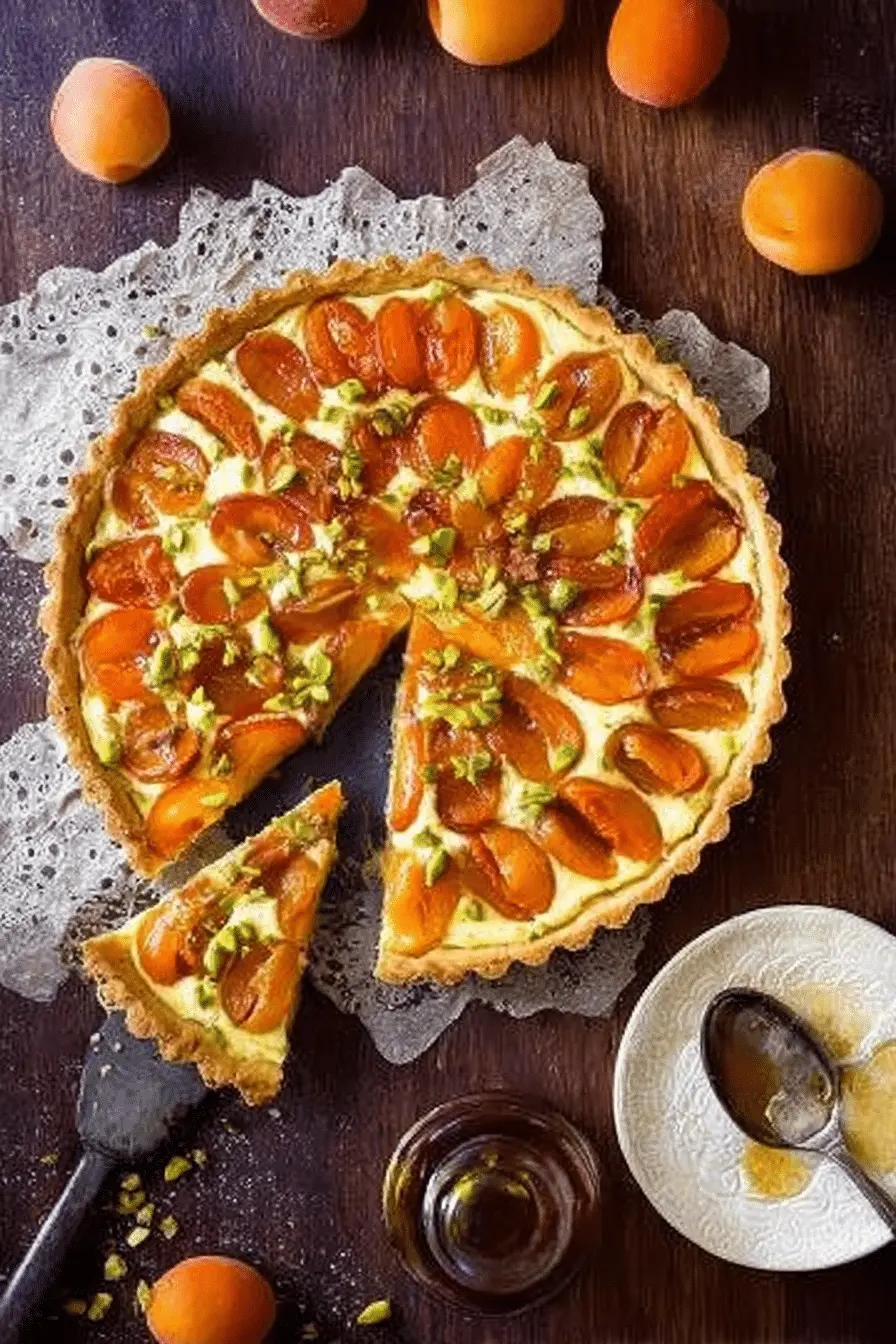
The Tart I Bring to Every Summer Party: Apricot Crème Fraîche Tart
- Prep
- 20 min
- Cook
- 60 min
- Total
- 90 min
- Serves
- 8
- Calories
- 329 kcal
- Carbs
- 33.00 g
Introduction
I remember the first time I served this tart at a backyard dinner: the kitchen went quiet as my friends leaned in to admire the glossy apricots and the pale, silky custard. I still get that same small thrill when I lift the tart out of the fridge — the pistachio-fringed edge, the floral honey sheen across the fruit. In my kitchen this tart became the dessert I turn to when I want something that looks like a showstopper but lets me stay present with my guests.
I make it often in summer because it highlights the season cleanly: ripe apricots, browned pistachios, and crème fraîche that keeps the custard bright instead of cloying. I like that much of the work happens ahead — the crust can be made and chilled, the fruit prepped, and the custard mixed while you finish arranging other dishes for the table.
Over the years I’ve fine-tuned the technique so the custard stays silky and the pistachio crust keeps a pleasant crunch. Below I’ll walk you through everything you need, the small technical steps that matter, and a few ways to adapt the tart for dietary needs while keeping the flavors true to summer.
Why this Apricot Crème Fraîche Tart is Perfect for Summer Entertaining
This tart is a centerpiece in more ways than one. Visually, the warm orange of halved apricots set against a pale, pillowy crème fraîche custard makes for an elegant plate that photographs beautifully and draws guests to the table. The aroma — lightly toasted nuts, honey, and the bright, almost floral scent of ripe apricots — fills the room without overpowering conversation.
It’s also forgiving for hosts: much of the work can be done ahead and it keeps well refrigerated, so you can move through the final oven time while your guests finish their mains. The contrasts of texture — crisp pistachio crust, tender fruit, and smooth custard — feel refined but approachable, which is exactly what I aim for when I’m entertaining.
Everything You Need for Apricot Crème Fraîche Tart
Gather a few tools and prioritize good produce; the technique is straightforward, but the quality of ingredients is what makes the tart sing.
- Tools – Food processor (for a fast, even nutty crust), an 8 or 9-inch tart pan with removable bottom (for neat presentation), a rimmed baking sheet (for safe handling in and out of the oven), a whisk, and a small bowl for the custard.
Ingredients and why each one matters:
- Powdered sugar – Gives the crust just a touch of sweetness and helps with texture when processed.
- Fine sea salt – Balances sweetness and brings out the nutty flavor.
- All-purpose flour (or a gluten-free substitute) – Provides structure to the crust; almond flour is a lovely gluten-free option that pairs well with pistachios.
- Raw, unsalted pistachios – The star of the crust: their flavor and color define the tart’s character. Toast lightly for more depth.
- Cold unsalted butter – Cold fat creates a flaky, tender crust when pulsed briefly in the processor.
- Almond extract – A whisper of almond lifts the apricot flavor without competing.
- Fresh apricots – Choose ripe-but-firm fruit so slices hold their shape while baking.
- Crème fraîche – Gives the custard creaminess and a faint tang that keeps the filling bright; sour cream or full-fat Greek yogurt will work in a pinch.
- Egg yolk – Adds richness and helps the custard set to a silky finish.
- Honey – Sweetens the custard and doubles as a finishing glaze for shine and floral note.
The Secret to a Silky Crème Fraîche Custard
The custard’s texture comes down to temperature control and gentle handling. Crème fraîche brings fat and tang that stabilize the custard so it sets without curdling or becoming grainy.
- Whisk the egg yolk thoroughly so it becomes pale and slightly aerated — that helps the custard feel light once baked.
- Temper the crème fraîche and egg mixture gently: if you need to warm the mixture slightly, do it slowly and avoid high heat which can cause splitting.
- Bake until the custard just holds when you give the pan a gentle shake; it should wobble like a barely-set gelatin in the center. Carryover heat will finish the set as it cools.
- Visually, aim for a smooth, pale surface with tiny apricot juices around the fruit; the aroma should be creamy with a hint of honey and warm stone fruit.
How to Get a Crisp Pistachio Tart Crust Every Time
A crisp crust is a contrast that makes the tart feel elevated. The technique is simple but precise: keep ingredients cold, work quickly, and give the dough a chance to rest before baking.
- Use cold butter in small chunks and pulse briefly in the food processor so pieces remain pea-sized — this creates flakiness without overworking the dough.
- Pulse until the mixture begins to clump; you want a uniform, sandy texture that will press together cleanly.
- Press the dough into the pan firmly and make neat, square corners. If the dough warms and becomes sticky, chill the whole pan for a few minutes before continuing.
- Dock the bottom with a fork and freeze briefly before blind baking; this reduces shrinking and helps the sides hold their shape.
- Bake the unfilled crust until it looks dry and is very pale golden around the edge. If it slips down while baking, use the back of a spoon to push it back up the sides while warm.
- For more visual step-by-step techniques, check this guide on how to make a pistachio tart crust.
For more detailed techniques, check out our guide on how to make a pistachio tart crust.
Where to Find the Best Apricots (Seasonal Sourcing Tips)
I buy apricots at farmers' markets whenever I can — they show off the range of varieties, and farmers can tell you when a particular orchard’s fruit is at peak. Look for fruit with even color (no green undertones), a slight give at the stem, and an apricot perfume when you bring it close to your nose.
Smaller, freestone apricot varieties tend to be more intensely flavored and hold up well in tarts. If you’re buying at a grocery store, choose firmer fruit and let it ripen at room temperature for a day or two so slices hold their shape in the tart.
Pairing idea: for a summer menu that repeats the apricot theme, try our Easy Apricot Glazed Chicken to bridge savory and sweet at the table.
For a delightful summer meal, pair your tart with our Easy Apricot Glazed Chicken that highlights the same fresh flavors.
How to Make Apricot Crème Fraiche Tart (Step-by-Step)
Below are the practical steps I follow in my kitchen. Read through them once before you begin so you have a sense of timing; I speak directly to you here so the sequence is easy to follow while you work.
- Preheat your oven and position a rack in the lower third so the crust and custard bake evenly.
- Make the crust: pulse the powdered sugar, salt, flour, and pistachios in the food processor. Add cold butter and almond extract; pulse until the dough forms coarse clumps. Dump and press into the tart pan, forming clean corners.
- Dock the crust bottom with a fork and freeze the shell until firm. This prevents slump when baking.
- Place the pan on a rimmed baking sheet and bake the unfilled crust until it looks dry and is pale golden around the edges; rotate partway for even browning.
- Halve and pit the apricots, then arrange them cut-side up in concentric circles in the warm shell, working from the outside in.
- Whisk together the crème fraîche, the egg yolk, and honey until smooth and pale; pour the mixture gently over the apricots so the fruit is evenly coated.
- Bake the tart until the custard is set but still slightly soft in the center when you jiggle the pan — the center should barely wobble. Rotate halfway for even baking.
- Let the tart cool completely on a rack; if the custard is still too soft, chill it until fully set.
- Just before serving, drizzle with more honey and scatter chopped pistachios atop. To remove the tart sides neatly, place the tart on an inverted bowl and ease the ring away.
Troubleshooting
- If the crust slipped down during baking, press it back up while warm and reduce the oven temperature slightly next time to avoid rapid shrinkage.
- If the custard appears cracked or curdled, the oven was likely too hot — lower the temperature and extend the bake time to set gently.
- If excess liquid pools from the fruit, blot apricot halves lightly before arranging or choose slightly less-ripe fruit that will hold shape.
- If your crust softens after refrigeration, rest the tart at room temperature for a few minutes before serving to revive some crunch.
Pro Tip for apricot creme fraiche tart: Make it gluten-free or dairy-free
I often adapt this tart for guests with dietary needs. Here are reliable swaps and how they change the finished dessert.
- Gluten-free crust – Use finely ground almond flour with a small portion of a neutral gluten-free binder (like a rice or oat flour). The crust will be more tender and nut-forward; press firmly and chill well before baking to help it hold shape. For another crowd-pleasing GF dessert, try this gluten-free strawberry shortcake.
- Dairy-free custard – Replace crème fraîche with cultured coconut cream or a blend of full-fat coconut milk and a dollop of unsweetened plant-based yogurt for tang. The texture will be slightly silkier and carry a subtle coconut note; add a touch of lemon to brighten if needed.
- Vegan option – For a non-egg set, a silken tofu-based filling blended with a touch of lemon and plant-based yogurt can emulate the mouthfeel; expect a denser set and adjust sweetness and acid to balance the apricots.
- Honey alternatives – Use maple syrup or agave for vegan guests; both provide a different nuance — maple gives a deeper caramel note, agave keeps things neutral.
For a gluten-free option, you might enjoy our Gluten-Free Strawberry Shortcake that caters to dietary needs.
How to Store, Chill, and Serve Your Tart (Make-Ahead Tips & Variations)
This tart is excellent for make-ahead entertaining. I usually bake it the morning of the event and let it chill for a few hours so flavors settle and the custard firms. The crust will soften slightly in the fridge — I find that acceptable, but if you prefer more crunch, do the crust and blind-bake it earlier in the day and fill just before serving.
- Short-term storage – Keep the tart covered in the refrigerator for up to three days. Bring to room temperature before serving for the best texture and aroma.
- Make-ahead workflow – Bake the crust and cool it completely, store the sliced apricots wrapped for a few hours, then assemble and bake the custard the day you plan to serve.
- Serving – Serve chilled or at cool room temperature. A light dollop of extra crème fraîche or a scoop of vanilla ice cream pairs beautifully.
Variations
- Swap apricots for halved nectarines or white peaches for a different summer profile.
- Add a thin smear of apricot jam on the baked crust before arranging fruit for extra glaze and fruit intensity.
- Stir a small amount of finely grated citrus zest into the custard for a brighter finish.
If you're interested in other summer dessert ideas, try our delicious Strawberry-Rhubarb Pie.
Frequently Asked Questions
Can I use fresh frozen apricots for this tart? While fresh apricots are ideal for their texture and flavor, you can use thawed frozen apricots. Just make sure to drain any excess liquid before adding them to the tart.
What can I substitute for crème fraîche? If you don’t have crème fraîche, you can substitute it with sour cream or Greek yogurt, though the flavor and texture may be slightly different.
Is the tart gluten-free? Yes! You can make this tart gluten-free by using the almond flour pistachio crust mentioned in the recipe.
How do I prevent the tart crust from getting soggy? To keep the crust crisp, make sure to bake it until it’s dry and lightly golden before adding the filling. You can also freeze it for a short time before baking.
How long can I store the tart? The tart can be stored in the refrigerator for up to three days. Just remember that the crust may soften slightly over time.