


When asparagus starts appearing at the market I always want to celebrate it in a way that feels both relaxed and a little bit showy. I make this asparagus galette with jammy leeks and ricotta when I want something that reads elegant on the table but doesn’t tie me to the stove; it’s the kind of dish I can slice and leave on the board while guests mill about. In my kitchen the scent of butter-softened leeks and a single sheet of golden, flaky crust has become synonymous with spring entertaining.
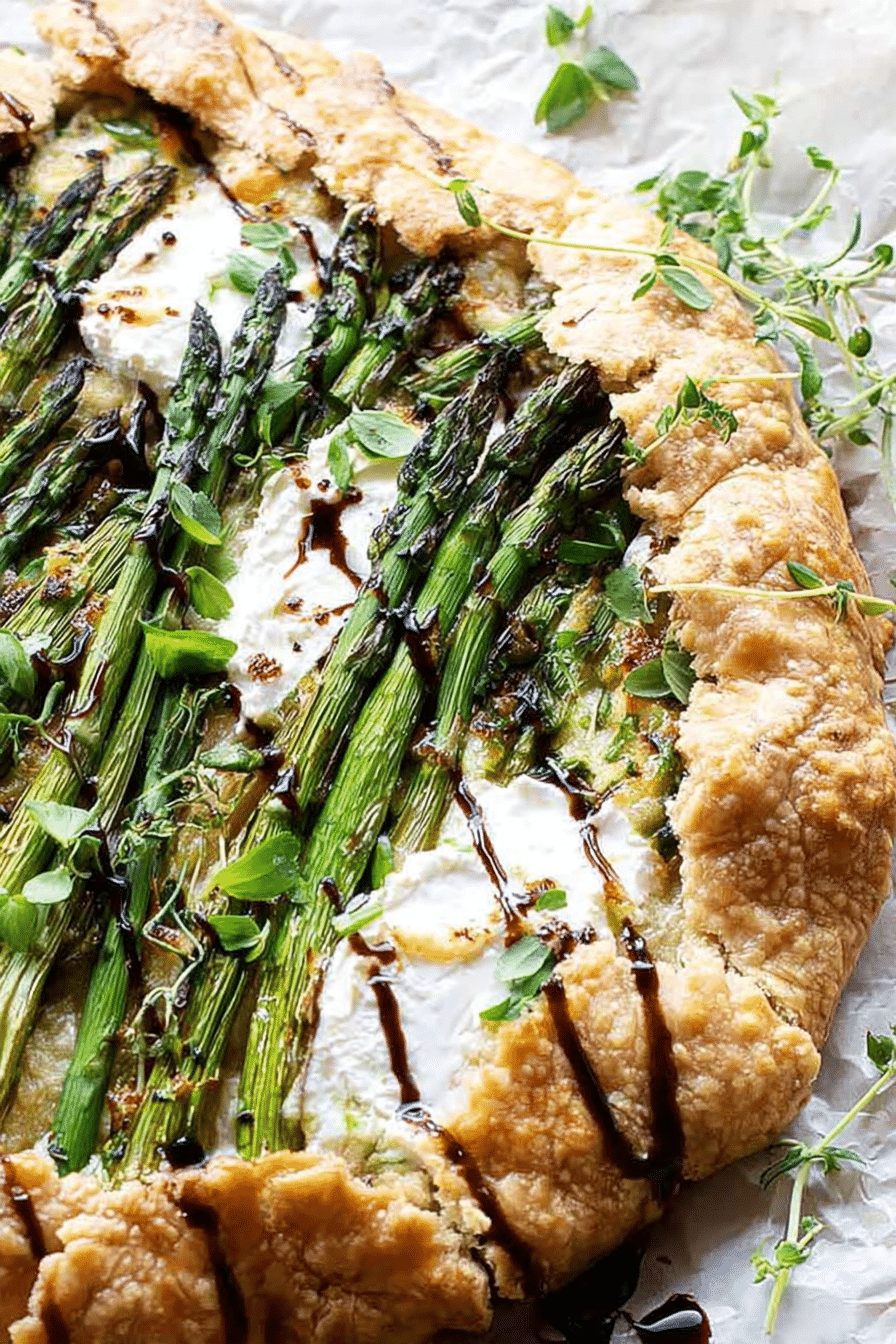
I like to think of this galette as raucous celebration disguised as something rustic. The bright green asparagus provides a crisp, vegetal counterpoint to the soft, creamy ricotta and the head-turning little pockets of burrata that I tear over the top right when it comes from the oven. The leeks carry the dish—slow-cooked to jammy sweetness they make the whole thing sing.
I’ve served this galette warm straight from the oven and at room temperature on long afternoon tables; both work beautifully. In the notes below I share everything I’ve learned about making a crust that flakes reliably, getting perfectly jammy leeks without browning, and transporting or reheating the galette so it still looks like you planned it that way.
Everything You Need for Asparagus Galette with Jammy Leeks and Ricotta
Gathering strong ingredients and the right tools makes this galette effortless. Think freshness for produce, cold butter for texture, and cheeses that give creamy lift.
- All-purpose flour / whole-grain pastry flour – Provides structure and a little nutty color; you can swap entirely to a pastry flour for a lighter crumb or use a gluten-free flour blend if needed (see swaps below).
- Cold butter – The single most important ingredient for flakiness; keep it cold so you get distinct layers in the crust.
- Ice water – Just enough to bring the dough together; too much makes it gummy, so add sparingly.
- Leeks – The aromatic backbone; when cleaned and cooked slowly they become sweet and jammy rather than sharp.
- Olive oil and butter – Butter for cooking the leeks gives richness; a good olive oil brushed on the dough adds flavor and sheen.
- Ricotta – The creamy base layer that keeps the filling lush; mascarpone or a blended cottage cheese are fine substitutes if you prefer.
- Parmesan or Pecorino – Adds savory depth and a little saltiness; reserve a portion to brown on top.
- Asparagus – Choose pencil-thin to medium stalks for even cooking and an elegant look.
- Egg wash – Gives the crust that golden, glossy finish.
- Burrata – Optional but transformative: scattered on hot slices it creates little molten centers; fresh mozzarella works in a pinch.
- Finishing touches – Balsamic glaze for brightness, flaky sea salt for crunch, and a twist of black pepper to balance richness.
- Tools – Food processor for quick dough, rolling pin, parchment paper for rolling and transferring, baking sheet or pizza pan, and a salad spinner to wash leeks thoroughly.
For those watching nutrition, a typical serving lands around mid-five-hundreds calories with a generous amount of fat from butter and cheeses and a satisfying hit of protein. If you want to trim it down, use part-skim ricotta and reduce the butter in the crust slightly; the asparagus and leeks still shine.
How to Make Asparagus Galette with Jammy Leeks and Ricotta (Step-by-Step)
- Prepare the dough: pulse your flours and cold diced butter in a food processor until the mix looks like coarse sand with some larger pea-sized bits.
- Add just enough ice water and pulse until the dough barely holds together when squeezed—it’s okay if it’s slightly shaggy; you don’t want a smooth, overworked ball.
- Form the dough into a flat disk between parchment sheets and chill for at least one hour; this resting time firms the butter and hydrates the flour for a flakier crust.
- While the dough chills, clean and thinly slice the white and light-green parts of the leeks, wash thoroughly in a salad spinner to remove grit, and dry well.
- Sauté the leeks in butter over medium heat with a pinch of salt, stirring frequently; cook gently until they are soft, jammy, and fragrant but not browned—about ten minutes depending on heat and pan.
- Bring the dough to room temperature briefly, then roll it between parchment into a roughly 14-inch circle; transfer, still on the bottom parchment, to a baking sheet or pizza pan.
- Brush the dough interior with olive oil, leaving a generous border, then spread ricotta evenly over the center and sprinkle with half your grated hard cheese.
- Spoon the warm leeks over the cheeses in an even layer, lay asparagus spears across the top, and finish with the remaining grated cheese.
- Fold the outer edge of the dough up in sections to create a rustic crust, pressing gently so the dough adheres and the filling is contained.
- Brush the crust with beaten egg mixed with a little cream or milk, then bake at a moderate-high temperature until the crust is deeply golden—about forty minutes.
- When the galette comes from the oven, tear or cut the burrata and distribute it immediately so it softens into the hot filling, then drizzle with balsamic glaze and scatter flaky sea salt and black pepper before slicing.
The Secret to a Flaky, Rustic Galette Crust
Flake comes down to temperature and gentleness. I learned the hard way that warm hands and impatient rolling collapse the little butter pockets you need for lift—when that happens the crust turns dense rather than layered.
- Keep everything cold: butter straight from the fridge, chilled dough, and brief handling. If the butter starts to soften, pop the dough back into the fridge for ten minutes.
- Minimal handling is your friend: pulse in a food processor, bring the dough together quickly by hand, and roll only until you have a workable circle.
- Chill before baking if the dough feels soft after assembly; a short rest firms the butter and prevents excessive spreading.
- Use parchment to roll and transfer the dough—this avoids tears and keeps the crust intact as you move the galette to the oven.
How to Get Jammy, Sweet Leeks Every Time
The difference between sharp, fibrous leeks and ones that taste like a gentle onion jam is all in the clean and the cook. I always taste as I go and let the leeks tell me when they’re ready.
- Slice thin and wash thoroughly: leeks trap grit between layers, so separate and spin them until the water runs clear.
- Cook slowly over medium heat with butter and a pinch of salt—maintain a gentle sizzle so they soften without browning.
- Stir frequently and adjust the heat down if you see color creeping in; you want tender, translucent ribbons, not browned bits.
- Taste and season near the end so you can balance salt and add a little pepper; the richness of ricotta and parmesan will also contribute saltiness, so be cautious.
Presentation Tips: Plating and Garnishing for a Party-Ready Tart
When I bring this galette to a party I focus on contrast: bright green asparagus, glossy golden crust, and the soft white of burrata. Little finishing touches make it feel intentional rather than rustic-for-rustic’s-sake.
- Cut neat wedges with a sharp knife and wipe the blade between cuts for clean edges; arrange slices on a platter with overlapping corners for a composed look.
- Tear burrata directly over the hot tart so each wedge gets a molten pocket; a gentle drizzle of balsamic glaze in a couple of parallel lines adds visual drama and a hit of acidity.
- Scatter microgreens or small herb leaves (chervil, tarragon, or basil) for freshness and color contrast.
- Serve with simple sides: a mixed greens salad dressed with lemon vinaigrette brightens the plate—this pairing is a reliable crowd-pleaser.
- Wine pairing: choose a crisp white with good acidity (such as Sauvignon Blanc or a light, mineral Pinot Grigio) to cut the richness, or try a light-bodied unoaked Chardonnay.
Scaling Up: Serving a Crowd Without Losing Quality
Hosting a larger gathering? You can scale this recipe in ways that preserve flavor and texture—batch the parts that keep well and time your oven work so everything comes out beautifully.
- Make and chill several dough disks ahead of time; they refrigerate well for a few days and freeze for longer storage.
- Prepare the leek jam in a larger skillet and cool completely; it stores in the fridge and can be spooned onto galettes when assembling.
- If you’re baking multiple galettes, rotate pans halfway through baking and leave space between them for airflow; don’t overcrowd the oven.
- Hold finished galettes at room temperature on a wire rack; if you need to keep them warm, use a low oven (around 200°F / 90°C) for short periods but avoid prolonged heat that will soften the crust.
- Scale ingredient ratios linearly for multiple galettes, but keep an eye on seasoning—taste the leek mixture and ricotta blend as you multiply so salt and acid remain balanced.
Pro Tips for Asparagus Galette with Jammy Leeks and Ricotta: Make-Ahead, Freezing & Gluten-Free Swaps
Note to any reader or contributor: present the Pro-Tips, Troubleshooting, and Variations sections as bulleted lists for quick scanning. Below are the pro tips and practical swaps I use in my kitchen.
- Make-ahead: You can make the dough up to a week ahead and keep it chilled, or freeze disks for up to a month. The leek jam also keeps for several days in the fridge.
- Freezing: Freeze unbaked galettes wrapped tightly; bake from frozen, adding a few extra minutes to the bake time. For baked galettes, cool fully, wrap well, and freeze—reheat in a hot oven to revive crispness.
- Gluten-free crust: Use a commercial gluten-free all-purpose blend that contains xanthan gum, or make a shortbread-style crust with almond flour and a binder; expect a slightly different texture but excellent flavor.
- Vegan options: Swap ricotta for a well-seasoned cashew or tofu-based ricotta and use a plant-based butter for the crust; finish with a plant-based mozzarella if you want that creamy melt.
- Transporting: For potlucks, keep burrata separate and add it at the last minute; move the galette on its baking sheet to avoid a fussy transfer.
How to Store, Reheat, and Adapt This Galette
I often make a galette the day before a gathering and reheat it just before serving; the key is to protect the crispness of the crust while warming the interior.
- Fridge: Store leftovers tightly wrapped for up to 3–4 days; refrigeration keeps the filling safe but will soften the crust over time.
- Reheating: Reheat slices in a 350–375°F (175–190°C) oven until warmed through to regain crispness—avoid the microwave, which makes the crust soggy.
- Quick revive: For single slices, a hot skillet for a minute or two per side will crisp the bottom while warming the interior.
- Leftover ideas: Serve cold slices with a green salad for lunch, or top warmed wedges with a runny fried egg for breakfast or brunch.
User-Generated Content: Share Your Variations and Stories
I love hearing how other cooks put their stamp on this galette—whether you swap cheeses, fold in herbs, or add prosciutto for salt and texture. Share a photo of your version and a note about what you changed; small adjustments often yield inspiring results.
If you post on social, use a short hashtag so the community can find each other: try something seasonal and simple. Tell me what you tried and what you’d do differently next time—those stories help others tweak and improve their own galettes.
Frequently Asked Questions
Can I make the galette crust in advance?
Yes! You can prepare the crust ahead of time and refrigerate it for up to a week. Just remember to bring it to room temperature before rolling it out.
What can I substitute for ricotta cheese?
If you’re looking for alternatives, you can use mascarpone cheese or cottage cheese blended until smooth. This will give a similar creamy texture.
How do I know when the leeks are cooked perfectly?
Cook the leeks until they’re soft and jammy, which should take about 10 minutes over medium heat. They should be tender without browning, so keep an eye on them!
Can I freeze the asparagus galette?
Absolutely! You can freeze the galette either before baking or after. Just make sure it’s well-wrapped to prevent freezer burn, and bake it from frozen when you’re ready to enjoy it.
What sides pair well with this galette?
A light salad, such as a mixed greens salad with a lemon vinaigrette, complements the richness of the galette beautifully!
Asparagus Galette with Jammy Leeks and Ricotta
Ingredients
Equipment
Method
- Place the flours into the bowl of a food processor fitted with the blade.
- Add the cold diced butter and pulse until the mixture resembles coarse sand with some larger pea-sized pieces.
- Add two tablespoons of the ice water and process for a moment.
- Test to see if the dough holds together when you squeeze a bit with your hand. If not, add the remaining water and process again.
- Use your hands to quickly form the dough into a ball. Then flatten into a disk between two approximately 14-inch square pieces of parchment paper.
- Wrap in the parchment followed by a gallon-sized zip-top bag, and refrigerate for at least an hour (up to a week) before proceeding.
- Remove dough from fridge about 20 minutes before you want to roll it out.
- Preheat oven to 400° F with a rack in the center.
- Slice off and discard roots and dark green parts from leeks and cut white and light green parts in half lengthwise, then into thin half-moons.
- Wash and dry the leeks very well in a salad spinner to remove all grit.
- Melt butter over medium heat in a medium nonstick skillet, add leeks and salt, and cook, stirring frequently, until jammy and tender, about 10 minutes.
- While the leeks finish cooking, sprinkle a little bit of flour on each side of the dough and then replace the parchment.
- Using a rolling pin and turning the dough a quarter-turn clockwise every so often, roll the dough out between the parchment into a 14-inch circle.
- Remove the top sheet of parchment and slide the dough (still on the bottom sheet of parchment) onto a pizza pan or baking sheet.
- Brush the dough with the olive oil, leaving a 1 ½-inch border around the outside.
- Spread the ricotta evenly over the dough, still leaving a plain 1 1/2-inch border.
- Sprinkle half the grated cheese evenly over ricotta.
- Spoon the warm leeks over the cheeses in an even layer.
- Lay asparagus evenly over the leeks and sprinkle with remaining grated cheese.
- Working in 6 to 8 sections, fold the outer ring of dough over the filling to form a crust.
- In a small bowl, beat together the egg with the milk or cream and brush the mixture over the outer ring of crust.
- Bake for 40 minutes, until nicely browned.
- While tart is hot, cut or tear burrata into pieces and distribute over filling.
- Drizzle with balsamic glaze and sprinkle with flaky salt and freshly ground black pepper. Cut into wedges and serve warm or at room temperature.