

I fell in love with asparagus quiche the first spring I kept a stash of quick dough in my freezer and shoved it into the oven for a last-minute Mother’s Day brunch. In my kitchen this quiche became my go-to when I needed something that looked special but came together while I finished other dishes. I like the way the goat cheese breaks into little creamy pockets and how the asparagus keeps a bright snap against the silken eggs.
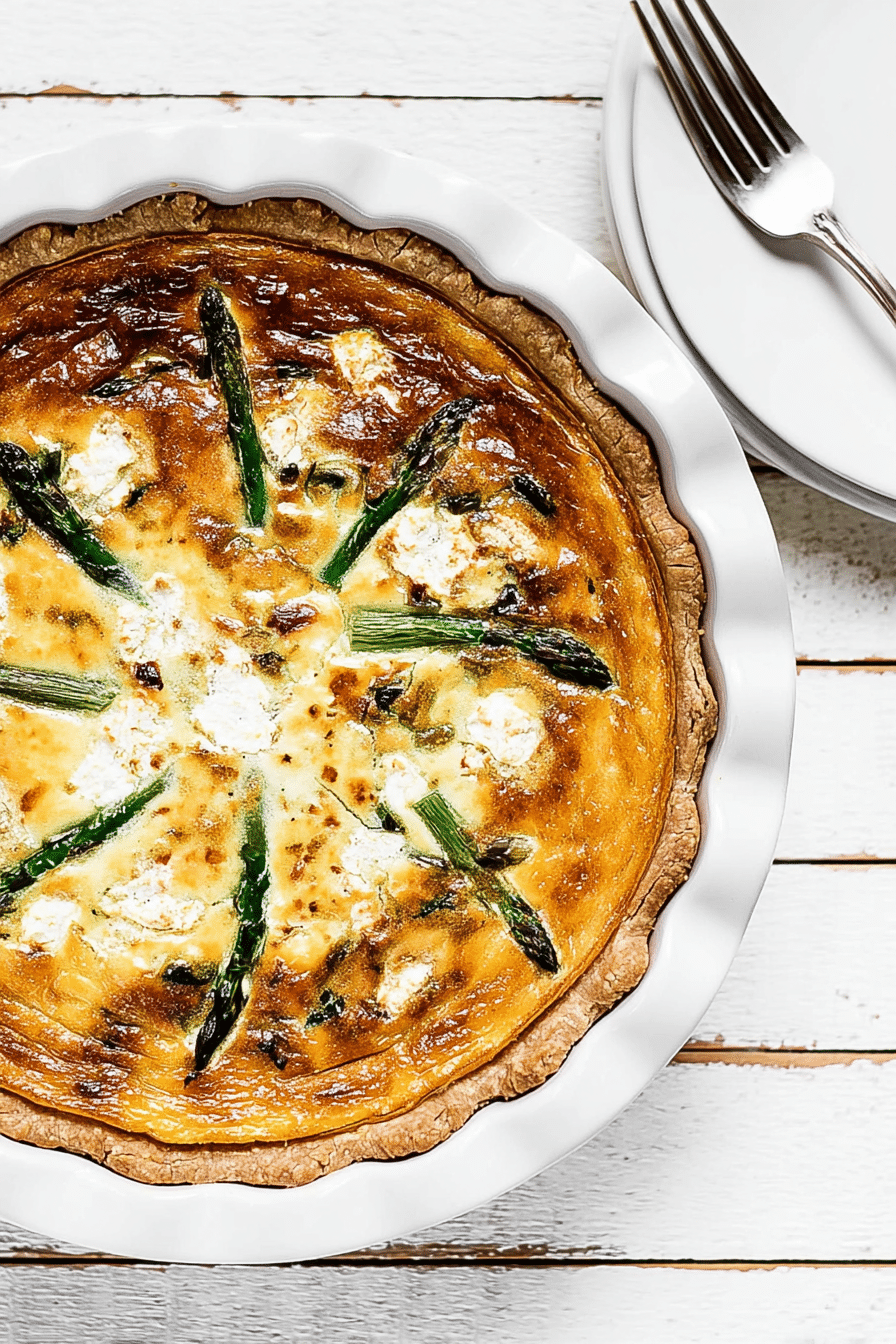
I keep one eye on timing: while the crust is blind-baking I brown the chicken sausage in a cast-iron skillet and sweat the onions until they’re soft and slightly sweet. That sizzle and the aroma of onions is the smell that tells me the filling will be worth it. Over the years I’ve learned which shortcuts keep texture and flavor intact—par-cooking asparagus just enough, draining cooked add-ins well, and letting the custard rest briefly before slicing.
For busy hosts, this quiche is forgiving. You can swap cheeses, use a store-bought crust, or build it crustless for a lower-carb crowd. I often assemble it the night before if I know guests will arrive early; it still bakes up with a golden rim and a creamy center when you pull it from the oven.
Below I walk you through everything I use, the small tricks that keep the crust crisp and the custard silky, and sensible make-ahead and variation ideas so you can tailor it to your table.
Fast Brunch: Why This Asparagus Quiche Works for Busy Hosts
This quiche sings for how quickly it comes together and how flexible it is for prioritizing time. Specific occasions where it shines: a spring Mother’s Day brunch, a casual weekend brunch with friends, a light dinner when you want something that travels well to a potluck, or a baby shower spread with mixed hot and cold dishes.
Practical reasons it works:
- Quick assembly: par-bake the crust while you handle the filling; while the crust cools you finish the sausage and onions.
- Ingredient flexibility: use what you have—swap the chicken sausage for mushrooms or spinach, or change the cheese to feta for a tangier finish.
- Balanced textures and flavors: crisp pastry edge, creamy custard, bright asparagus, and salty cheese make each bite interesting so guests won’t miss heavier brunch fare.
Everything You Need for Asparagus Quiche
Gather a handful of dependable ingredients and a few simple tools: a 9-inch pie or tart pan, a skillet for browning, a bowl for whisking the custard, and a small pot if you plan to blanch the asparagus. Fresh asparagus and room-temperature eggs make the biggest difference in outcome.
Ingredient notes:
- Asparagus – The star: choose firm, bright stalks. Thicker stalks can be halved lengthwise for tenderness; thin stalks work whole.
- Eggs – The binder and structure; bring to room temperature so the custard blends smoothly.
- Cream (or milk) – Adds silkiness to the custard; use higher fat for a richer mouthfeel or a lighter milk if you prefer.
- Cheese (goat cheese, feta, or Gruyère) – Use a tangy cheese like goat cheese for pockets of creaminess, or swap to a melting cheese for a uniformly creamy top.
- Chicken sausage (or substitute) – Cooked sausage adds savory heft; swap for mushrooms, spinach, or tempeh for vegetarian or plant-forward options.
- Onion or shallot – Sweated until soft to add sweetness and depth without overpowering the asparagus.
- Pie dough or alternative crust – Use a quick homemade dough, a store-bought crust, or omit for a crustless version.
- Salt, pepper, fresh herbs (chives, tarragon, dill) – Finish the custard with bright herbs to lift the flavors.
For another delicious option that uses similar ingredients and textures, consider the asparagus egg prosciutto tart, which pairs well with many of the same techniques described below.
The Secret to a Silky Custard (No Soggy Bottoms)
Concrete techniques, no fluff: the crust must be partially baked before the custard goes in, the ratio of eggs to dairy controls firmness, and moisture from vegetables must be released and drained. These three factors decide whether your slice keeps a crisp base or becomes a limp one.
- Blind-bake the crust until the edges are set and the base is just starting to color; weigh it down briefly with parchment and pie weights to prevent puffing, then remove the weights so the base crisps slightly.
- Whisk eggs and cream until smooth; more eggs will make a firmer slice, more cream makes a silkier, slightly looser custard—adjust based on how cleanly you want it to slice.
- Reduce vegetable moisture: either blanch asparagus quickly and pat dry, or sauté it first to concentrate flavor and release water; drain any cooked sausage or sautéed vegetables in a sieve to prevent pooling in the crust.
- Let the filled quiche rest at room temperature for a few minutes before baking so the custard settles and air bubbles escape for even cooking.
- Bake until the center is just set but still trembles slightly; the residual heat will finish the custard without overcooking it.
How to Prep Asparagus So It Stays Bright and Tender
- Trim the woody ends by snapping or cutting where the stalk naturally gives—the tender part is what you want in the quiche.
- If the stalks are thick, slice them lengthwise so they cook through quickly and stay tender; thin stalks can be left whole or halved.
- Blanch quickly in boiling water to lock in color, then shock in ice water to stop cooking and preserve that vivid green.
- Pat dry thoroughly on paper towels; any leftover water will leach into the custard and weaken the crust.
- Season lightly with salt and a sprinkle of black pepper or lemon zest before adding to the quiche to enhance asparagus’ natural flavor.
How to Make Asparagus Quiche (Step-by-Step)
- Preheat your oven and blind-bake your crust until the surface firms and the edges begin to color; remove weights so the base crisps slightly.
- Brown the sausage in a skillet until caramelized, then remove and let drain; in the same pan, soften diced onion until translucent and sweet.
- Arrange sliced sausage (or your chosen filling) evenly in the pre-baked crust, top with the cooked onions, and distribute par-cooked asparagus over the base.
- Whisk together eggs and cream until smooth, season with salt and pepper, then pour the custard over the fillings to just below the rim of the crust.
- Scatter chunks of goat cheese over the top so they melt into pockets while baking; bake until the center is nearly set with a slight jiggle.
- Remove and let the quiche rest briefly; if you like a final browned finish, pop it under a hot broiler for a minute or two while watching closely.
If you’re looking for other quiche ideas to inspire fillings and technique, check out the quiche florentine for variations that play well with spinach and richer cheeses.
Pro Tip for asparagus quiche: Make-Ahead, Crustless & Low-Carb Options
- Make-ahead (I do this often) – Assemble the quiche in the pan and keep it covered in the fridge for up to 24 hours before baking; this gives flavors time to meld and frees up your morning.
- Bake-ahead – Fully bake, cool, and refrigerate; rewarm in a low oven for about 10–15 minutes before serving so the custard warms evenly without becoming rubbery.
- Crustless / keto – Skip the crust and grease the pan well; reduce baking time slightly and add an extra egg or binder to help the quiche hold together.
- Almond or alternative crust – Use a nut-based crust for low-carb eaters; prebake it as you would a traditional crust to keep it from softening.
- Dairy-free swaps – Use a full-fat coconut milk or a creamy plant-based alternative plus a thickener like a bit of chickpea flour or silken tofu for structure.
Troubleshooting
- My crust is soggy – I usually blind-bake longer and make sure fillings are well-drained; excess moisture is almost always the culprit.
- The center is too runny – Return the quiche to the oven for a bit longer at a lower temperature so the custard firms without overbrowning the edges.
- Cheese didn’t brown – Finish briefly under the broiler, watching constantly for color without burning.
- Soggy vegetables – Cook them first and pat dry; if they still release water, give the assembled quiche a few minutes to rest before baking so liquids settle.
How to Store, Reheat, and Serve Leftover Asparagus Quiche
Store slices in an airtight container in the refrigerator for up to three days. For longer storage, wrap tightly and freeze for up to one month; thaw overnight in the fridge before reheating.
- Reheat in a low oven until warmed through to avoid a rubbery texture; a microwave works for quick single slices but can change the custard texture.
- To revive crispness, warm slices on a sheet pan in a hot oven for a few minutes to re-crisp the edge.
- Repurpose leftovers: cube and toss into a warm salad, chop into a breakfast hash, or warm gently and serve with a crisp green salad for a light dinner.
For more tips on maintaining quality, see our notes about leftover asparagus quiche storage and reheating.
Possible Variations: Vegetarian, Global Flavors & Dietary Swaps
- Vegetarian – Omit sausage and add sautéed mushrooms, spinach, or roasted peppers for savory depth.
- Vegan – Use silken tofu or a chickpea-flour batter with nondairy milk and a vinaigrette-style finishing drizzle for acidity.
- Mediterranean – Swap in feta, olives, sun-dried tomatoes, and oregano for a bright, herb-forward profile.
- Spanish-inspired – Use smoked paprika, chorizo (or smoked tempeh), and Manchego-style cheese for a bolder finish.
- Asian-leaning – Add a touch of miso to the custard, use sesame oil in the sauté, and finish with chopped scallions for umami complexity.
- Keto / low-carb – Go crustless or use an almond-flour crust; increase eggs slightly to help the slice hold together.
If you love asparagus in different formats, try an asparagus galette for a rustic, hands-on take that shares many of the same flavors.
Frequently Asked Questions
Can I use asparagus in a quiche? Absolutely! Asparagus adds a lovely flavor and texture to quiche, making it a perfect ingredient for this dish.
How do I prevent a soggy quiche crust? To avoid a soggy crust, make sure to pre-bake your crust and properly drain any excess moisture from your ingredients, like the asparagus or cooked sausage.
Can I make this quiche ahead of time? Yes! You can prepare the quiche and store it in the fridge for up to 24 hours before baking, or you can bake it and reheat it later for convenience.
What can I substitute for the chicken sausage? You can use any type of cooked sausage, or for a vegetarian option, try omitting the sausage or substituting it with vegetables like spinach or mushrooms.
How should I store leftover asparagus quiche? Store any leftovers in an airtight container in the refrigerator for up to 3 days. To reheat, simply warm it in the oven or microwave until heated through.