

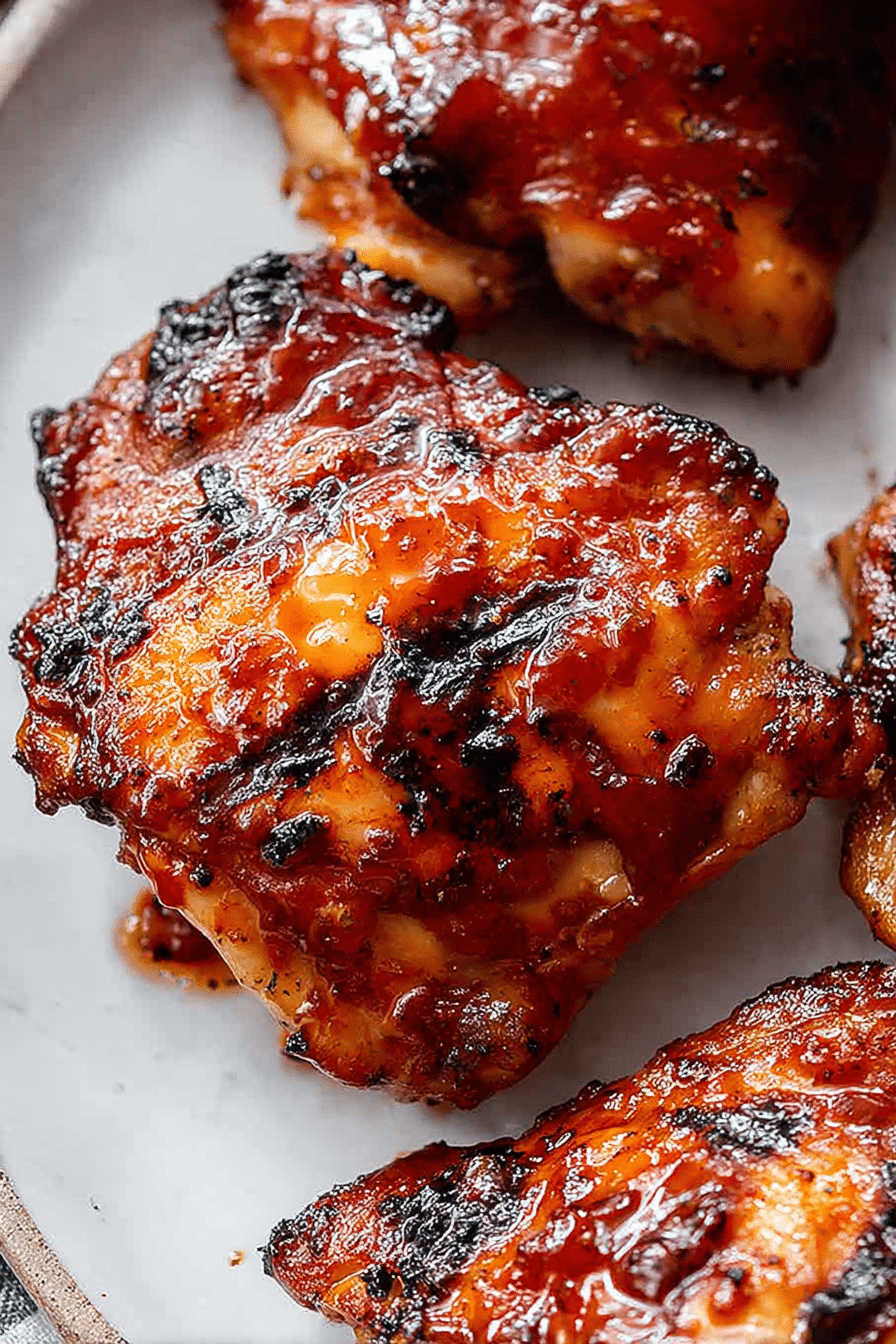
I make these BBQ Grilled Chicken Thighs any time I want hands-off, crowd-friendly grilling. Bone-in thighs give you more forgiving, juicy meat and the skin crisps up beautifully when you use a short dry-rub rest and finish with sauce at the end. I like this method because it’s fast, forgiving, and gets applause from people who expect perfect summer BBQ flavor.
The prep is simple: pat the thighs dry, rub with spices, let them sit while you set the grill, and then sear for a few minutes before moving to indirect heat. In my kitchen I can have these on the table in about an hour from start to finish, which makes them a perfect main for last-minute summer plans.
I’ll walk you through why thighs win for juiciness, what gear you actually need, quick grill setups for gas or charcoal, and why adding sauce late keeps the skin crisp. You’ll also find make-ahead and reheating tips so leftovers stay great.
Why These BBQ Grilled Chicken Thighs Are Perfect for Quick Summer Cookouts
BBQ Grilled Chicken Thighs are ideal for summer because thighs stay juicy under high heat and tolerate a bit more carryover cooking than breasts. The double-flavor approach—dry rub plus a late saucing—gives you both depth and a glossy, caramelized finish without soggy skin.
You’ll notice the aromas first: smoky char, toasted garlic, and warm chili notes riding above the grill. Visually, a good sear with dark grill marks and bronzed skin tells you the exterior is crisp while the interior stays tender. The short active prep time means you can spend more time with guests and less time babysitting the grill.
Everything You Need for BBQ Grilled Chicken Thighs
Lay everything out before you start so the cook goes smoothly. Use bone-in thighs for the best texture and flavor, but I note options below if you need swaps. For an oven alternative, consider this oven baked chicken thighs if weather or your grill schedule changes.
- Bone-in chicken thighs – Give more flavor and stay juicier than boneless; use boneless if you prefer faster cooking.
- Garlic & dry spices – A simple rub of savory and smoky spices seasons the meat and helps form a crust.
- BBQ sauce (your favorite) – Use a gluten-free labeled sauce if you need to avoid gluten; pick sweet, smoky, or spicy based on preference.
- Neutral oil – Helps the rub adhere and promotes even browning.
- Meat thermometer – Essential for safe, consistent results; don’t guess internal temperature.
- Long-handled tongs & grill brush – For safe flipping and clean grates to prevent sticking.
- Aluminum foil or a tray – For resting the thighs off the heat after cooking.
The Two-Step Flavor Trick: Dry Rub Then BBQ Sauce
Layering flavor is what makes these thighs stand out: the dry rub seasons the meat and creates a savory crust, while a late swipe of BBQ sauce adds gloss and concentrated sweetness without burning. Try one of the following marinade ideas to vary the profile:
- Smoky chipotle rub – Chipotle and chili give warmth and a faint smokiness that pairs well with darker, molasses-style sauces.
- Citrus-herb finish – Add a little lemon or orange zest to the rub if you want brighter notes; works well with thinner, vinegar-based sauces.
- Honey-mustard twist – Brush on a honey-mustard glaze late for a sweet-tangy finish that plays well with smoky char.
Grill Setup for Speed: Direct vs. Indirect Heat Explained
Setting up your grill correctly saves time and prevents flare-ups. Direct heat gives a quick sear and crisp skin; indirect heat lets the thighs finish cooking gently to the right internal temperature.
- Gas grill – Preheat one zone to medium-high and leave another burner off for indirect heat. Sear thighs skin-side down over the hot zone, then move to the cooler side to finish.
- Charcoal grill – Bank the coals to one side for a hot direct zone and use the opposite side for indirect cooking. Add a small handful of soaked wood chips if you want extra smoke aroma.
- Safety and flare-up control – Trim excess fat if you have large hanging flaps; keep a spray bottle of water handy for small flare-ups and move pieces away from flames if they flame up.
- Visual cues – You want a steady sizzle when searing and no open flames licking the skin while it finishes on indirect heat.
Timing and Internal Temp: When Thighs Are Truly Done
Use a thermometer to remove guesswork. Aim for the safe internal temperature and let carryover finish the job while the meat rests.
- Target temperature – Cook until the thickest part of the thigh reaches 165°F (75°C).
- Resting – Let thighs rest for about five to ten minutes; resting redistributes juices so the meat stays moist when you cut into it.
- Timing variables – Thin thighs and boneless pieces will reach temperature faster; charcoal grills can run hotter at the sear stage, so monitor closely.
- Visual doneness – Juices should run clear and the meat near the bone should no longer be pink.
How to Make BBQ Grilled Chicken Thighs (Step-by-Step)
- Pat each thigh dry with paper towels so the rub sticks and skin can crisp.
- Mix the dry spices in a small bowl and massage the rub over each thigh until evenly coated.
- Let the seasoned thighs sit for at least 30 minutes at room temperature, or longer in the fridge for deeper flavor penetration.
- Preheat your grill so you have both a direct high-heat zone and an indirect zone; aim for a searing surface temperature around 400°F for the initial sear.
- Place thighs skin-side down over direct heat and sear for 4–5 minutes until the skin browns and crisps; flip and sear the other side briefly.
- Move the thighs to indirect heat, skin-side up, and brush with a thin layer of BBQ sauce about 2–3 minutes before you expect them to reach temperature.
- Close the grill and let the sauce caramelize for a couple of minutes, watching closely so it doesn’t burn, then remove and rest for 5–10 minutes before serving.
Pro Tip for bbq grilled chicken thighs: Add BBQ Sauce Late for Crisp Skin
- I always wait until the last few minutes to add sauce so the sugars have time to caramelize without turning the skin gummy or burnt.
- Apply a thin coat of sauce, close the lid briefly, then add a second thin layer if you want more glaze; thick early layers trap moisture and prevent crisping.
- If you see flare-ups from sauce drips, move the thighs to indirect heat until flames subside.
- For extra snap, pat the skin dry again before the final glaze and keep the brush strokes light.
Troubleshooting
- If the skin is soggy, you likely added sauce too early; finish without sauce on that batch and glaze after resting next time.
- If the exterior chars too quickly, reduce direct heat or lengthen the indirect cooking time so the center can catch up without burning the outside.
- If the meat is still underdone near the bone, move to indirect heat and close the lid to allow even heat circulation.
How to Store, Reheat, and Make-Ahead BBQ Grilled Chicken Thighs
Leftovers are easy to manage and still tasty when reheated right. For meal prep, cook ahead and hold components separately for best texture.
- Cooling & storage – Cool to room temperature, then refrigerate in an airtight container for up to 3–4 days; freeze for longer storage.
- Reheating – Reheat gently in a low oven or covered skillet to retain moisture; a quick blast under a broiler or on the grill for a minute or two refreshes the skin.
- Make-ahead – You can apply the dry rub and refrigerate the thighs overnight to deepen flavor; only add sauce at serving time for best texture.
- Meal prep ideas – Slice chilled thighs for salads, wraps, or grain bowls to stretch a batch across meals.
Variations and Dietary Swaps
- Gluten-free – Use a gluten-free labeled BBQ sauce and check spice blends for hidden gluten-containing anti-caking agents.
- Low-carb – Skip sugary sauces or use a low-sugar BBQ sauce; the dry rub still gives plenty of flavor.
- Boneless option – Use boneless thighs for quicker cook times; watch internal temp closely to avoid drying out.
- Alternative proteins – Try the same rub-and-late-sauce approach on thick pork chops, firm tofu, or tempeh for different diets.
- Different flavor profiles – Swap the rub for a Mediterranean herb mix or use a sweet-and-spicy glaze for new twists. If you want a sweeter take, try an easy honey mustard approach.
Perfect Pairings: Side Dishes to Complement BBQ Grilled Chicken Thighs
Choose sides that contrast the rich, smoky thighs with crunch and brightness. Classic pairings like grilled corn, a crisp slaw, and potato salad work every time. Consider adding grilled wings as an appetizer and a zippy slaw to cut the richness—try serving grilled wings alongside as a starter and a cold slaw for balance.
- Grilled corn – Brush with butter and a squeeze of citrus to brighten the plate.
- Coleslaw – A crisp, acidic slaw refreshes the palate; try a vinegar-based slaw for contrast. For a ready recipe, pair with our best coleslaw recipe.
- Grilled vegetables – Zucchini, peppers, and asparagus add color and charred flavor.
- Light grain or salad – A simple herb salad or lemony couscous keeps the meal balanced and not too heavy.
- Appetizer idea – Consider serving grilled chicken wings as a starter to extend the BBQ spread.
Frequently Asked Questions
How long should I marinate the chicken thighs?
It’s best to let the chicken thighs marinate in the spice rub for at least 30 minutes. However, longer is always better for maximizing flavor!
What type of BBQ sauce should I use?
You can use your favorite kind of BBQ sauce! Whether it’s sweet, smoky, or spicy, choose one that you love for the best results.
What is the ideal internal temperature for cooked chicken thighs?
The internal temperature for cooked chicken thighs should reach 165°F (75°C) for safe consumption.
Can I use boneless chicken thighs instead?
Yes, you can use boneless chicken thighs! Just keep an eye on the cooking time, as they may cook a bit faster than bone-in.
How can I store leftover BBQ grilled chicken thighs?
Store any leftovers in an airtight container in the refrigerator for up to 3-4 days. Reheat them in the oven or microwave before enjoying!
BBQ Grilled Chicken Thighs
Ingredients
Method
- Begin by patting each chicken thigh with a paper towel to remove excess moisture.
- Mix garlic powder, chipotle powder, chili powder, paprika, black pepper, and salt in a small bowl.
- Pour spices over the chicken thighs and massage to coat evenly.
- Let chicken sit for at least 30 minutes to absorb flavors.
- Preheat grill to 400ºF with direct and indirect grilling space.
- Grill chicken skin side down over direct heat for 4-5 minutes.
- Flip chicken and cook for another 4-5 minutes.
- Flip one more time (skin up) and move to indirect heat.
- Add BBQ sauce to each chicken thigh and close the grill, cooking for 2-3 more minutes.
- Remove thighs from the grill, let rest for 5 minutes, and enjoy with more BBQ sauce.