

I’ve roasted more chickens in my kitchen than I can count, and this lemon herb method is one I come back to when I want reliably juicy meat and a skin that browns evenly. Over the years I learned which shortcuts cost me moisture, which steps produce the best browning, and why a simple herb-garlic butter makes a dramatic difference. I’ll tell you what worked for me, where I usually make mistakes, and how you can avoid them.
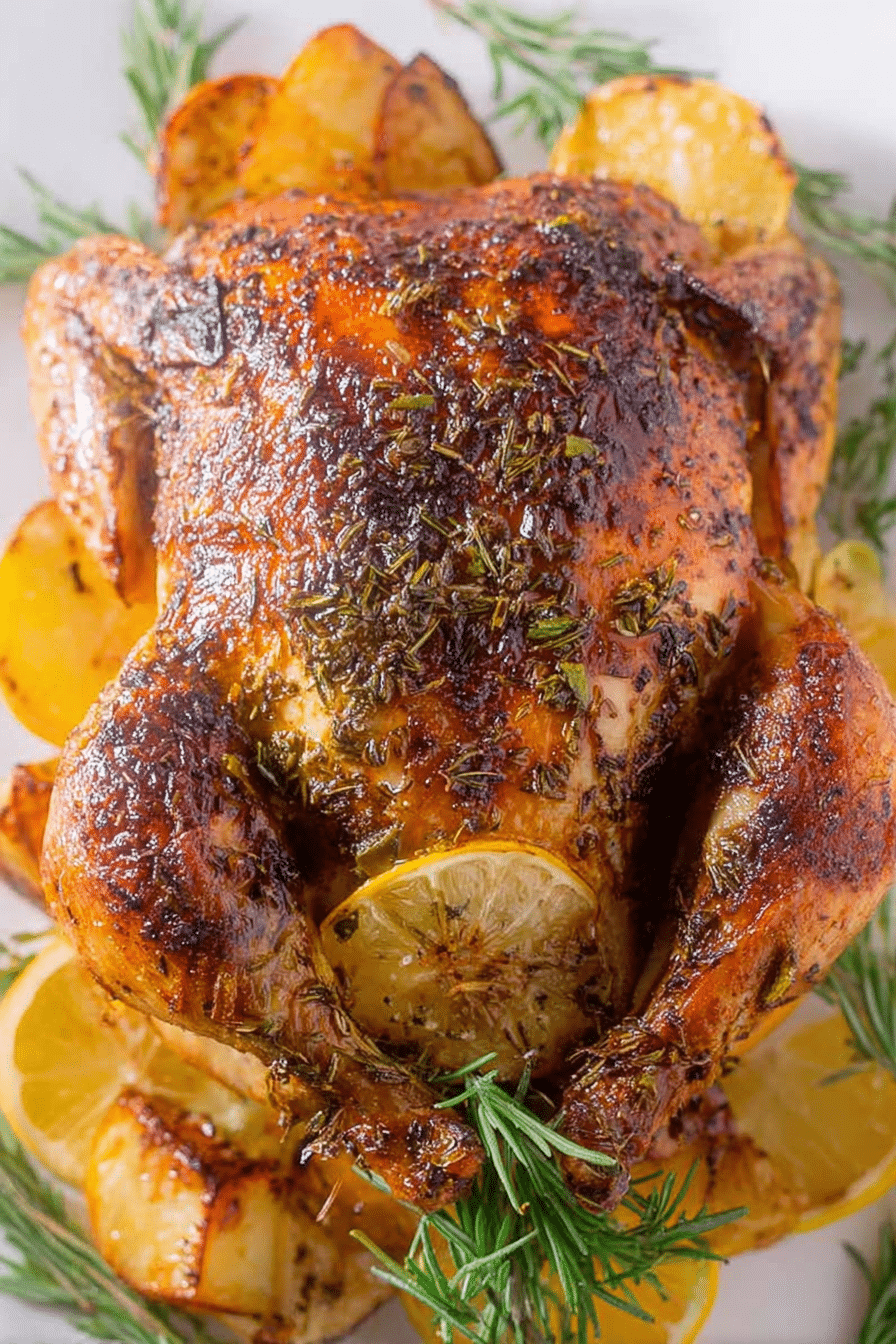
What I like about this roast is that it sits comfortably between an easy weeknight option and a centerpiece for a Sunday meal. The prep is straightforward: a quick herb butter, a little room-temperature patience, and an oven that does most of the work. The lemon and fresh herbs cut through the richness so the finished platter looks bright as well as smelling like the kind of meal that gathers people at the table.
Alongside recipes and timings, I’ll share concrete tips that changed my results—how to keep the breast moist while getting the thighs deeply flavored, when to shield quickly browning wing tips, and why a short resting window transforms the juices. I’ve tested the missteps so you don’t have to, and these are the tactics I rely on every time.
Read on for equipment notes, an ingredient conversation you can skim, the exact roast routine I use, and practical variations for different diets. This is a dependable roast you’ll make again and again.
Transform Weeknight or Sunday Dinner with Lemon Herb Roasted Chicken
This recipe fits both quick and special-occasion cooking. For a busy weeknight you can shorten sides and let the oven do the heavy lifting; for a Sunday meal the golden bird becomes the table’s focal point. Roasted chicken has a long place in American home cooking as a comforting, communal main course—simple seasonings amplify good ingredients and present wonderfully on a platter.
Think of the sensory cues: the bright citrus perfume of lemon zest mingling with the piney notes of rosemary and the sweet warmth of roasted garlic. The contrast between the sizzling, crisp skin and the tender, steaming meat beneath makes the dish feel elevated without being fussy.
If you want another dinner idea that’s equally accessible on a weeknight, try a lighter fish option alongside this type of roast:
Everything You Need for Lemon Herb Roasted Chicken
Ingredient quality and the right tools change outcomes dramatically. Use fresh herbs and good lemons because their oils and aromatics are what carry the topnotes of the roast. The right pan and a probe thermometer reduce guesswork and help you react when browning is uneven.
- Roasting pan or heavy baking dish – A pan with low sides lets air circulate and the base catch juices; use a rack if you prefer more crisping under the bird.
- Kitchen twine – Trussing keeps the legs close so the thighs and breasts cook more uniformly.
- Instant-read thermometer – The single most reliable tool to avoid overcooking; it tells you when the breast and thigh have reached safe, juicy temperatures.
- Fresh lemons – Zest and aromatic oils are crucial; stuffed into the cavity they steam the interior and brighten the fat.
- Fresh rosemary and thyme – These herbs add piney, woodsy notes that hold up under roasting heat better than delicate herbs.
- Unsalted butter – Used under the skin and on top to promote browning and carry herbs and garlic right against the meat.
- Garlic and onions – They brown in the pan and create an aromatic bed that flavors juices and the pan sauce if you make one.
- Chicken stock or water – Keeps pan juices from scorching and adds a bit of steam for even cooking.
The Secret to Golden, Crispy Skin: Butter Under the Skin
Sliding herb-garlic butter under the skin is the step that made the most consistent improvement in my roast. The fat from the butter bastes meat directly, keeps the skin taut, and creates a barrier that helps the breast stay moist while the skin crisps. The aromatics pressed under the skin flavor the meat rather than only the surface.
On a small physics note: rendering fat in close contact with the skin promotes Maillard browning where protein and sugars react at the skin surface; the butter components also help heat transfer and create those shiny, golden spots you want.
Because this technique is visual, if you can use step-by-step pictures or a short clip—showing how to separate skin from breast and where the butter sits—you’ll get a better sense of the motion. When I teach this to friends I demonstrate the gentle two-finger lift, then press the butter toward the thighs with a spoon so the entire breast benefits.
Why Temperature and Resting Time Make This Chicken Juicy
Temperature is the single variable that makes chicken dry or succulent. Cooking to the right internal temperature ensures safety without overcooking; resting lets those hot juices redistribute instead of running out onto the cutting board the moment you slice. Pulling the bird from the oven and letting it rest for a short window gives you meat that’s both flavorful and moist.
Common mistakes I see are relying on visual cues alone and carving too early. Use your thermometer in the thickest part of the breast and the thigh, and allow the carryover heat during resting to finish the cook. If you do that, the results are reliably tender.
Brining vs. Herb Butter: Which Adds the Most Flavor?
Brining and a flavorful herb butter are two distinct approaches that can be used separately or together. Brining increases the meat’s ability to retain moisture by changing protein structure; it seasons the interior. Herb butter concentrates aromatics at the surface and under the skin, giving a direct, robust herb-and-garlic note to the meat and skin.
If you’re curious about alternative brining techniques, this is a useful read on an atypical approach many cooks recommend:
In practice: a short wet brine gives noticeably juicier thighs and breasts, while the herb butter provides the signature herb-lemon crust and immediate aromatics. If you have the time, I sometimes brine briefly, pat dry, and still use herb butter for the best of both worlds.
How to Make Lemon Herb Roasted Chicken (Step-by-Step)
- Bring the chicken closer to room temperature for twenty to thirty minutes so it roasts evenly.
- Preheat your oven to a high roast temperature and position the rack low enough to allow browning without burning the surface.
- Make the herb-garlic butter by combining melted butter with minced garlic, chopped rosemary and thyme, and lemon zest.
- Pat the chicken thoroughly dry inside and out with paper towels; moisture on the skin prevents crisping.
- Carefully separate the skin from the breast and push the herb butter under the skin, spreading it toward the thighs and breast for even flavoring.
- Stuff the cavity with quartered lemon, onion, halved heads of garlic, and a few herb sprigs; this steams the interior and adds subtle aromatics.
- Truss the legs and tuck the wings to promote even cooking and an attractive presentation.
- Arrange onions, additional lemon, garlic, and herbs in the roasting pan as a bed; place the chicken breast side up on this bed.
- Brush remaining butter over the exterior skin and season lightly with salt and pepper; add some stock or water to the pan to prevent drippings from burning.
- Roast, checking periodically. Rotate the pan if you notice uneven browning and add more liquid if the pan becomes dry.
- Use an instant-read thermometer inserted into the thickest parts of the breast and thigh; when they read the safe internal temperature, remove the chicken.
- Let the chicken rest before carving so the juices redistribute and the meat remains moist.
Troubleshooting
- I notice the breast drying out — I check that the skin is well buttered underneath and that I’m not overcooking; reducing oven time slightly and relying on thigh temperature helps.
- I see uneven browning — I rotate the pan once during roasting and tent any over-browning areas with foil if needed.
- I get soggy skin — I always pat the bird very dry before applying butter and ensure the oven is hot enough at the start to crisp immediately.
- My pan drippings burn — I add a small amount of stock or water to the pan and check the liquid level mid-roast.
Pro Tip for Lemon Herb Roasted Chicken: Prevent Dry Breast & Fast Browning
- I reverse-rotate the bird in the oven if one side seems to brown faster; simple pan rotation evens color without changing internal cooking.
- Shield wing tips or exposed areas with small foil patches if they’re darkening too quickly while the rest of the bird still needs time.
- Start at a higher temperature to encourage skin crisping, then lower slightly if you need more gentle cooking to finish the thighs.
- Use a thermometer probe with an alarm so you can monitor carryover heat and pull the bird at the right moment.
How to Store and Reheat Lemon Herb Roasted Chicken
Cool the chicken briefly at room temperature, then refrigerate within two hours in an airtight container. Leftovers stay flavorful for up to four days when stored properly.
- To reheat without drying, warm slices gently in a covered dish with a splash of stock in a moderate oven until just heated through.
- Alternatively, shred cold chicken into salads or sandwiches—the lemon-herb notes translate well cold.
- For a tasty leftover combo, consider serving with complementary dishes such as this flavorful option:
Dietary Variations and Substitutions
- Gluten-free – The basic technique is naturally gluten-free; just ensure any store-bought stock or seasoning contains no wheat-derived ingredients.
- Low FODMAP – Use garlic-infused oil and omit whole garlic pieces to keep the allium flavor while reducing FODMAPs.
- Dairy-free – Substitute a high-quality neutral oil blended with herb paste in place of butter for similar herb delivery without dairy.
- Herb swaps – If you don’t have rosemary or thyme, oregano and sage are fine alternatives that hold up under roast heat.
- Faster option – Spatchcock the bird to reduce roast time and increase even browning if you’re short on time.
- If you want another lemon-forward option cooked on the grill, try this alternative:
Serving suggestions: carve the rested bird and arrange on a platter with the roasted vegetables from the pan, extra lemon wedges, and a scattering of fresh herbs. Mashed potatoes, a crisp green salad, or simple roasted root vegetables make excellent companions.
Frequently Asked Questions
Can I prepare Lemon Herb Roasted Chicken in advance?
Yes, you can prepare the chicken up to the point of roasting, cover it, and store it in the fridge for a few hours or overnight. Just make sure to bring it back to room temperature before roasting!
What can I serve with Lemon Herb Roasted Chicken?
This dish pairs wonderfully with roasted vegetables, mashed potatoes, or a fresh salad. You can also serve it with bread to soak up the delicious juices!
How do I know when the chicken is fully cooked?
The best way to check is by using an instant-read meat thermometer. The chicken is ready when the internal temperature reaches 165 degrees F in the thickest part of the breast and thigh.
Can I use other herbs for this recipe?
Absolutely! While rosemary and thyme work beautifully, you can experiment with other herbs like oregano or sage to customize the flavor to your liking.
How do I store leftovers of Lemon Herb Roasted Chicken?
Leftovers can be stored in an airtight container in the fridge for up to 4 days. To reheat, simply cover and warm in the oven or microwave until heated through.
Lemon Herb Roasted Chicken
Ingredients
Equipment
Method
- Let the chicken sit on the counter for 20 to 30 minutes to come to room temperature.
- Preheat oven to 425 degrees F and position the rack in the lower third.
- Combine melted butter with minced garlic, chopped rosemary, thyme leaves, lemon zest, Kosher salt, and black pepper. Set aside.
- Pat the chicken dry, then season under the skin with half of the prepared butter.
- Stuff the cavity with 1 quartered lemon, 1 quartered onion, 1 halved head of garlic, and herb sprigs.
- Tie chicken legs and tuck wings under the back.
- Arrange remaining onions, garlic, lemons, and herbs in a roasting pan. Place the chicken on top.
- Rub the remaining butter on the chicken and season the exterior.
- Add chicken broth or water to the bottom of the pan.
- Roast for 1 hour and 30 minutes or until the internal temperature reaches 165 degrees F. Rest for 15 minutes before carving.