

The first time I remember making salsa verde on purpose was at my mother’s kitchen table. She set out a pile of green tomatillos with their papery husks, a handful of serranos, and a chipped blender that had seen decades of salsas. We cooked, we tasted, and she taught me a small ritual: always taste the water you saved from cooking, and always season at the end. That ritual has saved more than one batch in my kitchen.
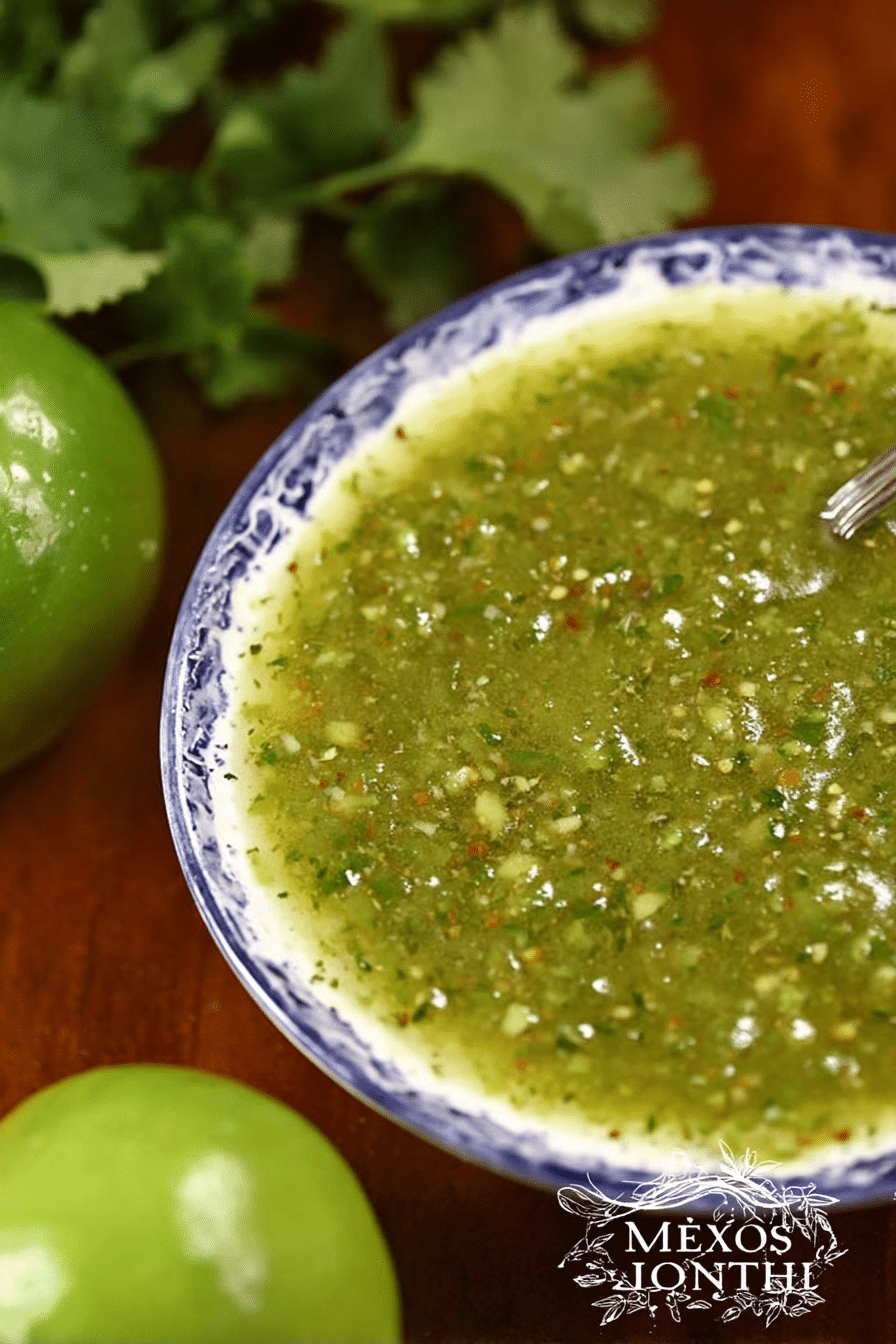
There’s something about the bright, tart smell of tomatillos as they hit hot water that brings the whole house alive — it’s the scent of quick, honest food. I make this salsa for weeknight tacos, for guests who linger at the table, and when I want something green and sharp to cut through rich meat like carnitas. Over the years I learned small fixes: a little reserved cooking liquid smooths the texture, and a quick roast deepens the flavor when you want something smoky.
This recipe is how we make salsa verde at home in Mexico: simple, fast, and respectful of ingredients. I’ll tell you which tools make the work easier, how to choose peppers to match the heat you want, and exactly how to get that vibrant color and silky texture so it sits proudly beside any grilled meat or vegetable.
Everything You Need for Spicy Tomatillo Salsa Verde
Set everything out before you begin so the process stays fast — tomatillos darken quickly once peeled and prepped. Below I describe the ingredients by purpose and common substitutions, and the tools that will save you time.
- Tomatillos – The tart backbone of this salsa. Pick firm, bright-green fruits with intact husks; avoid ones with soft spots.
- Serrano or jalapeño peppers – Your choice for heat. Serranos bring more bite; jalapeños are milder. Remove seeds for a gentler spice.
- Onion – Adds bite and texture. Use raw for a fresher edge or softened if you prefer gentler onion flavor.
- Garlic – A single clove brightens the salsa without overpowering.
- Cilantro – Optional but traditional; adds herbal lift. If you dislike cilantro, use parsley or omit.
- Salt – Season at the end so you can dial it precisely.
- Water (for cooking) – You’ll reserve a little of the cooking liquid to adjust texture later.
Tools I reach for in my kitchen:
- Sturdy blender – Gives a silky texture; a food mill or mortar and pestle can be used for a chunkier, rustic salsa.
- Medium saucepan – For simmering the tomatillos and peppers.
- Slotted spoon and bowl – To drain and reserve cooking liquid.
- Tasting spoon – You will taste and adjust at least twice.
Why Tomatillos Are Not Just Green Tomatoes (and Why It Matters)
You might see tomatillos and think of green tomatoes, but they are different botanically and in flavor. Tomatillos have a papery husk and a firm, slightly sticky skin; their flesh is tart and bright rather than sweet. That acidity is what gives salsa verde its lift — it cuts through fatty meats and keeps the salsa lively.
Use tomatillos when you want that sharp, citrus-like tang; green tomatoes can work in a pinch, but they lack the characteristic brightness. If you’re exploring other uses, tomatillos make an excellent base for stews, chiles verdes, or a fresh salad dressing — anywhere you want acidity and green color.
Tip for varying heat with tomatillos: pick smaller, very green tomatillos for a tarter edge when you want the salsa to sing; slightly riper, more yellow-tinged fruit will be milder and rounder. And if you’re wondering “Can I use green tomatoes instead of tomatillos?” see the FAQ below for more guidance.
Choosing Heat: Serrano vs Jalapeño — Match Flavor to Fire
Choose peppers based on how much you want to feel the spice and how you want the flavor to support the tomatillos. Use these practical tips when selecting and testing peppers so you get exactly the heat you expect.
- Know the scale: serranos are noticeably hotter than jalapeños. If you want bright, immediate heat that lingers, use serranos. For milder, rounder heat, choose jalapeños.
- Seed and membrane control the heat. Remove seeds and membranes for a gentler salsa; leave them in to ramp up the spice.
- Taste a raw slice before cooking to judge heat — this is the simplest way to match your tolerance and how it will mingle with the tomatillos.
- Substitutions: if serranos are unavailable, pick a fresher jalapeño and add a small pinch of crushed red pepper after blending if you want extra kick.
The Secret to Bright Color and Silky Texture (Boil, Roast, or Raw?)
How you treat the tomatillos and peppers determines the salsa’s final color and mouthfeel. Each method has its place — I keep all three in my repertoire and choose based on mood and the meal.
- Boiling/Simmering: Keeps the color vivid and yields a bright, clean flavor. When I simmer, I save a bit of that cooking liquid for blending to smooth texture.
- Roasting/Charring: Roasting on a comal or under the broiler adds smokiness and deepens flavor, but it will darken the green. Use this when you want a richer, slightly caramelized profile.
- Raw: Blender the raw ingredients for the freshest, herbaceous salsa. It will be the brightest green and most piquant, but less mellow than cooked versions.
- Experiment: Try one method at a time and note the difference. I often roast the peppers and simmer the tomatillos for a balance of smoke and brightness.
How to Make Spicy Tomatillo Salsa Verde (Step-by-Step)
Follow these practical steps. You’ll be tasting and adjusting as you go; that’s where the salsa learns to sing. Use your reserved cooking liquid to control the final texture.
- Bring water to a simmer in a saucepan and add the husked, washed tomatillos and your chosen peppers; simmer until the tomatillos soften and change color.
- Remove the pan from heat and drain, saving a small amount of the cooking liquid for later.
- In your blender add the drained tomatillos, peppers, garlic, and chopped onion. Add cilantro now if you use it.
- Pulse to start, then blend until smooth. Add a little of the reserved cooking liquid only if you need a saucier texture.
- Transfer to a bowl and season with salt to taste; rest for a few minutes so the flavors marry, then taste and adjust again.
Pro Tip for spicy tomatillo salsa verde: Adjusting Spice from Mild to Super Spicy
I always taste as I go — that step keeps me from overshooting the heat. Below are the tweaks I use depending on the level of spice you want.
- If you want mild: use jalapeños, remove seeds and membranes, and consider adding more onion for balance.
- If you want medium heat: use one serrano plus one jalapeño, keep some seeds, and finish with a squeeze of lime (or a splash of vinegar) to brighten.
- If you want very spicy: use two serranos and keep the seeds; you can add a pinch of crushed red pepper if you want more after blending.
- To tame heat quickly: add a little diced raw onion or a small bit of sugar to soften perceived heat, or serve the salsa with creamy elements like avocado or crema.
- Balance matters: acid (lime or vinegar) will sharpen the salsa; a touch of sweetness will calm it — use them sparingly and taste between additions.
Serving Ideas Beyond Tacos: From Carnitas to Grilled Veggies
This salsa is more versatile than its taco fame suggests. Think of it as a green sauce that can brighten rich or charred dishes and add a fresh herbal note to lighter plates.
- Serve with carnitas, grilled steak, or roasted chicken for a classic pairing.
- Use as a sauce for grilled fish or shrimp — the acidity cuts through oils and brings freshness.
- Toss with grilled vegetables or use as a finishing drizzle on roasted potatoes.
- Stir into quinoa or rice bowls to add brightness, or mix with plain yogurt for a quick dip.
- Brush on meats as a marinade before grilling for a tangy, herby crust.
How to Store, Freeze, and Make-Ahead Your Salsa Verde
Make this ahead — the flavors relax over a day and often taste better the next day. Here’s how I keep it tasting fresh when I store it.
- Refrigerate in an airtight container for up to a week; always give it a stir before serving.
- To freeze: portion into freezer-safe containers, leaving space for expansion. Thaw in the fridge and stir; the texture may loosen slightly but the flavor holds well.
- For make-ahead meals: store a small jar of salsa with roasted vegetables or grilled meats; the salsa will act like an instant finishing sauce when reheating.
Variations
- Roasted Verde: roast tomatillos and peppers for a smoky, darker-green salsa.
- Creamy Verde: blend in ripe avocado for a smoother, richer sauce.
- Herb-forward: increase cilantro or add fresh parsley for a different herbal note.
- Smoky Chipotle Twist: add a small chipotle in adobo for smoky heat and depth.
- Chunky Rustic: pulse instead of blending for a salsa with texture perfect for scooping with thicker chips or topping grilled vegetables.
Troubleshooting
I keep a few quick fixes on hand because even small mistakes happen in a busy kitchen. These are the repairs I rely on when a batch needs rescuing.
- Too watery: I strain a bit of the liquid or simmer the salsa briefly to concentrate flavor.
- Too bland: I add salt in small increments and a splash of acid; both wake up muted flavors.
- Too spicy: I stir in raw diced onion, a little crema, or mashed avocado to calm the heat.
- Too bright/acidic: a tiny pinch of sugar helps round the edges without making the salsa sweet.
- Color too dark after roasting: serve it anyway — the flavor is deeper and excellent with roasted or grilled meats; reserve raw or boiled salsa when you want the brightest green.
Frequently Asked Questions
Can I use green tomatoes instead of tomatillos?
While green tomatoes can be a substitute in a pinch, tomatillos have a unique flavor that’s essential for authentic salsa verde. It’s best to stick with tomatillos for the true taste!
How can I adjust the spice level of my salsa verde?
You can adjust the spice by selecting different peppers. If you prefer a milder salsa, use jalapeños instead of serranos, and remember to remove the seeds for an even gentler heat!
What can I serve with spicy tomatillo salsa verde?
This salsa is incredibly versatile! It pairs well with carnitas, steak tacos, grilled chicken, or even as a topping for grilled veggies and fish.
How should I store leftover salsa verde?
Store your salsa verde in an airtight container in the refrigerator for up to a week. You can also freeze it for longer storage—just make sure to leave some space in the container for expansion!
Can I make spicy tomatillo salsa verde ahead of time?
Absolutely! In fact, the flavors can deepen when it sits. Just make sure to store it properly and give it a good stir before serving.
Spicy Tomatillo Salsa Verde
Ingredients
Method
- In a saucepan, bring the water to a boil. Add the pepper and tomatillos, simmer, uncovered, for 12-15 minutes.
- Drain, reserving 1/4 cup water of the liquid.
- In a blender, puree the peppers, tomatillos, garlic, and chopped onion, adding the cilantro if using. Add the reserved liquid if needed to get a saucier texture.
- Transfer to a bowl and add salt to taste.