

Stuffed cabbage is the sort of dish that lives in the corners of memory: the steam rising from a pot at family dinners, the slow, patient hands that roll each leaf, and plates passed around until there is nothing left. I learned to make these rolls in my kitchen the way my grandmother did—by feel more than by measure—and it’s become my answer to chilly nights and houses full of guests. There’s something quietly generous about a pan of cabbage rolls; they stretch a little, feed a lot, and taste like company.
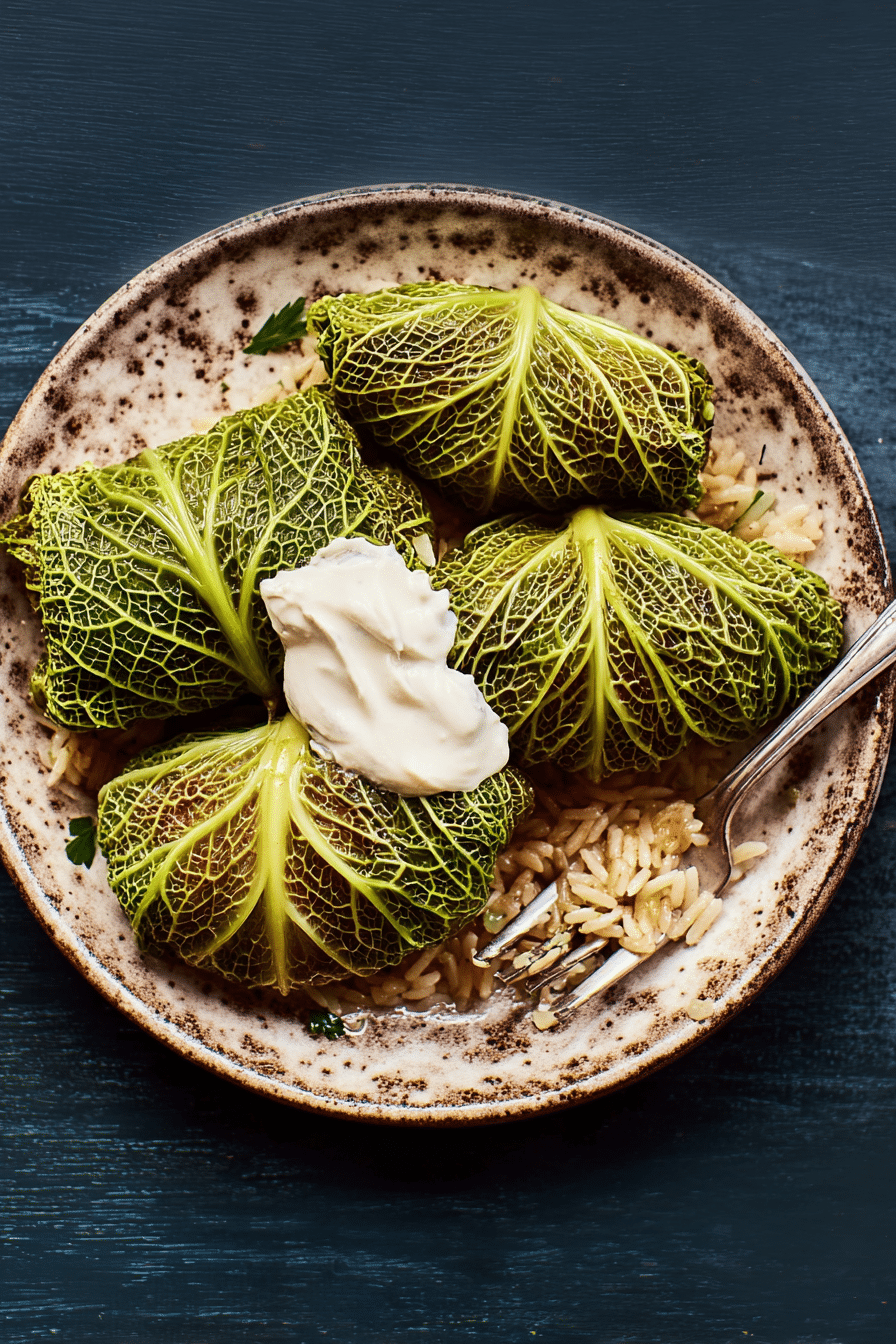
When I make this version—rice warmed with toasted pine nuts, bright herbs, raisins, and a hit of tart sumac—I aim for balance: soft rice, a little bite from the sumac and lemon, and the buttery pop of nuts. The sour cream on the side is not optional in my kitchen; it cools and rounds the tartness and makes each mouthful feel complete.
These rolls are unfussy to assemble once you know the small tricks: how long to soften leaves, how to keep rice from overcooking, and how to steam the finished rolls so the leaves stay tender but intact. I’ll walk you through those steps and share the swaps I use when I want a lighter or vegan version. If you enjoy stuffed cabbage, you might also love our easy stuffed peppers that evoke similar comforting flavors.
Why This Stuffed Cabbage With Rice Feels Like Home
Stuffed cabbage appears in many kitchens across Eastern Europe, the Middle East, and beyond—each family with a slightly different folding technique or secret ingredient. For me, the dish is a bookmark of gatherings: holiday tables, lunches that stretched into conversation, and the slow ritual of rolling while stories unfold. The texture contrast—tender cabbage, grainy rice, soft herbs, and crunchy nuts—creates a comforting, honest plate more than a showpiece.
Sensory note: imagine the warm, vegetal scent of simmering cabbage, the faint toast of pine nuts, and the citrusy perfume of lemon and fresh herbs. That aroma is as much the memory as the taste.
Everything You Need for Stuffed Cabbage With Rice
Before you start, gather honest ingredients and simple tools. A few choices—like using savoy cabbage for pliable, crinkly leaves or choosing a bright, aromatic herb mix—make the work feel worthwhile.
- Cabbage – Choose a head with large, unbroken leaves; savoy gives the best pliability and folds easily.
- Rice – A long-grain white rice yields light, separate grains; see the choices below if you’d like a swap.
- Pine nuts – Toasted for a buttery crunch; almonds or walnuts are fine substitutions.
- Onion – Slowly caramelized to add sweet depth to the filling.
- Herbs – A mix of tender herbs keeps the filling bright and aromatic; pick ones you like for freshness.
- Sumac – A tangy, lemony powder that lends tartness without extra acidity.
- Lemon – Just a splash to lift the filling.
- Raisins – Provide small pockets of sweet contrast; swap with chopped dried apricots if you prefer.
- Egg – Binds the filling; there are easy plant-based alternatives in the Pro Tip section.
- Butter or oil – For browning and steaming; use oil to keep it dairy-free.
- Sour cream – For serving; a tangy spoonful softens the tart edges and cools each bite.
- Essential tools – Large pot (for blanching and later steaming), a bowl of ice water, a baking sheet for draining leaves, and a heavy-bottomed pot with a lid for the final steam.
Sourcing tip: sumac lives in most spice shops and Middle Eastern markets; if it’s new to you, buy a small jar and use it on salads and roasted vegetables as well.
The Secret to Tender, Pliable Cabbage Leaves
Getting tender leaves is about timing and technique. Overcooking leaves makes them limp and fragile; undercooking makes them tough and hard to roll. I use the blanch-and-shock method because it preserves color and gives a predictable texture.
- Bring a pot of generously salted water to a rolling boil; working in batches keeps the temperature steady and prevents overcooking.
- Boil leaves just until they turn bright green and are easily folded—this usually takes only a couple of minutes per batch for large savoy or green cabbage leaves.
- Immediately transfer leaves to an ice bath to stop the cooking; the shock preserves that vibrant color and the tender-crisp mouthfeel.
- Trim the thick vein of each leaf by cutting a shallow V from the base; this makes rolling easier and prevents the rib from tearing the leaf when you fold it.
- Selecting cabbage: go for a heavy head with loose, large leaves (savoy is forgiving). If leaves are very thick, blanch a touch longer, but test often—thickness varies with season and variety.
Sensory focus: you should see bright green leaves that bend without breaking and feel that satisfying, soft snap when you fold them.
Why Sumac, Lemon, and Pine Nuts Make the Filling Sing
Sumac brings a clean, tart note that is less sharp than vinegar but more floral than lemon alone; it rounds the filling without weighing it down. Lemon provides immediate brightness and lifts the herbs and rice. Pine nuts add a buttery bite and textural contrast that keeps the mouth interested against the soft rice.
A refreshing glass of homemade lemonade pairs beautifully with these aromatic flavors.
- Sumac: provides acidic lift and a fragrant, slightly fruity tartness that balances the richness of toasted nuts and butter.
- Lemon: adds a quick, bright acidic note that wakes the herbs and rice.
- Pine nuts: when toasted, they give a warm, nutty flavor and a gentle crunch that contrasts the soft filling.
- Herbs and raisins: herbs add freshness, raisins add little sweet pockets—together they create an interplay of bright and round flavors.
Use culinary balance: if the filling tastes flat, add a pinch more sumac or a squeeze of lemon; if it’s too tart, a touch more butter or a few extra raisins will tame it.
Choosing Rice (or Quinoa) and the Best Herb Mix
Rice choices change the texture of the filling. Long-grain rices like jasmine or basmati keep grains separate and light; short-grain will be stickier and denser. Quinoa is an excellent swap for more protein and a slightly earthy taste. Herbs shift the dish’s personality: parsley keeps it traditional and bright, mint brings freshness, dill adds a faint anise note, and tarragon offers a soft licorice perfume.
- Long-grain rice: light, fluffy grains that finish al dente when par-cooked—ideal if you want distinct texture.
- Short-grain rice: yields a creamier filling; use if you prefer a more cohesive interior.
- Quinoa: cooks faster, adds protein, and gives a nuttier chew; rinse well before cooking to remove any bitterness.
- Herb combos: parsley + mint is bright and familiar; parsley + dill feels more Eastern European; parsley + tarragon nods to French influences—choose based on the mood you want.
- Nutrition note: swapping half the rice with cooked quinoa or adding a handful of chopped lentils increases protein and fiber with minimal change to texture.
Sensory focus: imagine the steam lifting herb aromatics as you stir the filling—peppery parsley, cooling mint, and lemon intermingling with warm, toasty pine nuts.
How to Make Stuffed Cabbage With Rice (Step-by-Step)
Below are the practical steps I follow; I break the process into clear stages so you can work steadily without feeling rushed. Common pitfalls and fixes follow the list.
- Prepare an ice bath and a baking sheet lined with towels for draining cabbage leaves.
- Bring a large pot of generously salted water to a boil. Working in batches, blanch cabbage leaves until bright green and pliable, about a couple of minutes per batch, then transfer to the ice bath. Drain and set aside.
- Return the pot of water to a boil and par-cook the rice until the grains swell and rise but remain al dente—this will finish during steaming.
- Drain rice and rinse briefly under cold water to stop cooking; transfer to a large bowl.
- In the wiped pot, heat oil over medium and sweat onions until soft and golden—this may take several minutes to coax out sweetness; add pine nuts and toast until fragrant and slightly darkened.
- Stir in herbs, raisins, and sumac; cook just until herbs are wilted and fragrant. Remove from heat, stir in lemon juice, and cool briefly.
- Mix the onion-herb mixture and beaten egg into the cooled rice; season generously with salt and black pepper.
- Trim the thick vein from each cabbage leaf. Place a spoonful of filling crosswise near the base of the leaf, fold the base up over the filling, fold in the sides, and roll like a burrito. Don’t overstuff—about a two-finger thickness of filling rolls easily and cooks through.
- Arrange rolls seam-side down in a single layer in the large pot. Dot with butter (or add oil), pour in a small amount of water to create steam, and bring to a simmer. Reduce heat to low, cover, and steam until leaves are tender and filling is cooked through—plan on roughly 18–25 minutes.
- Serve warm with a drizzle of olive oil, a sprinkle of extra sumac and cracked black pepper, and a generous dollop of sour cream.
Common Troubleshooting
- If leaves tear while rolling: trim more of the thick vein and roll a little more gently; slightly under-blanched leaves will tear, so blanch until pliable.
- If filling is loose and falls apart after cooking: either the rice was undercooked before rolling or the ratio of binder (egg) to rice was low—mix in a touch more beaten egg or a little cooked grain to firm it up next time.
- If rolls are gummy: rice was likely overcooked before stuffing. Rinse cooked rice under cold water to stop residual cooking and use a rice that holds its shape.
- If the bottoms scorch during steaming: check that there’s enough liquid in the pot to create steam and keep heat low; use a heat diffuser if your burner runs hot.
Pro Tip for Stuffed Cabbage With Rice: Make It Vegan, Swap Grains, and Boost Nutrition
I often make variations depending on who’s coming over or what’s in my pantry. Below are quick, scannable swaps and enhancements I use regularly.
- Vegan binder: replace the egg with a flax egg (ground flaxseed mixed with water) or a couple of tablespoons of plain, thick plant-based yogurt to help the filling hold together.
- Dairy-free: swap butter for olive oil or vegan buttery spread and serve with plant-based sour cream or a tangy yogurt alternative.
- Grain swaps: use cooked quinoa for more protein, or try farro for a chewier, nuttier filling—adjust pre-cooking so the grain is al dente before stuffing.
- Protein boost: fold in cooked lentils, chopped walnuts, or a can of drained chickpeas mashed slightly into the filling for heartiness.
- More greens: stir finely chopped cooked spinach or swiss chard into the filling for extra nutrients and color.
- Serving suggestion: Considering a vegan twist? Try pairing this dish with our easy falafel salad bowls for added protein and greens.
How to Store, Freeze, and Reheat Stuffed Cabbage With Rice
These rolls keep beautifully, which is why I often double the batch. Proper cooling and storage keep textures intact and flavors bright.
- Cooling and refrigeration: let rolls cool to near room temperature, then store in an airtight container with a little of the cooking liquid or a thin drizzle of olive oil to prevent drying. They’ll keep in the fridge for up to four days.
- Freezing: freeze rolls individually on a tray until firm, then transfer to a freezer bag or container. Freeze for up to three months. Reheat from frozen by baking covered in a little broth until heated through, or thaw overnight in the fridge and re-steam.
- Reheating without sogginess: reheat covered at moderate oven heat with a splash of water or broth; remove the cover for the last few minutes to restore a bit of texture. Microwaving works in a pinch but can make leaves softer—use short bursts and check frequently.
For a delightful meal, serve with our classic potato salad, perfect for accompanying stuffed dishes.
Frequently Asked Questions
Can I use a different grain instead of rice for the stuffing?
Absolutely! You can substitute the rice with quinoa or another grain of your choice. Just be sure to adjust cooking times accordingly.
What can I use instead of pine nuts?
If you don’t have pine nuts, you can use walnuts or almonds for a similar texture. You can also omit them if you prefer!
How do I prevent my cabbage leaves from tearing?
To prevent tearing, make sure to cook the cabbage leaves just until they are pliable in boiling water. This helps maintain their integrity when rolling.
Can I make this dish vegan?
Yes! You can simply omit the egg from the filling and use a vegan substitute. Additionally, ensure that your sour cream is plant-based or leave it out.
How do I store leftovers?
Store any leftover stuffed cabbage in an airtight container in the fridge for up to 4 days. You can also freeze them for up to 3 months!
Stuffed Cabbage With Rice
Ingredients
Method
- Line a baking sheet with a clean kitchen towel or a few layers of paper towels; set aside. Working in batches, cook cabbage leaves in a large pot of boiling generously salted water until bright green and pliable, about 2 minutes per batch. Transfer leaves to a bowl of ice water to cool; reserve pot of water for cooking rice. Transfer cabbage leaves to prepared baking sheet and let drain.
- Return water in pot to a boil and cook rice, stirring often, until grains swell and rise to the surface, 3–6 minutes. Drain rice and rinse under cold running water to stop it from cooking further. Drain again and transfer to a large bowl.
- Wipe out pot. Pour in ¼ cup oil and set pot over medium heat. Add onion and cook, stirring occasionally, until softened and golden, 7–9 minutes. Add pine nuts and cook, stirring often, until nuts smell toasty and have slightly darkened in color and onion is almost jammy, about 5 minutes. Mix in herbs, raisins, and 2 Tbsp. sumac and cook, stirring, until fragrant, about 2 minutes. Remove from heat and stir in lemon juice; let cool 5 minutes.
- Add onion mixture and egg to rice and mix well; season generously with salt and pepper. Working with 1 cabbage leaf at a time, cut out the thickest part of the rib. Place 3 heaping Tbsp. filling in the center of the leaf. Fold the leaf around the filling like a burrito.
- Arrange cabbage rolls, seam side down, in a single layer in the pot. Add butter and ½ cup water and bring to a simmer over medium-high heat. Reduce heat to low, cover pot, and steam rolls until filling is cooked through and leaves are tender, 18–25 minutes.
- Divide cabbage rolls among plates; drizzle with oil and sprinkle with sumac and pepper. Serve with sour cream.