

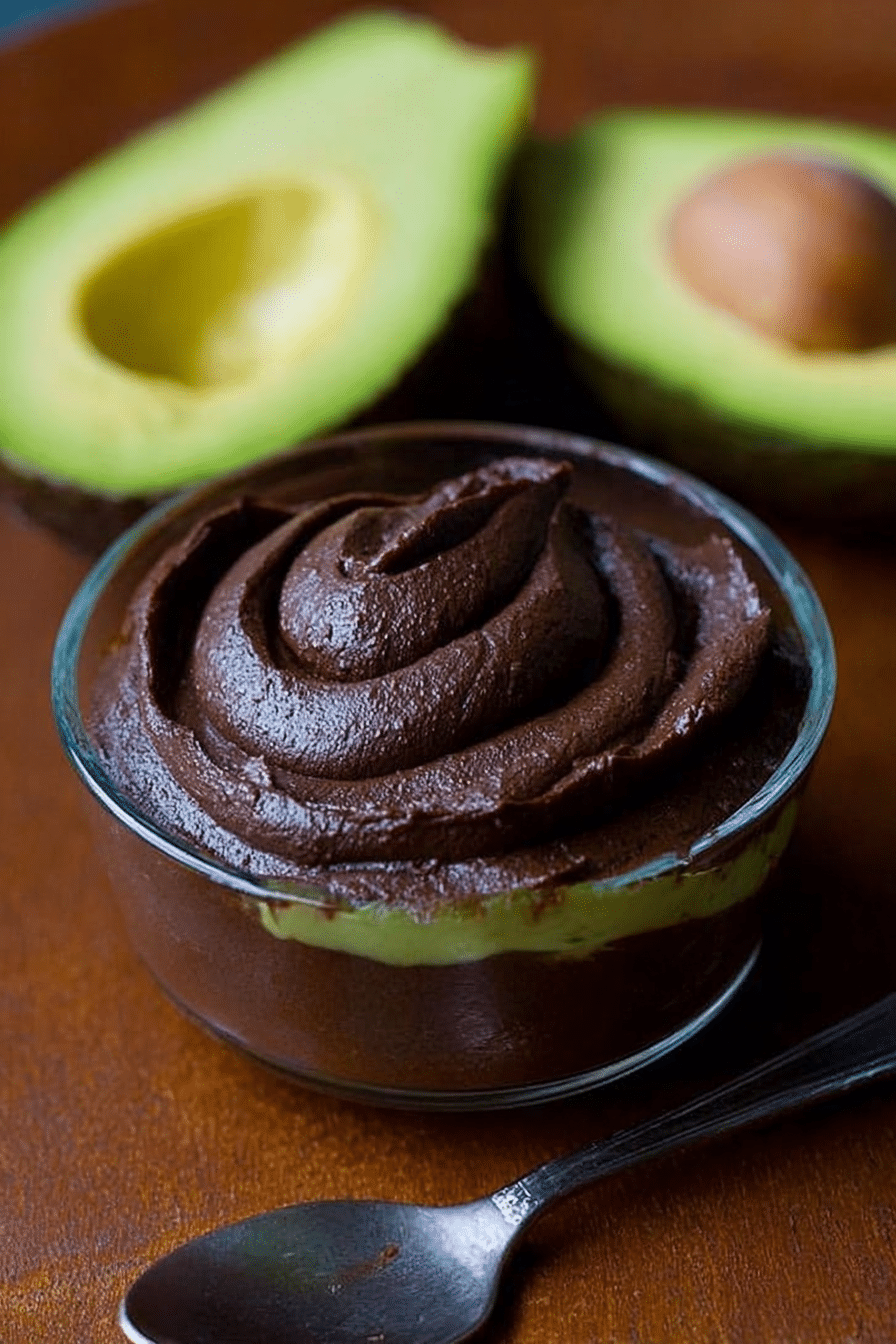
I didn’t expect a bowl of mashed green fruit to replace my usual dessert routine, but this avocado chocolate mousse became a regular in my kitchen the week I tested it. I love that it satisfies a chocolate craving while keeping the sugar lower than a traditional mousse, and the texture can be genuinely silky when you treat the ingredients right.
In my tests I learned to trust ripe avocados and not to skimp on good-quality cocoa — both make a noticeable difference in aroma and depth of chocolate flavor. I often make small batches for the week and keep extras in airtight jars for a quick, healthy dessert that still feels indulgent.
My approach is about balance: using avocado for creamy, heart-healthy fats, cocoa for antioxidant-rich chocolate flavor, and a sweetener you control so the sugar fits your diet. The result is a glossy, dark-brown mousse with a deep chocolate scent and a smooth, melt-in-the-mouth texture.
Below I’ll walk you through what to have on hand, how to get the texture ultra-smooth, sensible nutrition notes, easy variations, and the small troubleshooting tips I rely on when something isn’t quite right.
Why this avocado chocolate mousse is perfect for vegan, low-sugar cravings
This mousse hits the sweet spot for health-conscious eaters because it leans on whole-food fats and antioxidant-rich cocoa instead of heavy cream and refined sugar. Avocados provide mostly monounsaturated fats, which support heart health and help the mousse feel satisfyingly rich without a sugar rush. Cocoa powder contributes a deep chocolate aroma and polyphenols—beneficial antioxidants—without added sugars when you choose unsweetened powder. The recipe is flexible with sweeteners, so you can pick options that keep the overall sugar lower or match a vegan diet.
Sensory notes: visually you want a glossy, dark-brown surface; the aroma should be a pronounced chocolate scent with a hint of vanilla; on the palate it should be creamy, not greasy, with a gentle sweetness that lets the cocoa shine.
Everything You Need for Avocado Chocolate Mousse
Below I’ve listed the essential ingredients and tools in plain terms so you know their purpose and how to swap them to suit dietary needs. When I test, I keep a small toolkit nearby to speed the process.
- Ripe avocados – The base of the mousse for creaminess and healthy fats; very ripe fruit blends most smoothly. If an avocado is underripe the texture will be chalky and the flavor muted.
- Unsweetened cocoa powder – Provides chocolate flavor and antioxidants; choose Dutch-processed cocoa if you prefer a mellower, less acidic chocolate note.
- Melted chocolate or chocolate chips (optional) – Use for a richer, deeper flavor; adding melted chocolate increases fat and richness compared with cocoa alone.
- Milk of choice – A splash of plant milk helps the blender and fine-tunes the texture; pick unsweetened almond or oat for lower sugar.
- Pure vanilla – Lifts and rounds the chocolate aroma; a little goes a long way.
- Salt – Enhances chocolate flavor and balances sweetness.
- Sweetener of choice – Use a liquid sweetener for silkier texture or a granular/zero-calorie option for lower sugar; swap to suit vegan or diabetic needs.
- Blender or food processor – Essential for a smooth result; a high-speed blender gives the creamiest texture.
- Spatula and bowls – For scraping and serving; small jars are handy for make-ahead portions.
The Secret to Silky Texture: How to Get Ultra-Smooth Mousse
Texture is everything with avocado mousse. I learned a few small adjustments that consistently improve creaminess and mouthfeel.
- Blend long enough at medium-high speed so the avocado breaks down completely; stop and scrape the sides to avoid small green flecks in the mousse.
- If your sweetener is liquid (like maple or agave), add it early — the extra liquid helps the blades create a silkier emulsion. If you’re using a dry sweetener, add a splash of plant milk to help achieve the same effect.
- Choose your cocoa carefully: Dutch-processed cocoa often yields a smoother, less gritty texture than natural cocoa. If using melted chocolate, temper it slightly so it blends evenly instead of seizing.
- For the lightest texture, chill the blended mousse briefly and then whisk by hand or give it a short pulse in the blender to introduce a little air. The mousse should look airy and hold soft peaks but remain glossy.
- Sensory check: touch the mousse—your spoon should glide through it with minimal drag; sight-wise it should have a uniform color and sheen, with no streaks of avocado or dry powder.
Nutrition Breakdown: Calories, Macros, and Health Benefits
Per serving this mousse is modest in calories compared with traditional cream-based mousses. A typical four-serving batch lands in the low-to-mid hundreds of calories per serving depending on the sweetener and whether you use added chocolate. Expect most of the calories to come from healthy fats in the avocado, with a moderate amount of carbohydrates from any sweetener and cocoa, and a small amount of plant protein.
Approximate per-serving snapshot (will vary by exact ingredients):
- Calories: roughly 140–160 kcal
- Fat: primarily monounsaturated fats; roughly 9–12 g
- Carbohydrates: moderate, depending on sweetener; roughly 12–18 g
- Protein: small amount from avocado and cocoa; around 1–3 g
- Fiber: a notable source thanks to avocado and cocoa; expect 4–6 g
Health benefits to mention: the mousse supplies heart-healthy fats, fiber for satiety and blood sugar support, and antioxidants from cocoa. For people managing blood sugar, choosing a low- or no-added-sugar sweetener and watching portion size makes this dessert an approachable option.
Flavor Boosters: Variations and Mix-Ins (spices, fruit, and swaps)
I always recommend experimenting with small additions to suit your taste. Below are variations I often test — keep them to small amounts so the chocolate remains central.
- Cinnamon or ground espresso – Adds warmth or a mocha edge that deepens the chocolate aroma.
- Cayenne or chili powder – A tiny pinch adds a subtle heat that plays beautifully with dark chocolate.
- Orange zest – Brightens the flavor and pairs naturally with cocoa.
- Fresh berries – Stir in raspberries or top the mousse to add freshness and tartness.
- Banana – Blends well for extra sweetness and body, but raises sugar and changes the flavor profile.
- Nut butters – A spoonful folded in gives a deeper, more indulgent mouthfeel and adds protein.
How to Make Avocado Chocolate Mousse (Step-by-Step)
Follow these simple steps and adjust sweetness to your preference. I find saying the steps out loud while I work keeps me from over-processing or over-sweetening.
- Prepare your avocados by halving, removing the pits, and scooping the flesh into the blender or food processor.
- Add cocoa (or melted chocolate if using), vanilla, a pinch of salt, and your chosen sweetener to the blender.
- Pour in a small splash of your milk of choice to help the blades move; start blending at medium speed.
- Stop, scrape the sides, and continue blending until the mixture is completely smooth and glossy. Add a touch more milk if needed for a silkier consistency.
- Taste and adjust sweetness or salt; if you want it colder and firmer, chill for 20–30 minutes before serving.
- Serve in small bowls and garnish with berries, shredded coconut, or a dusting of cocoa if desired.
Pro Tip for avocado chocolate mousse: Lower-Sugar & Diabetic-Friendly Swaps
Here are practical swaps I use when I want to lower sugar or make the mousse friendlier for people monitoring carbohydrates:
- Use a liquid non-nutritive sweetener or a monk-fruit blend to maintain a smooth texture with far less sugar.
- Replace maple or agave with a calorie-free sweetener that performs well in cold recipes to keep sweetness without the carbs.
- Choose unsweetened plant milk and unsweetened cocoa to avoid hidden sugars.
- Control portions: serve smaller amounts paired with fresh berries or a handful of nuts to add fiber and slow glucose absorption.
Common Mistakes and Troubleshooting for Perfect Texture
I’ve made and fixed these errors dozens of times—here’s what I tell myself when something goes wrong:
- Too chunky? Blend longer and scrape often; if necessary add a little more liquid sweetener or plant milk to help the blades.
- Too thin? Chill the mousse to firm it up or add a small amount of melted chocolate (cooled slightly) to thicken without diluting flavor.
- Green taste or visible flecks of avocado? That means the avocado wasn’t fully incorporated—keep blending and use a high-speed blender if possible.
- Grainy texture from cocoa? Use Dutch-processed cocoa or sift natural cocoa before adding; alternatively, add melted chocolate for a silkier finish.
- Too sweet or not sweet enough? Taste as you go—sweetness preferences vary. I add a little at a time and refrigerate briefly before final tasting, as chilling can mute sweetness slightly.
How to Store, Make-Ahead, and Serve This Mousse
Storing and serving correctly preserves texture and flavor. I often make a batch to keep on hand for quick desserts or to pack into small jars for breakfasts with fruit.
- Store in an airtight container in the refrigerator for up to 4–5 days; the surface may slightly darken from oxidation—stir gently before serving.
- Freeze in small portions for up to 3 months; thaw overnight in the refrigerator and stir to recombine any separated liquids.
- Make-ahead tip: assemble the mousse and chill for at least 30 minutes so it firms and the flavors meld; finish with garnishes just before serving for the best presentation.
- Serving suggestions: top with fresh berries, a sprinkle of toasted nuts, a light dusting of cocoa, or a few dark chocolate shavings for texture contrast.
Frequently Asked Questions
Can I use other sweeteners instead of maple syrup?
Absolutely! Feel free to use any sweetener of your choice, like agave syrup, honey (if not vegan), or a sugar substitute to suit your taste.
Is this mousse suitable for a gluten-free diet?
Yes, this avocado chocolate mousse is naturally gluten-free, making it a great dessert option for those with gluten sensitivities.
What can I do if my mousse isn’t smooth enough?
If your mousse isn’t as smooth as you’d like, try adding a little more milk or blending it longer until you reach the desired consistency.
Can I add flavors to customize my mousse?
Definitely! You can mix in spices like cinnamon, or even add fruits such as raspberries or bananas for an extra flavor twist.
How should I store leftover mousse?
Store any leftover mousse in an airtight container in the refrigerator for up to 5 days, or freeze it for up to 3 months. Just thaw and stir before serving!
Avocado Chocolate Mousse
Ingredients
Method
- Combine all ingredients in a blender or food processor until completely smooth.