

I fell in love with this dessert the first summer I served it at a backyard get-together: cool, spoonable coconut jelly with a bright squeeze of lime that cuts through the richness. It’s the kind of dessert that smells like sunscreen and salt air on the counter — fresh citrus on the inhale and a gentle coconut creaminess on the palate. I remember how guests kept returning for just one more spoonful, and how the bowls looked impossibly pretty lined up on the buffet.
I like recipes I can make ahead so I’m present when guests arrive, and these jelly bowls fit that goal perfectly — they take very little hands-on time and set in the fridge while you get everything else ready. In my kitchen I use good-quality coconut products; the difference between a bland coconut note and a fragrant, silky mouthfeel is the starting point for a dessert that feels special without fuss.
If you want to try something slightly more hands-on, you can make your own coconut milk at home to use in your jelly bowls.
For an extra fresh flavor, you can make coconut milk at home to use in your jelly bowls.
Why These Coconut-and-Lime Jelly Bowls are Ideal for Summer Parties
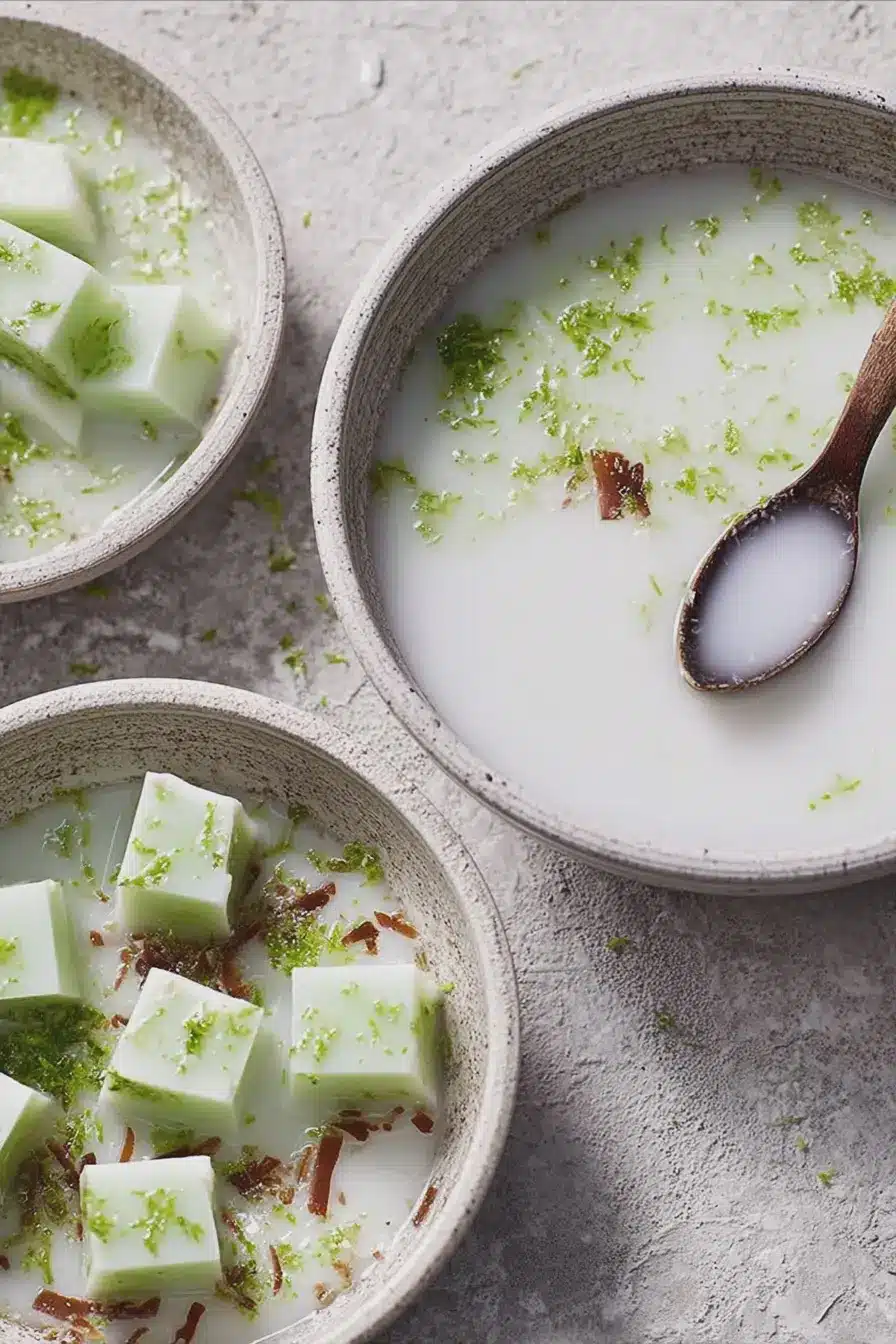
The combination of coconut and lime is a natural summer match: tropical creaminess balanced by citrus brightness. These bowls are refreshing rather than heavy, so they’re a welcome finish after grilled mains or a spicy mezze spread. Visually, they bring a clean, elegant look to a buffet — think glossy pale-white jellies topped with a fine dusting of lime zest and pale flakes of fresh coconut.
Sensory notes to expect: the kitchen will smell faintly of toasted coconut and fresh lime while you’re preparing them, the texture is spoonable and satin-smooth, and served chilled they feel cooling in warm weather. Because they’re mostly no-cook and can be made ahead, you’ll spend more time enjoying the party instead of hovering at the stove.
Everything You Need for Coconut-and-Lime Jelly Bowls
Lay out your ingredients and tools before you start — the process is quick and you’ll appreciate having everything at arm’s reach. Use the best coconut products you can find for a true, creamy coconut flavor.
- Coconut milk – Provides the base liquid and light coconut flavor; full-fat options give a silkier set.
- Coconut cream – Adds richness and helps the jelly hold a creamy mouthfeel.
- Sugar – Balances the coconut and lime; you can substitute low-carb sweeteners (see swaps below).
- Gelatine or gelatine sheets – The traditional setting agent for a smooth, spoonable texture; agar agar is the vegan alternative and behaves differently (see below).
- Fresh limes – Zest for garnish and juice for bright acidity to lift the coconut.
- Fresh coconut – For grating or shaving as a garnish to add texture and visual contrast.
Tools: a medium saucepan, a whisk, small bowls or ramekins for serving, and a grater or fine zester. If you’re making things from scratch,
For an extra fresh flavor, you can make coconut milk at home to use in your jelly bowls.
The Secret to a Silky, Spoonable Coconut Jelly
The single biggest factor that changes a jelly from grainy or rubbery to satin-smooth is how the gelatine (or agar) is handled. Blooming gelatine properly and dissolving it gently into warm (not boiling) liquid preserves a delicate texture. If liquid gets too hot, the protein structure of gelatine can tighten and create a firmer, less creamy set.
Technically: gelatine needs to be hydrated before it meets heat. This allows the protein strands to unfold uniformly and join the liquid in a way that yields a smooth, consistent gel. Agar agar, used for vegan sets, requires boiling to activate and will set firmer and more quickly than gelatine; it also tolerates acids differently, so you may need to slightly adjust how much lime you add if using agar.
Presentation Tips: Style Jelly Bowls to Impress Without Stress
Presentation is about contrasts: soft, glossy jelly with zesty, textured garnishes. Use clear glass bowls or small stemmed dishes so the pale coconut color reads cleanly; the lime zest and white coconut shavings will pop against that backdrop.
- Garnish simply with a fine grate of fresh coconut and a scattering of lime zest for color and a fragrant finish.
- Serve chilled on a tray with small spoons; arranging the bowls on a bed of crushed ice will keep them cool outdoors.
- For table styling, pair the bowls with light linens, woven placemats and small bowls of additional fruit so guests can customize their portion.
Pair your stunning jelly bowls with a glass of refreshing homemade lemonade to impress your guests and keep the menu feeling cohesive and summery.
Vegan & Low‑Carb Swaps for Dietary Needs
It’s easy to adapt these jelly bowls without losing their tropical character.
- Agar agar – Use as a vegan setting agent; it needs boiling and sets firmer and more quickly than gelatine, so test for firmness and reduce the amount of lime if the set seems weak.
- Plant-based coconut alternatives – Use canned coconut cream or a blend of homemade coconut milk and cream to keep richness without dairy.
- Low-carb sweeteners – Granulated erythritol or a monk-fruit blend can replace sugar; note that some sugar substitutes can affect set and texture, so aim for a blend formulated for baking where possible.
If you need a full vegan menu for a gathering, try a complementary savoury option like Vegan Paella alongside these bowls; the contrast in textures and temperature is excellent for summer parties.
How to Make Coconut-and-lime Jelly Bowls (Step-by-Step)
- Warm the coconut milk, coconut cream and sugar in a saucepan over medium heat until the mixture is fragrant and steaming; do not let it come to a hard boil.
- While the liquid heats, soften the gelatine in cold water if using powdered or sheets; squeeze out excess water once soft and ready.
- Remove the warm coconut mixture from the heat. Whisk in the bloomed gelatine until it dissolves completely and the mixture looks smooth and glossy.
- Stir in the lime juice off the heat so the acid doesn’t interfere with the setting process while still delivering bright flavor.
- Pour into individual serving bowls and chill in the refrigerator until firmly set — plan for several hours so the texture becomes fully spoonable.
- Before serving, grate fresh coconut and lime zest over each bowl for aroma, texture and a pop of color.
Pro Tip for coconut-and-lime jelly bowls: Bloom gelatine (or agar) correctly for the best set
- Blooming gelatine: I always hydrate gelatine first in cold water; it should plump up evenly. If you add dry gelatine to hot liquid, it can clump and give you an uneven texture.
- Dissolving: Stir the bloomed gelatine into warm (not boiling) coconut mixture until fully dissolved — you should see a glossy finish with no grainy bits.
- Using agar agar: Bring agar and liquid to a gentle boil to activate it, then simmer briefly. Agar sets at room temperature and firms faster, so pour quickly and check firmness sooner than you would with gelatine.
- Acid and setting: High amounts of lime juice can weaken gelatine’s setting power; add lime off the heat and taste as you go. If the jelly seems soft, reduce the citrus slightly next time or strengthen the set agent just a touch.
- Troubleshooting: If your jelly is too soft after chilling, I recommend gently reheating, adding a small amount more dissolved gelatine (bloomed first), then re-chilling. If it’s too firm with agar, reheat and add a little more liquid to soften the set.
How to Store and Make-Ahead Coconut-and-Lime Jelly Bowls
These bowls are excellent for make-ahead entertaining. Cover them tightly and keep refrigerated until ready to serve; they hold well and keep their aroma and texture when stored properly.
- Refrigerate covered for up to three days to maintain freshness and prevent the surface from absorbing other fridge odors.
- Make them the day before your event to save time; add the fresh coconut and lime zest just before serving so those bright aromatics shine.
- If you need to transport them, keep them chilled on ice in a cooler and add garnishes on arrival to avoid sogginess.
Creative Flavor Variations Using Tropical Fruits
Small additions can turn these jelly bowls into something new while honoring the coconut-and-lime base.
- Mango ripple: Fold a smooth mango purée through the coconut jelly before it fully sets for swirls of color and a sweeter, tropical note.
- Lychee and rosewater: Add diced canned lychee on top and a whisper of rosewater to the coconut for a perfumed, elegant twist.
- Pineapple-lime: Use a little crushed fresh pineapple in the base for tang and texture, and reduce added sugar slightly to balance the fruit’s natural sweetness.
- Herb lift: Scatter torn mint or Thai basil leaves on top when serving for an aromatic contrast that cuts through the richness.
For more ideas on mixing tropical flavors, see this guide to exciting ways to elevate their jelly bowls with other tropical flavors.
Frequently Asked Questions
Can I use agar-agar instead of gelatine for this recipe?
Yes! You can substitute gelatine with agar-agar for a vegan option. Just make sure to follow the blooming and heating instructions specific to agar for the best results — agar needs boiling to activate and sets firmer than gelatine.
How long can I store the coconut-and-lime jelly bowls?
You can store the jelly bowls in the refrigerator for up to 3 days. Just make sure they’re covered to keep them fresh.
What are some good garnishes for the jelly bowls?
Fresh coconut and lime zest are wonderful options! You can also add tropical fruits like mango or kiwi for extra color and flavor.
Is this recipe gluten-free?
Absolutely! The coconut-and-lime jelly bowls are gluten-free and wheat-free, making them a great dessert option for those with dietary restrictions.
Can I make these jelly bowls in advance for a party?
Definitely! This recipe is perfect for make-ahead preparations. Just chill the jelly bowls for at least a few hours in advance, and they will be ready to serve by the time your guests arrive.
Coconut-and-lime jelly bowls
Ingredients
Method
- Heat all the ingredients except the gelatine and lime zest and juice in a saucepan over a medium heat until simmering. Remove from the heat.
- Soak the gelatine in cold water for 5 minutes, or until soft. Squeeze out any excess water and add to the pan. Stir until the gelatine has dissolved. Remove from the heat and stir in the lime juice.
- Chill for 4–6 hours, or until set. Grate over coconut and lime zest to serve.