

I first tested roasted cabbage as a way to make a humble vegetable feel intentional at the dinner table. In my kitchen, a halved head of cabbage became something guests asked about rather than pushed aside. The trick was not in exotic ingredients but in treating the cabbage like a steak: thick wedges, confident heat, and enough oil to coax the sugars into deep caramel notes.
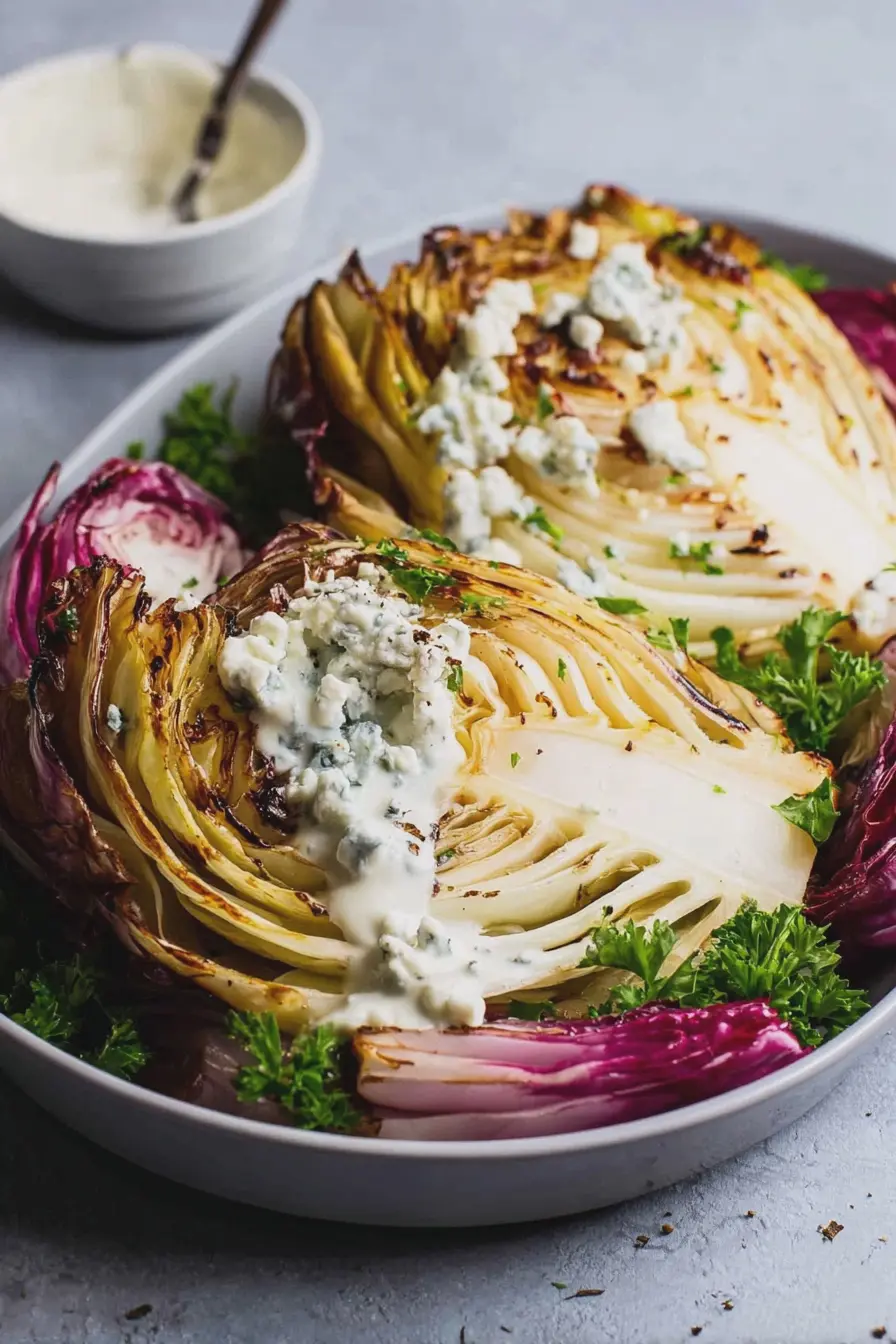
When I pair those browned edges with a warm blue cheese sauce, there’s a satisfying contrast: the cabbage offers sweet, nutty char and a gentle crunch while the sauce brings a creamy, saline counterpoint. The aroma that fills the kitchen — caramel and tang — reads as both rustic and indulgent. It’s a combination that looks striking on a plate: green turning to gold, streaked with a pale, marbled drizzle.
I like to serve this alongside roasted chicken, grilled steak, or a hearty grain bowl; it can also stand boldly as the centerpiece of a vegetarian supper. Over the years I’ve refined timing and seasoning so the wedges are tender inside, crisp at the tips, and never sodden under the sauce. Below I’ll walk you through what matters most, from ingredient selection to reheating without losing texture.
Why This Roasted Cabbage with Blue Cheese Sauce Belongs on Your Menu
There’s a rare honesty to this dish: inexpensive produce transformed through technique into something visually elegant and richly flavoured. The roasted cabbage delivers sweet, caramelized edges that contrast beautifully with the assertive, saline creaminess of blue cheese. Together they create a composed side that complements rich proteins and bright, acidic elements alike.
Seasonal additions — thinly sliced radicchio, roasted apples, or toasted hazelnuts — add color, texture, and nuance. I often finish the plate with parsley for freshness and a scattering of toasted seeds for crunch. This recipe has the versatility to pair with simple weeknight mains and also to present well for guests when you want something memorable but not fussy.
Everything You Need for Roasted Cabbage with Blue Cheese Sauce
Choosing fresh ingredients and the right tools makes the difference between a flat, soggy result and a wedge with teeth and flavor. Below I describe the role of each main ingredient and useful equipment so you can feel your way through the process.
- Green cabbage – The sturdy leaves hold together for wedges; select one that feels heavy and crisp with firm, tightly packed leaves.
- Olive oil – Coats and conducts heat so the outer surfaces brown evenly; use a neutral or extra-virgin depending on how much olive flavor you want.
- Salt and pepper – Layered seasoning is essential: a base at the start and a finishing pinch to sharpen the sauce.
- Heavy cream – Provides body to the sauce and helps carry the blue cheese into a glossy emulsion; substitute with a full-fat plant cream for a dairy-free version.
- Blue cheese – The star of the sauce; buy a high-quality wedge with a pronounced but balanced character. If you prefer milder tang, choose a younger or creamier variety.
- Worcestershire sauce – Adds umami depth and a slightly savory tang; optional but recommended for rounding the sauce.
- Optional radicchio – A bitter, colorful head to mix with roasted cabbage for visual contrast and bite.
- Fresh parsley – Brightens the finished plate and cuts through richness.
- Roasting pan or rimmed baking sheet – A sturdy, wide surface lets you space wedges for even browning.
- Whisk and small saucepan – For making and stabilizing the sauce without scorching.
If you’re looking for other creative cabbage recipes, check out our Oven Baked Cabbage Recipe with Mustard Sauce.
The Secret to Perfectly Caramelized Cabbage Wedges
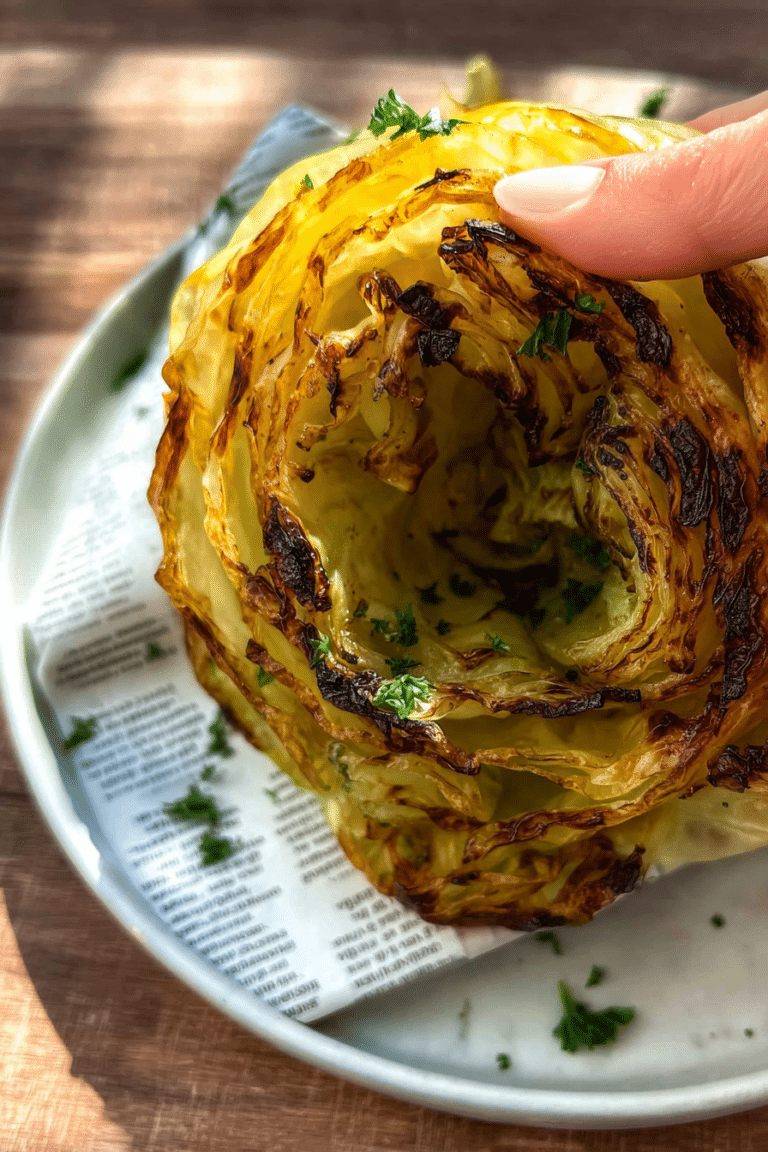
The magic is simple chemistry: heat breaks down complex carbohydrates into sugars and browns them through the Maillard reaction. To harness that, you need to present dry surfaces to hot air and resist the temptation to over-baste; oils help conduct heat but too much will steam the cabbage instead of browning it. The wedge shape concentrates both tender interior and exposed surface for crisping.
- Trim the core so wedges stay intact but sit flat; uniform thickness ensures even cooking.
- Pat the cut surfaces dry before oiling; moisture is the enemy of crispness.
- Use enough oil to coat the pan bottom and the cut faces lightly — the goal is sheen, not drowning the cabbage.
- Position wedges with the cut side down first, then flip during roasting to brown both faces.
- Watch the color: aim for deep golden-brown flecks and occasional charred tips for nutty notes; these are signs of well-developed flavor.
How Temperature and Timing Shape Texture and Flavor
Temperature dictates whether the cabbage steams or caramelizes. Higher heat gives faster browning but requires attention to avoid burning; lower heat softens without crisping. Timing is closely tied to wedge size and oven hotspots — both determine how long to roast to achieve a tender center and a crisp rim.
- Roast at a robust temperature that encourages browning; adjust time for wedge thickness and how crisp you want the edges.
- If your oven runs hot, check early and rotate the pan; if it runs cool, give the wedges a little extra time and consider finishing under a broiler for a minute to add color.
- Allow a short rest after roasting so the cabbage firms slightly and the sugars set; this helps the sauce sit prettily on the surface rather than sliding off.
Understanding the cooking techniques for Cabbage Steaks can also help you perfect your roasted cabbage with blue cheese sauce.
Blue Cheese Sauce: How to Make a Velvety, Stable Drizzle
A glossy, stable blue cheese sauce comes from gentle heat, constant whisking, and respect for the dairy. Hitting the right temperature lets the fats emulsify with the cheese proteins; overheating causes separation. If you need a non-dairy approach, choose a cashew or silken tofu base and fold in miso or a bit of vinegar for that characteristic tang.
- Warm the cream over medium-low heat; avoid a rolling boil which can break the emulsion.
- Add crumbled blue cheese gradually while whisking so it melts evenly into the cream.
- Bring to a gentle simmer to thicken slightly, then remove from heat to prevent graininess; residual heat finishes the melt.
- To stabilize: whisk in a small amount of softened cream cheese or a cornstarch slurry if you need the sauce to hold up for service.
- For a plant-based version: blend soaked cashews with a splash of plant milk and white miso, then warm gently and whisk until silky.
How to Make Roasted Cabbage with Blue Cheese Sauce (Step-by-Step)
Below are the practical steps I follow in my kitchen. Use them as a framework, and adjust as your oven, cabbage size, and taste demand. Keep an eye on visual cues — color and texture are your best timers.
- Cut the cabbage into uniform wedges through the core so each piece holds together during roasting.
- Remove any ragged outer leaves and trim the base just enough to let each wedge sit flat.
- Lightly oil the bottom of the roasting pan and rub oil onto each cut surface so they’re coated but not saturated.
- Arrange wedges cut-side down, roast until the undersides form a deep golden crust, then flip to brown the other faces.
- While the cabbage roasts, warm cream and Worcestershire in a small saucepan, then whisk in crumbled blue cheese until smooth; remove from heat at the first gentle simmer.
- Bring the cabbage to the desired crispness — a few well-browned spots are desirable — then transfer to a serving platter and spoon the warm sauce over the wedges just before serving.
For a different serving style, consider trying our Parmesan Garlic Cabbage Steaks which complement the blue cheese sauce beautifully.
Pro Tips for Roasted Cabbage with Blue Cheese Sauce: Balancing Salt and Tang
- Season in layers: lightly salt the cabbage before roasting and taste the sauce before adding finishing salt — blue cheese is already quite salty.
- If your blue cheese is very assertive, temper the sauce with a splash of cream or a spoonful of full-fat yogurt to mellow the intensity.
- For textural contrast, finish with toasted nuts or seeds — hazelnuts and pumpkin seeds are excellent companions.
- Adjust acidity with a squeeze of lemon or a few drops of sherry vinegar if the sauce feels heavy.
- Try pairing with roasted pork or grilled steak to echo the sauce’s richness, or serve with grains for a vegetarian composed plate.
For another delicious twist on roasted cabbage, try our Roasted Cabbage with Miso Butter recipe, which provides a unique umami flavor.
Troubleshooting
- If the cabbage is steaming rather than browning: pat the wedges dry and reduce pan crowding so hot air circulates.
- If the sauce separates or looks grainy: remove from heat immediately and whisk in a little warm cream or an emulsion agent (softened cream cheese or a small starch slurry).
- If the wedges are browned outside but hard inside: cut thinner wedges or extend roasting time at a slightly lower temperature so heat penetrates without burning the exterior.
- If the dish tastes too salty: add a touch of sweetness with a drizzle of honey on the cabbage or fold in unsalted cream to the sauce.
- I often keep a small pan on low heat while serving to gently rewarm the sauce — I’ve learned that abrupt reheating ruins its texture.
How to Store, Reheat, and Try Variations for Roasted Cabbage with Blue Cheese Sauce
Leftovers keep well if managed correctly. Store components separately when possible: the cabbage and the sauce will maintain texture longer when not combined. When reheating, apply dry heat to revive crispness, and bring the sauce back gently over low heat to avoid separation.
- Storing – Refrigerate roasted cabbage and sauce in separate airtight containers; use within a few days for best texture.
- Reheating – Warm wedges in a hot oven or skillet to re-crisp the edges; reheat the sauce slowly on the stovetop and whisk until smooth before serving.
- Freezing – I don’t recommend freezing the sauce; if you must, freeze cabbage only and plan to make a fresh sauce when serving.
- Variation: Toasted Nuts & Seeds – Scatter toasted hazelnuts or pumpkin seeds over the finished dish for crunch.
- Variation: Fruit Contrast – Add roasted apple or pear slices to introduce a bright counterpoint to the cheese.
- Variation: Smoked Paprika or Chili – For warmth, dust the cabbage with smoked paprika or a pinch of chili flakes before roasting.
- Variation: Plant-Based Sauce – Use a cashew-miso cream in place of dairy to create a tangy, vegan-friendly drizzle.
Frequently Asked Questions
Can I use a different type of cheese instead of blue cheese?
Absolutely! While blue cheese gives a unique flavor, you can experiment with other cheeses like goat cheese or feta for a different taste.
What can I serve with roasted cabbage to make it a complete meal?
Roasted cabbage can be a great side dish to accompany grilled meats, roasted chicken, or even a hearty grain bowl for a vegetarian option!
How do I know when the cabbage is perfectly roasted?
The cabbage is perfectly roasted when it has a golden-brown crust and is tender, yet crispy around the edges. Feel free to roast it longer if you prefer a crispier texture.
Can I prepare the blue cheese sauce in advance?
Yes! You can prepare the blue cheese sauce ahead of time. Just store it in the fridge and gently reheat it on the stove before serving.
What are some variations I can try with this recipe?
You can add toppings like toasted nuts or seeds for extra crunch, or mix in spices like smoked paprika for added flavor. Experiment to find your favorite combination!
Roasted Cabbage with Blue Cheese Sauce
Ingredients
Method
- Preheat oven to 400 F.
- Slice the cabbage through the middle of the core and continue all the way through.
- Remove the bottom half of the core from each piece.
- Cut each half into half again through the core area, and repeat again. In the end there will be 8 wedges.
- Drizzle olive oil all over the bottom of a roasting pan.
- Place each wedge flat side down in the oil, rub then flip over again.
- Roast for 45 minutes, or more depending on how crispy you want the cabbage to be.
- While the cabbage is roasting, place the cream, Worcestershire and blue cheese together in a small saucepan.
- Heat them together on medium low heat, whisking as it warms up.
- Once the blue cheese has incorporated into the milk, allow to come to a slight simmer then immediately remove from the heat.