

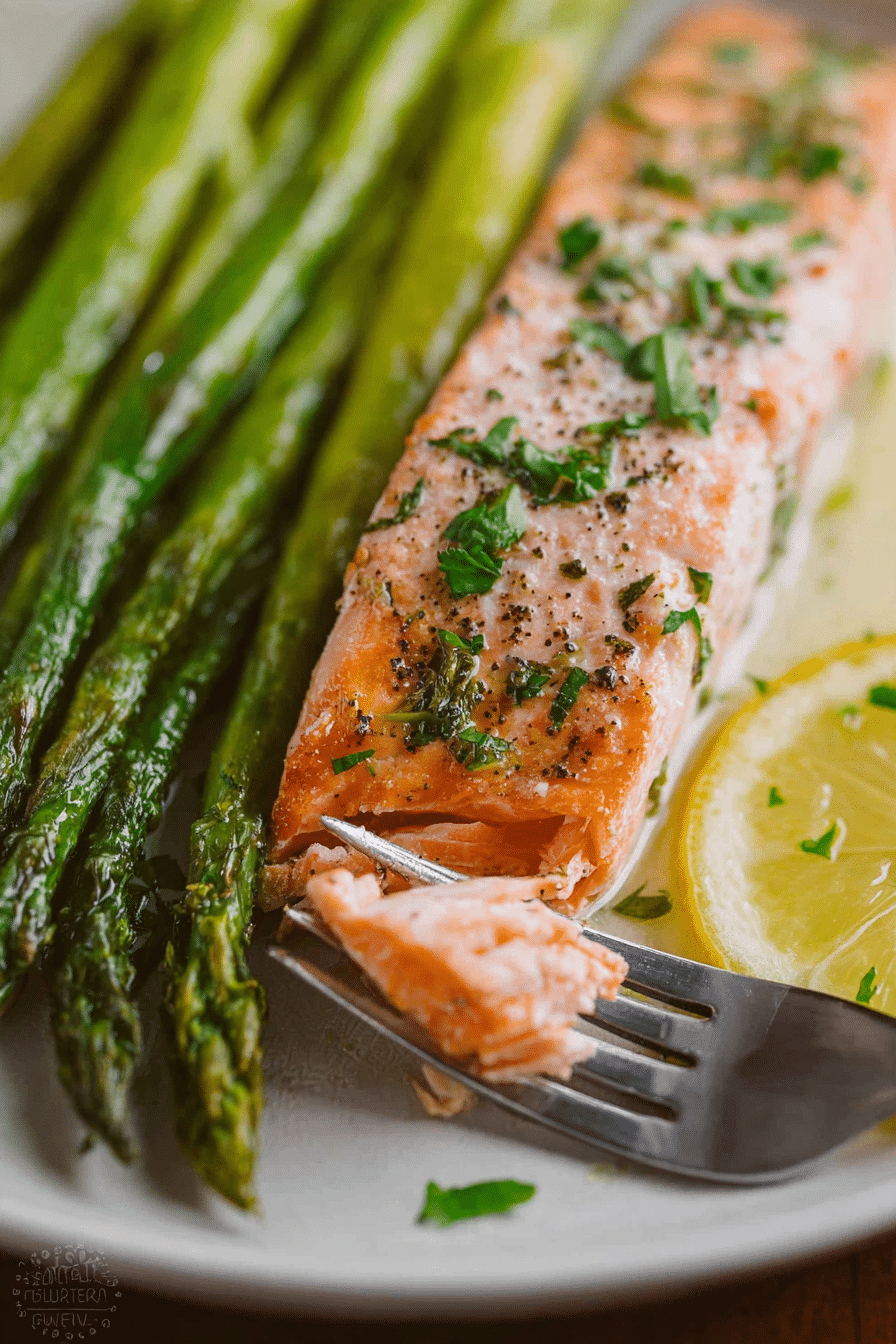
I cook this sheet pan salmon and asparagus when the week gets hectic and I want dinner that feels thoughtful but actually takes almost no time. The lemon-garlic-herb butter is the reason I keep coming back to this recipe — it melts over the fish and vegetables and carries bright, savory flavor with almost zero effort. I usually have this on the table in about 20 minutes from oven-on to plates being cleared.
What I like most: one rimmed sheet, a quick mash of the butter, and you’re done. Cleanup is minimal, and the whole tray goes from oven to table without multiple pans. The asparagus cooks alongside the salmon, so you get a balanced plate—protein and veg—without babysitting the stove.
I test this version with family-style portions, and the quick broil at the end gives the salmon a little color while keeping the center tender. In my kitchen this has become the go-to when I want something healthy, fast, and reliable.
Why This Sheet Pan Salmon and Asparagus Works for Busy Weeknights
This recipe is built for speed and simplicity. The one-pan approach means you won’t be rinsing a sink full of dishes at the end of the night, and the short prep and cook times let you get a full meal on the table in under 30 minutes. Because salmon cooks quickly and asparagus roasts at the same temperature, both components finish together, saving time.
Nutrition-wise, you get a solid portion of protein and plenty of vitamins from the green veg without heavy sauces or complex sides. The lemon in the butter brightens the whole tray so it tastes fresh even when you’re short on time. Imagine the citrusy aroma hitting you as you open the oven and the salmon turning from translucent to flaky and opaque — that’s the signal dinner is ready.
Everything You Need for Sheet Pan Salmon and Asparagus
Use fresh, good-quality ingredients for the biggest payoff. The lemon and herbs are doing most of the lifting here, so don’t skimp.
- Salmon – The star protein; choose a firm, fresh fillet so it holds together on the sheet pan. You can portion it into individual fillets before roasting.
- Asparagus – Adds color, crunch, and quick-roasting veg. Trim the woody ends so each spear cooks evenly.
- Unsalted butter – Forms the flavored butter base; control the salt level so the finished dish isn’t overly salty.
- Lemon – Provides juice and slices for garnish; the acidity brightens the butter and cuts richness.
- Garlic – Gives savory depth; press or mince so the flavor distributes into the butter.
- Fresh parsley or herbs – Adds freshness and a herbal lift; other soft herbs work too.
- Olive oil, salt, and black pepper – Basic seasoning to help the asparagus roast and to season the fish.
For a complement to your salmon, you might also enjoy grilled asparagus, which highlights the same flavors.
The Lemon-Garlic Herb Butter That Makes the Dish
The butter is the flavor engine here. You want it soft enough to mash and spread, but not melted — that helps it cling to the salmon and drip onto the asparagus as the pan heats. If the butter is too cold it won’t incorporate; too warm and it’ll pool on the pan instead of basting.
I mash the butter with a fork until everything is evenly combined; a food processor works if you’re in a hurry. The lemon juice adds brightness, garlic brings savory backbone, and fresh parsley keeps the finish light. Each element plays a clear role: acid to cut fat, garlic for depth, herbs for freshness.
- Tip: If your butter is straight from the fridge, let it sit a few minutes or briefly warm it using a gentle method so you can mash it into a cohesive spread.
- Tip: Taste and adjust the salt after mixing; the herbs and lemon can mute saltiness, so a small extra pinch can make the flavors pop.
Timing & Temperature: Get Flaky Salmon and Crisp Asparagus
Temperature and timing are everything for this sheet pan dinner. Preheat your oven to 450°F so the asparagus caramelizes quickly while the salmon cooks through without drying out. Aim for the salmon to reach an internal temperature of 145°F for safe, flaky fish; thinner fillets need about 10 minutes and thicker ones closer to 12 minutes at this temp.
- Start with a hot oven (450°F) and use a rimmed baking sheet lined with parchment to prevent sticking and reduce cleanup.
- Bake uncovered for about 10–12 minutes depending on thickness, then set the oven to BROIL and broil 2–3 minutes to add a golden finish.
- Check doneness by inserting an instant-read thermometer into the thickest part of the fillet or by testing with a fork — the fish should flake easily but stay moist.
Simple Swaps: Make It Gluten-Free, Low-Fat, or Veg-Friendly
Adapt this tray dinner to fit dietary needs without losing the fast, flavorful payoff.
- Gluten-free: Ensure all condiments and seasonings are certified gluten-free; the base recipe is naturally gluten-free otherwise.
- Low-fat: Replace some or all of the butter with olive oil and increase lemon and herbs to keep the dish bright.
- Dairy-free: Use a stable vegan butter or extra-virgin olive oil for a dairy-free version that still roasts beautifully.
- Vegetarian swap: Try firm tofu steaks or thick slices of roasted cauliflower in place of salmon; roast the same way but watch timing so the tofu browns without drying.
How to Make Sheet Pan Salmon and Asparagus (Step-by-Step)
Follow this order to move quickly: prep the butter while the oven preheats, then assemble the tray so everything bakes together. Handle raw fish carefully and keep it chilled until it goes in the oven.
- Preheat oven to 450°F and position rack in the top third of the oven.
- Line a large rimmed baking sheet with parchment and trim so it doesn’t hang over the edges.
- Place salmon fillets in a row down the center of the pan; arrange trimmed asparagus on the sides.
- Drizzle asparagus with a little oil, roll to coat, and season both asparagus and salmon with salt and pepper.
- Mix the flavored butter until smooth, spoon most over the salmon, and dab the rest over the asparagus.
- Bake 10–12 minutes until salmon is opaque and flakes; then set oven to BROIL and broil 2–3 minutes for color.
- Remove from oven and let rest a minute before serving with lemon slices.
If you love salmon, try our easy grilled salmon for another delicious option.
Pro Tip for Sheet Pan Salmon and Asparagus: Broil 2–3 Minutes for a Golden Finish
- I always watch closely during the broil step — the butter bubbles and the edges turn golden quickly, so don’t walk away.
- Use visual cues: once the top has a light golden color and the butter is bubbling, it’s time to pull the tray.
- If your fillets are very thin, skip the broil or reduce the time so the fish doesn’t overcook; thicker pieces tolerate the extra color.
How to Store, Reheat, and Meal-Prep Sheet Pan Salmon
Leftovers are great for quick lunches and make meal prep effortless. Store portions properly to keep flavor and texture as close to fresh as possible.
- Cool quickly and refrigerate in shallow airtight containers within two hours of cooking.
- Reheat gently in a low oven (about 275–300°F) until warmed through to avoid drying the fish; a microwave works for convenience but watch timing to prevent rubberiness.
- For meal-prep portions, separate salmon and asparagus in containers so the veg retains more texture—reheat together briefly when ready to eat.
Check out our easy sheet pan salmon dinner for more tips on meal prep and storage.
Variations for Different Tastes
Make this recipe your own with simple swaps and flavor twists. Below are easy ideas to change the personality of the dish.
- Spicy: Add a pinch of cayenne or a drizzle of sriracha to the butter before spreading.
- Sweeter glaze: Stir a little honey or maple into the butter for a sweet-savory finish.
- Mediterranean: Add oregano and olives, and finish with a squeeze of lemon and a sprinkle of feta after baking.
- Asian-inspired: Swap the herb butter for a miso-ginger glaze and finish with sliced scallions and sesame seeds.
Consider pairing this dish with garlic butter shrimp pasta for a seafood-inspired meal.
Frequently Asked Questions
What temperature should I cook salmon in a sheet pan?
Preheat the oven to 450 degrees Fahrenheit to ensure the salmon and asparagus cook perfectly.
How long does it take to cook salmon and asparagus together?
Bake the salmon and asparagus uncovered for 10-12 minutes, then broil for an additional 2-3 minutes for a nice golden finish.
Can I use frozen salmon for this recipe?
It’s best to use fresh or thawed salmon for even cooking, but if you use frozen, increase the cooking time slightly until the salmon is cooked through.
What are some good substitutes for salmon in this recipe?
You can substitute salmon with other fish like trout or cod, or use chicken breasts if you prefer a different protein.
How can I make this dish gluten-free or dairy-free?
To make it gluten-free, ensure all ingredients are certified gluten-free. To make it dairy-free, substitute the butter with vegan butter or olive oil.
Sheet Pan Salmon and Asparagus
Ingredients
Method
- Preheat oven to 450˚F with oven rack in top third. Line large rimmed baking sheet with parchment paper.
- Place salmon filets in a row down the center of your lined baking pan. Arrange trimmed asparagus on the sides of the salmon.
- Drizzle asparagus lightly with olive oil and roll to coat. Sprinkle both asparagus and salmon with salt and pepper.
- In a medium bowl, mash together all ingredients for flavored butter. Spoon 3/4 of your flavored butter over the salmon and dab remaining butter on the asparagus.
- Top each salmon filet with a slice of lemon and bake uncovered at 450˚F for 10-12 minutes, then broil for another 2-3 minutes.