

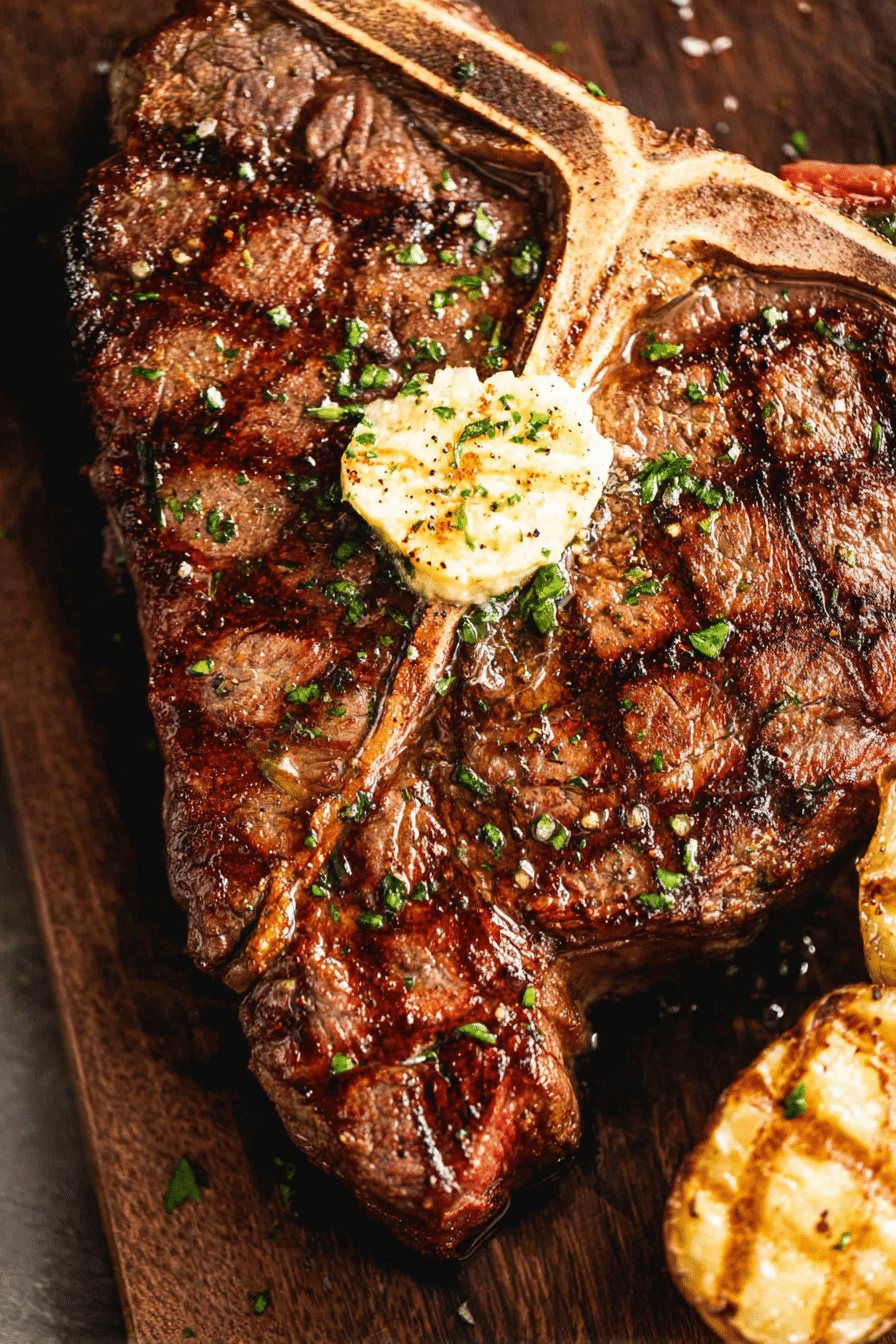
I’ve spent years chasing the perfect crust on a T‑bone on backyard grills of all stripes, and the payoff is simple: a steak with contrast — a razor‑crisp exterior and a buttery, tender interior. When I talk about the grilled t-bone steak, I’m talking about technique more than tricks: heat control, timing, and a confident flip. Those three things make a stark difference between a decent steak and one people remember.
I remember the first time I stopped worrying about marinades and started treating the beef like the star it is. Letting a well‑seasoned T‑bone hit an intensely hot grate and then finishing it over gentler heat changed everything for me — the kind of change that trains your instincts for future grills. Get this method right and you’ll impress friends, family, and anyone you invite over for dinner.
The T‑bone is special because it gives you two textures in one cut: the strip side’s beefy snap and the tender filet on the other. That contrast, combined with bold seasoning and a finishing pat of cowboy butter, creates a deeply satisfying profile. I’ll walk you through the science behind doneness, the gear and ingredients I reach for, and the exact grilling choreography that yields perfect grill marks and a reliably juicy interior.
Why Home Grillers Should Master This Grilled T-Bone Steak
The grilled t-bone steak is a benchmark for a home griller’s skill set. Learn it and you’ll gain command over heat zones, timing, and the Maillard reaction — skills that translate to other high‑heat proteins and vegetables. You should visualize the dark crosshatch of grill marks, hear the sizzle as the steak hits the grate, and feel the anticipation as carryover heat does the final work.
Aside from the technical growth, nailing this steak is hugely satisfying on a human level: it’s a dinner that reads impressive but relies on straightforward techniques. The cut also offers high‑quality protein and an intense beef flavor that doesn’t need heavy masking — which is why seasoning choices and finishes matter so much.
Everything You Need for Grilled T-Bone Steak
Think of this as your preflight checklist. I keep my setup minimal but precise: a reliable thermometer, a clean and oiled grate, long tongs, and a plan for direct and indirect heat. Whether you use gas or charcoal will change how you manage the fire, but the fundamentals of sear then finish are the same.
- Meat thermometer – Use an instant‑read probe for spot checks and a leave‑in probe if your grill supports it.
- Quality T‑bone – Choose steaks with good marbling and appropriate thickness for grilling; thicker steaks tolerate high heat better.
- Grill brush and oil – Clean, well‑oiled grates prevent sticking and promote even charring.
- Long tongs – Avoid piercing the meat; tong control is essential when turning and angling for grill marks.
- Smoked salt or Kosher salt – Brings depth without overwhelming the beef; adjust to preference.
- Freshly cracked black pepper – Adds a bright, peppery finish that complements the crust.
- Cowboy butter or compound butter – A cold pat used to finish the steak adds richness and aroma as it melts.
- Marinade or rub (optional) – If you choose a marinade, keep it short to avoid changing the steak’s texture; dry rubs amplify the crust without masking beef flavor.
- Charcoal vs. gas – Charcoal gives deeper smoky notes; gas offers precision and speed. Either works when you control direct and indirect zones.
Sensory note: the prep stage should smell like fresh cracked pepper and warm fat — a cue that the grill is ready and the meat is primed for a proper sear. Don’t skip seasoning; simple salt and pepper let the T‑bone sing, but a quick dry rub or a short marinade can add character if done deliberately.
Why Temperature Matters for T-Bone Steaks (The Science of Doneness)
Temperature is the language the steak speaks. The Maillard reaction — the browning that produces the crust — happens rapidly at high surface temperatures and creates the deepest savory notes. Internally, protein denaturation progresses with heat and moisture loss; that’s why timing and resting are critical.
Internal target temperatures to guide you (post‑carryover pull temps):
- Rare — pull around low 120s°F (finish a bit cooler after carryover)
- Medium‑rare — pull around 130–135°F for a warm pink center (I often pull around 135°F and let carryover settle)
- Medium — pull around 140–145°F
- Medium‑well — pull around 150–155°F
Carryover cooking will add several degrees after the steak leaves the grill; thicker cuts gain more residual heat. That’s why I almost always remove steaks a few degrees shy of your target. Texture wise, lower internal temps keep the meat tender and juicy; overcooking squeezes out moisture and flattens the flavor profile.
The Secret to a Perfect Crust: Sear, Angle, and Carryover Heat
The crust is built in two parts: an initial furious sear for surface browning, and a patient finish to bring the center to temperature without burning the outside. The 45‑degree turn is cosmetic but effective — it creates the crosshatch and ensures even contact across the steak’s fat and lean areas.
If you want the iconic grill pattern, you need to set the steak down, let the contact do the work, then turn 90 degrees halfway through that sear period. Use direct heat for searing, then move to indirect heat to finish. Resting under a loose tent of foil lets the juices redistribute while the outer crust relaxes and stabilizes.
Troubleshooting tips for the crust:
- If the steak is browning too quickly but not reaching internal temp, move it to indirect heat and reduce flame intensity.
- If meat is sticking to the grate, your grate wasn’t hot enough or well oiled — preheat longer and oil just before placing the steak down.
- If you’re not getting good contact, press any curled edges flat with tongs briefly, then rotate to maintain even searing.
Common Grilling Mistakes and How to Avoid Them
Most home grillers sabotage a great steak with avoidable mistakes. I’ve cooked enough to know the usual suspects and how to correct them quickly.
- Insufficient seasoning – Salt early enough to penetrate surface proteins but don’t overdo it; finish with cracked pepper right before grilling. Proper seasoning amplifies the beef rather than hiding it.
- Skipping rest at room temperature – Putting an ice‑cold steak on the grill makes the outside overcook before the center warms; let it rest at room temp for 30–60 minutes before cooking.
- Poor heat management – Not having direct and indirect zones leads to uneven cooking. Preheat the grill and know which area will sear and which will finish.
- Flipping too often – Constant flipping prevents proper crust development. One flip (plus the 90° rotations for marks) is all you need during searing.
- Not using a thermometer – Relying on time alone invites inconsistency. Use a probe to confirm doneness.
- Carrying char into bitterness – If flare‑ups char the fat excessively, move the steak away from the flames and briefly pat with tongs to keep smoke from turning bitter.
For more on common pitfalls with high‑heat grilling, see this helpful primer on common grilling mistakes that apply across proteins.
How to Make Grilled T-Bone Steak (Step-by-Step)
- Remove the steaks from the refrigerator 30–60 minutes before grilling so they come closer to room temperature; pat dry and season generously with smoked salt (or Kosher) and cracked black pepper.
- Preheat your grill: for gas, crank to high (500°F+); for charcoal, bank coals to create a hot direct zone and a cooler indirect zone. Clean and oil the grates.
- Place the steaks over direct heat and close the lid. Sear for 1–1.5 minutes, then lift and rotate the steak 90 degrees to create the crosshatch; return to sear another 1–1.5 minutes.
- Flip the steak to the other side and repeat the sear and 90° rotation sequence to develop matching marks on the reverse side.
- After the initial sear, move the steak so the filet side rests over indirect heat and continue cooking for several minutes until the internal temperature approaches your pull target (we aim to remove around 130–135°F for medium‑rare after carryover).
- Remove the steaks, top each with a generous pat of cowboy butter, and tent loosely with foil to rest for 7–10 minutes; carryover heat will bring them to final temp and the butter will melt into the crust.
- Slice against the grain where appropriate and serve immediately with your chosen sides; for an extra flavor boost, consider making a chimichurri steak to serve alongside.
Timing notes: Total grill time varies by thickness and grill intensity. The searing windows above are short by design — the aim is to build crust fast and finish gently so the center remains juicy.
Pro Tip for Grilled T-Bone Steak: Finish with Cowboy Butter and a 7–10 Minute Rest
I almost always finish a T‑bone with a cold pat of cowboy butter — it melts into the crust, adding savory herbs and tang. The butter should be cold when it hits the steak so it slowly emulsifies with the rendered fat rather than pooling and running off.
Pro‑Tips:
- Chill your cowboy butter before plating so it holds its shape; the residual heat will melt it just enough to flavor every bite.
- Use a probe thermometer that alerts you at your pull temp — this prevents overreliance on guesswork during the finish.
- When plating, slice the strip and filet separately to show off the two textures; a little finishing salt on the sliced meat brightens the taste.
Troubleshooting (quick fixes I use in my kitchen):
- If the butter melts away too fast, pull the steak earlier and rest slightly longer so flavors set without excess pooling.
- If one side is cooking faster, tent the faster side with foil or move the steak to a cooler zone while the center catches up.
- If you get large flare‑ups from fat drips, momentarily move the steak to indirect heat and brush away burning fat from the grate until flames subside.
Variations:
- Swap cowboy butter for a lemon‑garlic herb butter for brighter notes that cut through richness.
- Apply a short dry brine with coarse salt and herbs overnight for a deeper crust and firmer texture.
- For smoky depth, add a small handful of soaked wood chips to charcoal or a smoker box on gas and finish the steak with low smoke during the indirect phase.
How to Store and Reheat Grilled T-Bone Steak
Proper storage preserves texture and flavor. After resting, cool any leftovers to room temperature then refrigerate in a shallow airtight container. Consume within a few days for best quality — the sooner the better.
Reheating without drying is a skill: use gentle methods that bring the center back up slowly. An oven at low heat or sous vide set to target temp will keep the steak juicy. If you prefer a quick finish, warm slices in a hot skillet with a touch of butter for just a minute per side to refresh the crust.
Leftover ideas and sides: pair slices with roasted vegetables or a bright, herbaceous sauce; for a complementary dish, try serving with garlic butter shrimp pasta. If you’re reheating larger leftover portions, check this approach for pan‑style reheating via an oven baked cauliflower steak technique that works well for even warming.
Texturally, properly stored and gently reheated steak should retain a slight spring and a juicy mouthfeel — avoid high, fast heat which will toughen the protein and collapse the fat pockets.
Frequently Asked Questions
How long do I grill T-bone steak? For a medium‑rare T‑bone, grill it for about 5–7 minutes on each side after searing, depending on thickness. Always verify with a meat thermometer to reach your desired internal temperature.
What temperature should the grill be for T-bone steak? Preheat your grill to high heat, around 500+°F. That intense heat ensures a great sear and helps lock in the juices.
What is the best way to season T-bone steak? A simple seasoning of smoked salt and cracked black pepper highlights the beef’s natural flavor. You can add a short dry rub or brief marinade for variation, but restraint usually yields the best results.
Why is it important to let T-bone steak rest after grilling? Resting allows juices to redistribute through the meat, making it more tender and flavorful. A rest of about 7–10 minutes is ideal for most steaks.
Can I use Cowboy Butter on any steak? Absolutely. Cowboy Butter enhances flavor on any grilled steak, adding richness and aromatics as it melts over the hot surface.
Grilled T-Bone Steak
Ingredients
Equipment
Method
- Remove the steak from the fridge 30 minutes to 1 hour before grilling. Sprinkle generously with salt and pepper on both sides and let rest at room temperature.
- Clean and oil your grill grates, preheating the grill to high heat.
- Place steaks over direct heat, searing for 1-1.5 minutes, then turning for grill marks. Flip and repeat until desired doneness.
- Plate the steaks, top with Cowboy Butter, tent with foil, and let rest for 7-10 minutes before slicing.