

I first made these lychee rose macarons in a quiet week of testing, coaxing bright, floral perfume from a humble can of fruit and learning how that perfume behaved inside buttercream. I remember the moment a bite surprised me: the floral rose note sat like a whisper over the bright, slightly tart lychee; a combination that felt both delicate and confidently present. In my kitchen I learned which textures must be coaxed and which can be trusted.
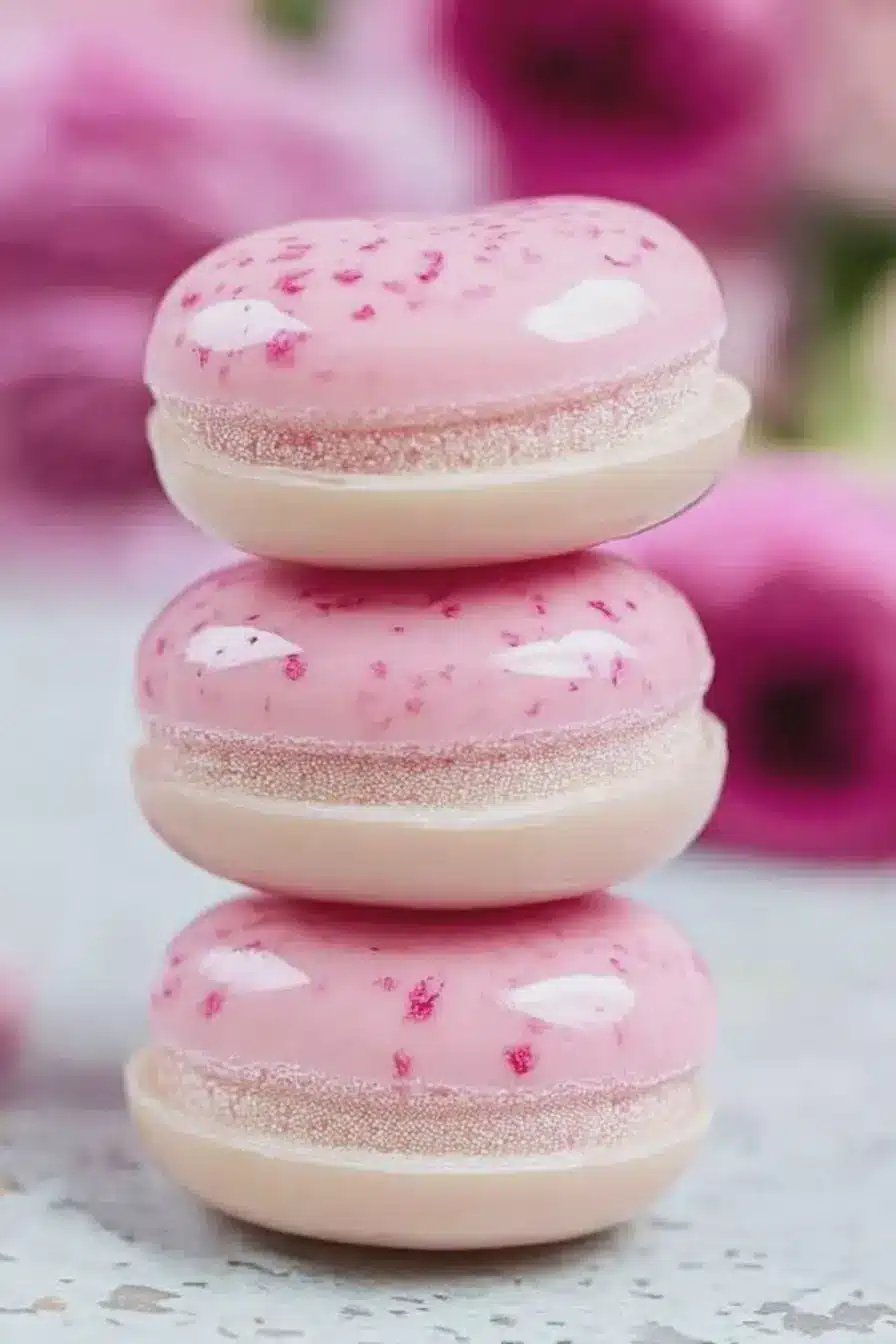
I refined the shells until they had that thin, glossy skin and a fragile foot, and adjusted the lychee filling until it neither weeped nor tasted canned. I also learned to respect timing: macaron batter needs its quiet moment to form a skin, the lychee cream must cool before incorporation, and the assembled cookie benefits from 24 hours of rest. Those pauses transform simple components into something composed and confident.
Over several bakes I kept notes on humidity, oven hot spots, and how much rose water reads as ‘charming’ versus ‘overstated.’ I still love the way the finished cookie looks—pale rose shells with a ribbon of pale cream and tiny pockets of textured lychee pulp—and how it changes slightly with each day of maturation. These are not showy macarons; they are the kind that reward patience.
Why These Delicate Lychee Rose Macarons Belong in Your Repertoire
These macarons fuse two subtle elements that together feel modern and refined. Lychee keeps the profile bright: there’s a natural sweetness with a faint citrus-like tang. Rose water provides floral lift but no heaviness when used sparingly. The contrast of a crisp shell with a satiny buttercream and flecks of real lychee pulp is elegant and texturally surprising. Culturally, lychee appears in many Asian desserts as a marker of seasonality and freshness; pairing it with French macaron technique is a fitting, cross-cultural expression.
Sensory notes to imagine: inhale a soft floral top note of rose, see pale pink shells with a dainty foot, and feel the slight give of a perfect shell as it breaks to reveal the pillowy interior. I found that using real fruit—not just extract—gives this recipe its personality: the fruit’s acid brightens the buttercream and keeps the sweetness from feeling cloying.
Everything You Need for Delicate Lychee Rose Macarons
Precision and quality make a measurable difference with macarons. Make sure your workspace is clean and your measuring tools are accurate; when you bake these you will want everything to be repeatable. Below I list the essential tools and ingredients conversationally so you can visualize what to have on the counter.
- Almond flour – Use a fine, low-moisture almond flour; it keeps shells smooth and prevents excess oil from breaking the meringue.
- Icing sugar – Helps create a satin surface and integrates with the almond flour for stability.
- Egg whites – Aged or separated and rested egg whites improve meringue stability; older whites whip to a better volume.
- Granulated sugar – For a stable Italian or Swiss meringue; quality sugar aids in glossy peaks.
- Cream of tartar – A small acidifier to strengthen the meringue network.
- Pink gel color – Use gel for saturation without extra liquid that would loosen batter.
- Cornstarch – Thickens lychee juice for a stable fruit cream without adding cooked fruit flavor.
- Lychees (fresh or canned) – Provide both juice for a purée and pulp for texture; real fruit offers antioxidants and a naturally bright acidity.
- White chocolate – Adds body and silk to the lychee cream; choose good-quality couverture for flavor.
- Butter – Use unsalted, good-quality butter for a clean, creamy buttercream foundation; dairy-free butter can be substituted for allergen-friendly swaps.
- Rose water and rose extract – Rose water gives fragrant floral notes; a small amount of extract can bolster the flavour without turning soapy.
- Tools – Fine mesh sieve, stand mixer with whisk and paddle, piping bags and round tips, a scale, parchment or silicone mats, and a thermometer for sugar stages.
Sensory prompt: line up these ingredients on your counter and notice the pale pinks, creamy whites, and the light floral scent of rose water before you begin. If you’re considering health benefits, real lychees contribute vitamin C and antioxidants; using fresh or properly drained canned fruit means less processed sugar in the filling.
The Secret to Crisp, Hollow Macaron Shells
Hollow centres and crisp shells mean different things to different bakers. For me, crispness starts with a glossy, well-developed meringue and a skin that can form before heat traps expansion. Humidity, sugar temperature, and macaronage technique all feed into that result. Below are targeted techniques to give you the shell texture I aim for.
- Whip a stable meringue: aim for glossy, medium-stiff peaks that still move slightly when you lift the whisk—this creates structure without becoming dry.
- Control hydration: avoid adding liquid color or extracts directly into the meringue; add color in small concentrated gel amounts and fold gently to maintain aeration.
- Macaronage rhythm: fold until the batter flows in a continuous ribbon and settles back in 10–12 seconds—over-mixing flattens shells, under-mixing leaves peaks that crack.
- Resting to form a skin: after piping, let your shells sit until a gentle touch feels dry; this skin prevents surface cracking and encourages feet formation.
- Oven environment: bake on a middle rack; if your oven has hot spots, rotate once midway. Slightly lower temperatures with longer bake times often produce crisper, hollower shells than brief intense heat.
- Humidity awareness: on humid days reduce drying time or use a dehumidified room; I watch the surface: if it never dries, the cookie won’t develop a proper foot.
Sense check: you should see a glossy, even surface and feel that fine skin when you touch them gently. I always test one shell to confirm the foot development and crisp snap before committing the whole tray to a single bake setting.
Why Lychee Juice and Pulp Matter (and How to Prepare Them)
Lychee flavor is layered: the juice gives brightness and aroma while the pulp gives texture and an unmistakeable presence of real fruit. Using both is what takes these macarons from an impression of lychee to an honest lychee experience.
- Fresh vs canned: fresh lychees have sharper aromatics, while canned fruit is more consistent year-round. Either works, but adjust sweetness—canned juice can be sweeter and may need reduced added sugar.
- Extraction technique: pulse whole lychees briefly to release their juice, then press the puree through a fine sieve to separate a clear juice for reduction and a pulp for texture.
- Concentrating the juice: simmer the strained juice with a little sugar until it tastes distinctly of lychee; mix a slurry of cornstarch with a small amount of juice and temper into the hot liquid to create a glossy lychee cream without a raw starch flavor.
- Dehydrating pulp briefly: spread the pulp thinly, cover with plastic wrap poke a few holes, and chill to remove excess surface moisture; this prevents the pulp from breaking the buttercream seal and causing weeping.
- Textural decision: use a portion of smooth purée in the cream for silkiness and reserve small pieces of pulp folded in at the end for bite and visual interest.
Sensory cue: freshly strained lychee juice should smell floral and bright; the pulp should look translucent and slightly grainy—both elements contribute aroma and texture in different ways. If you prefer, fresh lychees will work great in this recipe; just make sure to extract and strain the juice properly.
How to Make Delicate Lychee Rose Macarons (Step-by-Step)
Follow a disciplined sequence to avoid the common pitfalls that come with adding fresh fruit to a buttercream. Use these steps as a reliable map—each bullet is a deliberate action.
- Prepare shells: sift almond flour and icing sugar together, then whip aged egg whites with sugar and a touch of acid until glossy; fold dry ingredients into the meringue until batter flows in a smooth ribbon.
- Color and pipe: add a tiny amount of pink gel color and fold briefly, transfer to a piping bag, and pipe uniform circles onto a lined tray; tap firmly to release large air bubbles and let sit until a dry skin forms.
- Bake and cool: bake on the middle rack until shells lift from the paper cleanly and have a crisp exterior; cool completely before filling to prevent melting the buttercream.
- Make lychee cream: reduce strained lychee juice with sugar, thicken with a cornstarch slurry, whisk into chopped white chocolate, then blend with softened butter to a smooth, silky cream; chill until pipeable.
- Make rose buttercream base: prepare a stabilized buttercream (Swiss or Italian meringue style) and reserve a portion; gently fold in rose water and a touch of rose extract to taste.
- Assemble: pipe a buttercream dam around the shell edge, fill the center with a small spoonful of lychee cream, add a touch of dehydrated pulp, then top with another dab of lychee cream and sandwich with a matching shell.
- Mature: refrigerate assembled macarons for 24 hours to let flavors knit and textures harmonize; bring to room temperature before serving for best mouthfeel.
Sensory guidance: you want a shiny shell, a satiny buttercream, and tiny, translucent pockets of lychee pulp—each bite should begin crisp and finish silky. If you notice any weeping from the fruit, return the assembled macarons to chill and allow the creams to firm.
Pro Tip for delicate lychee rose macarons made with real lychees: controlling meringue hydration and bake timing
I learned to treat meringue hydration as the single most mutable factor in macaron success: a little extra moisture can turn a promising batter into a weeping, hollow mess. Below are concise, practical points to keep at hand while you bake.
- Age your whites: separate egg whites and rest them overnight in the fridge loosely covered; aged whites whip more consistently and reduce over-aeration risk.
- Use gel color only: concentrated gel color prevents additional liquid from changing batter viscosity.
- Test the skin: in humid conditions, extend the resting time until the surface is definitely dry to the touch; if it never dries, use a dehumidifier or shorten your drying expectations and adjust heat downwards.
- Adjust bake timing: if shells brown too quickly without developing feet, lower oven temperature and extend bake time slightly; if shells rise unevenly, increase initial heat briefly then lower.
- Cool in the tray for a short time: let shells sit on the tray briefly after baking before moving to a rack to prevent shock and cracking.
Troubleshooting: Fixing Cracked Shells, Hollow Centres, and Weeping Fillings
I keep a short checklist beside my mixer for quick fixes—many issues can be corrected the next bake with small adjustments rather than wholesale changes. Below are fast, actionable remedies I use in my kitchen.
- Cracked shells: usually from under-resting or oven too hot—let shells dry longer and reduce oven temperature by a small increment next time.
- Hollow centres: caused by over-whipping or over-mixing—reduce whisking time and fold more gently until the batter flows in a thick ribbon.
- Weeping fillings: sugar imbalance or excess fruit moisture—thicken lychee juice into a stable cream with a cornstarch reduction and dehydrate pulp briefly before assembly.
- Flat shells with no feet: over-mixed batter or under-whipped meringue—whip to medium-stiff peaks and practice a few controlled folds to preserve air.
- Soapy rose flavor: too much rose water or poor-quality extract—use a light hand and taste as you add; a drop of extract goes a long way.
How to Store, Mature, and Gift Your Lychee Rose Macarons
Proper storage and maturation amplify flavor and texture. After I assemble macarons, I always give them at least 24 hours in the fridge; the acids and aromatics mellow into the buttercream and the shell softens just enough for a harmonious bite.
- Short-term storage: place macarons in a single layer in an airtight container and refrigerate; they keep best for up to 5 days this way.
- Freezing: freeze unassembled shells or filled macarons in a flat, well-sealed container for up to one month; thaw in the fridge before bringing to room temperature to serve.
- Maturation: a 24-hour rest allows the lychee and rose to integrate—flavors feel more rounded and textures more cohesive after this maturation.
- Gifting: present in a shallow box with parchment separators to avoid crushing; include a chilled gel pack if the macarons must travel in warm weather.
Sensory note: after maturation, the rose note should feel softer and the lychee more pronounced—slice one in half and admire the even ribbon of filling and the small flecks of pulp for proof of a well-made cookie.
Variations and Dietary Swaps
These variations give you options for seasonal or dietary preferences while keeping the technique intact. I encourage experimentation with restraint—small changes can produce large flavor shifts.
- Fruit swaps: replace lychee with pear or white peach reductions for a similar subtle fruit perfume and texture.
- Floral swaps: try orange blossom water or a whisper of lavender instead of rose for a different floral character—use sparingly to avoid bitterness.
- Dairy-free option: use a good-quality non-dairy butter alternative and dairy-free white chocolate for a vegan-friendly lychee cream.
- Lower-sugar filling: boost fruit reduction and reduce added sugar in the lychee cream to let the natural fruit acidity shine through.
Frequently Asked Questions
Can I use fresh lychees instead of canned?
Absolutely! Fresh lychees will work great in this recipe. Just make sure to extract and strain the juice properly.
What if my macaron shells crack while baking?
Cracking can happen due to a few reasons, such as over-mixing the batter or oven temperature being too high. Make sure to check these factors for a smoother bake next time!
How do I know when my macarons are ready to be baked?
Macarons should form a skin on the surface after piped out, which usually takes about 30 minutes. They should look dry to the touch before you bake them.
Can I make these macarons dairy-free?
Yes! You can use dairy-free butter and alternative chocolate to make the buttercream suitable for a dairy-free diet.
How can I enhance the rose flavor in my macarons?
You can add a little more rose water or a drop of rose extract to the buttercream for a stronger floral flavor. Just be careful not to overdo it!
Delicate Lychee Rose Macarons Made with Real Lychees
Ingredients
Equipment
Method
- Follow the instructions on my Best Macaron Recipe to make the shells.
- Open canned lychees and prepare lychee puree.
- Prepare buttercream and assemble macarons.
- Place assembled macarons in the fridge to mature for 24 hours